Queen events are a major colony-survival risk: colonies experiencing queen loss or replacement have a relative mortality risk of 3.1, meaning they are more than three times as likely to die within 50 days as colonies without a recorded queen event. Commercial beekeepers can reduce this risk through routine queen-status inspections, controlled queen introduction, professional queen-rearing equipment, and timely decisions to re-queen, combine, or split colonies.
Core takeaway: A queen event creates a high-risk management window, particularly when the colony remains queenless, accepts a replacement poorly, or enters a weak condition late in the season. Specialized apiary tools help commercial operators identify queen problems earlier, make interventions more controlled, and protect the value of the entire colony.
Why Queen Events Threaten Colony Survival
Queen loss disrupts colony organization
The queen supplies the pheromonal signals that help maintain colony cohesion and reproductive stability. When she is lost or her performance declines, worker behavior, brood production, population growth, and colony discipline can deteriorate.
A queenless colony may begin emergency queen rearing, become unstable, or lose productive time while workers attempt to restore normal organization. The longer the problem remains unresolved, the greater the risk that the colony becomes too weak to recover.
The mortality risk is substantial
The reported relative risk of 3.1 within 50 days is an important operational warning. It does not mean that every queen event causes death, nor does it prove that replacement itself is the sole cause of mortality.
It does show that queen events identify colonies requiring prompt attention. Queen failure may occur alongside disease, parasite pressure, nutritional stress, poor weather, or an already declining worker population.
Timing determines the outcome
A replacement queen introduced while a colony still has a strong worker population is generally easier for the operation to support than one introduced after prolonged decline. Late-season queen failure is particularly difficult because the colony may lack sufficient time and population strength to rebuild before winter.
In such cases, combining a weak colony with a robust, queen-right colony may be more reliable than attempting a late replacement. The resulting colony can then be split in spring using new hive bodies, frames, and fresh queen stock.
How Specialized Tools Reduce Queen-Related Risk
Inspection tools identify failure earlier
Professional hive inspection tools support regular assessment of:
- Queen presence
- Egg-laying patterns
- Brood continuity
- Queen cells
- Worker population strength
- Signs of queen exhaustion or supersedure
The objective is not simply to find the queen during every inspection. A colony can be queen-right but still have a failing queen, so brood pattern and colony development are equally important indicators.
Earlier detection gives beekeepers more choices: replace the queen, support the colony, unite it with another colony, or remove it from a production program before losses become irreversible.
Queen introduction cages improve replacement control
Queen introduction cages allow a replacement queen to be inserted while limiting immediate worker contact. This creates a controlled transition period during which the colony can become familiar with the queen’s pheromones.
Controlled introduction can reduce the risk of immediate rejection and aggressive worker behavior. It also provides a practical way to manage queen succession without relying entirely on an uncontrolled natural replacement process.
Queen-rearing equipment supports rapid replacement
Professional queen-rearing and breeding kits help commercial apiaries produce or source replacement queens at operational scale. They support annual queen replacement, colony multiplication, and selection for useful traits.
Depending on the breeding program, selection may focus on honey productivity, disease resistance, mite tolerance, defensive behavior, and adaptation to local conditions. Better queen stock improves the likelihood that colonies remain productive and resilient, although equipment alone cannot compensate for poor nutrition, unmanaged parasites, or inadequate biosecurity.
Queen excluders improve hive management
Queen excluders help control the queen’s movement between brood and honey-storage areas. This can simplify brood management, honey production workflows, and queen-location procedures.
They should be treated as a management aid, not as a diagnostic or survival solution by themselves. Incorrect placement or use can restrict brood expansion or create congestion, so their value depends on an appropriate colony-management plan.
Colony-combining equipment prevents weak colonies from being stranded
When a late-season queen event leaves a colony too weak to overwinter safely, standard colony-combining equipment supports a more decisive intervention. Combining the weak colony with a strong, queen-right hive can preserve workers, brood, stores, and equipment value.
This strategy is often more practical than repeatedly attempting to introduce a queen into a colony that lacks the population or environmental conditions needed to support her.
Building a Commercial Queen-Event Program
Establish a routine inspection schedule
Commercial operations should use standardized inspections rather than waiting for obvious queenlessness. Recording queen status, brood condition, population strength, and replacement history creates an actionable apiary record.
A consistent system also helps teams identify recurring problems by yard, season, queen line, or supplier. This improves purchasing decisions and makes it easier to maintain suitable replacement inventory.
Maintain replacement capacity before it is needed
Queen events are time-sensitive. Commercial beekeepers should plan access to replacement queens, introduction cages, breeding materials, and essential hive components before peak replacement periods.
For distributors and resellers, this creates a strong operational requirement for one-stop sourcing, rapid response, dependable inventory, and efficient fulfillment. A delayed cage, frame, or replacement queen can turn a manageable intervention into a colony loss.
Use controlled succession instead of emergency reaction
Proactive queen replacement can help maintain colony performance and reduce the likelihood of entering the season with exhausted queens. It may also reduce swarming pressure when incorporated into a broader swarm-control program.
However, replacement should be based on colony condition and production objectives. Replacing every queen without evaluating genetics, performance, acceptance, and seasonal timing can increase cost without delivering equivalent value.
Understanding the Trade-offs
Replacement is not risk-free
A replacement queen may be rejected, poorly accepted, inadequately mated, or introduced when the colony is too weak to support recovery. The introduction process therefore requires appropriate timing, inspection, and follow-up.
A queen event may also be a symptom rather than the root cause. Parasites, disease, starvation, pesticide exposure, or nutritional stress can continue to damage the colony after a new queen is installed.
Natural succession can be less predictable
Allowing a colony to replace its queen naturally may reduce equipment and labor requirements, but it provides less control over timing, genetics, and mating outcomes. It can also leave the colony without a productive queen during a critical period.
Specialized tools improve control, but they do not eliminate biological uncertainty. Commercial operators still need sound stock selection, sanitation, pest management, and seasonal planning.
Late intervention may require consolidation
Trying to save every weak colony as an independent unit can waste queens, labor, and equipment. When worker numbers are declining late in the season, consolidation may protect more total colony value than repeated queen introductions.
The correct decision should consider the colony’s population, stores, brood condition, season, and the availability of strong queen-right colonies.
How to Apply This to Your Apiary or Product Program
Specialized tools are most valuable when they are integrated into a complete queen-management workflow.
- If your primary focus is colony survival: Inspect regularly, identify queen failure early, and use controlled introduction cages or colony-combining equipment before the colony becomes too weak to recover.
- If your primary focus is honey yield: Prioritize queen stock and breeding equipment that support productive, well-populated colonies, while monitoring brood continuity and queen performance.
- If your primary focus is genetic improvement: Use queen-rearing and breeding kits to select for productivity, disease resistance, mite tolerance, and local adaptation.
- If your primary focus is commercial supply reliability: Build a full-spectrum sourcing program covering inspection tools, cages, excluders, rearing equipment, hive bodies, frames, and replacement queens, supported by fast fulfillment and responsive technical service.
- If your primary focus is seasonal efficiency: Plan spring replacement and late-autumn consolidation procedures in advance rather than treating queen events as isolated emergencies.
With early diagnosis, controlled queen management, and reliable access to specialized apiary equipment, commercial beekeepers can turn queen events from a major survival threat into a manageable operational risk.
Summary Table:
| Key Factor | Impact on Colony | Management Strategy |
|---|---|---|
| Queen loss/disruption | Increased mortality risk (3.1x); colony disorganization | Regular inspections; early detection |
| Timing of failure | Late-season failures harder to recover | Combine weak colonies with strong ones |
| Queen introduction control | Reduces rejection risk | Use introduction cages |
| Genetic quality | Affects productivity and resilience | Invest in queen rearing/breeding equipment |
| Queen movement control | Simplifies hive management | Use queen excluders properly |
| Population strength | Weak colonies may not survive interventions | Consolidate or combine colonies |
Optimize Your Queen Management Program with HONESTBEE
At HONESTBEE, we specialize in supplying commercial apiaries and distributors with premium beekeeping tools and equipment. Our full-spectrum portfolio includes inspection tools, queen introduction cages, queen excluders, rearing kits, hive components, and more. With fast delivery, dedicated support, and deep expertise, we help you reduce queen-related risks and maximize colony survival. Contact us today to discuss your needs and discover how our one-stop sourcing can enhance your operations. Contact us now to get started!
Related Products
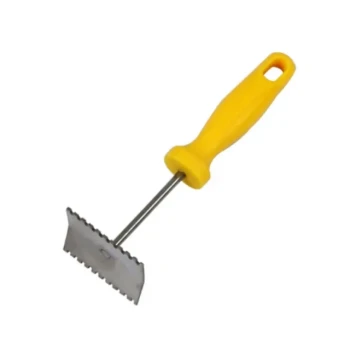
- Stainless Steel Scraper for Metal Queen Bee Excluders
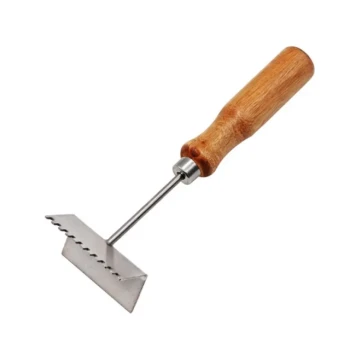
- Professional Dual Action Queen Excluder Scraper for Beekeeping
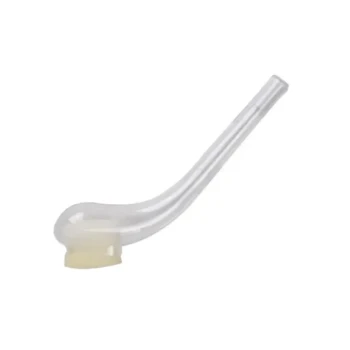
- Professional Queen Catcher and Introduction Queen Cage
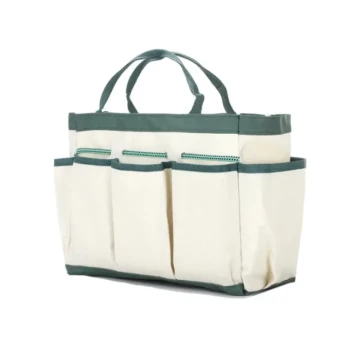
- Professional 600D Oxford Cloth Beekeeping Tool Bag with 8 Pockets and Elastic Loops
- Professional Grade Foldable Beehive Handles
People Also Ask
- How does a queen-bee excluder function as a defense against Small Hive Beetles? Protect Your Honey with Resource Denial
- What are the characteristics of a stainless steel queen excluder? Maximize Your Apiary's Longevity & Hive Fit
- What types of queen excluders are available for beekeepers? Choose the Right Tool for Your Hive
- Why are standardized hive frames and queen excluders essential for maintaining honey purity and quality? Scale Your Purity
- What is the function of the queen excluder in the brood break induction process? Optimize Your Varroa Mite Control