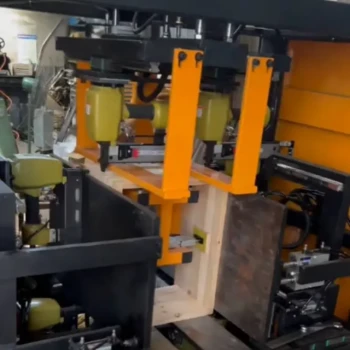
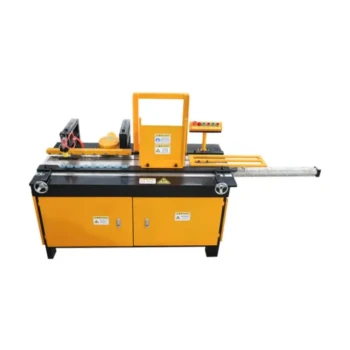
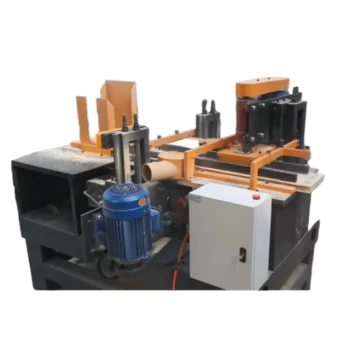
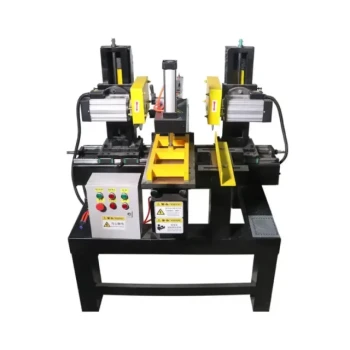
Standardized beehive-making machinery is the foundational hardware requirement for modern, industrial-scale beekeeping. By ensuring the absolute precision of internal hive spaces, this technology directly promotes the healthy development of bee populations and maximizes the efficiency of collecting by-products like royal jelly and drone pupae.
The core value of this machinery lies in converting variable biological processes into a controlled industrial workflow. It eliminates structural inconsistencies that stress colonies, ensuring uniform product output while enabling compatibility with automated extraction and transport systems.
The Critical Role of Precision Engineering
Enhancing Colony Health
The primary contribution of standardized machinery is the maintenance of precise internal dimensions.
Machinery guarantees that internal hive spaces adhere to exact specifications, which is critical for the healthy development of bee populations.
High-precision woodworking ensures tight component fits, which improves sealing and helps colonies maintain stable internal temperatures against external stressors.
Optimizing By-Product Collection
Beyond basic honey production, commercial apiaries rely on diverse revenue streams.
Standardized machinery is essential for the large-scale, efficient collection of high-value by-products such as royal jelly and drone pupae.
Uniform hive specifications ensure that the output of these niche products meets consistent commercial standards, which is difficult to achieve with hand-built equipment.
Operational Scalability and Logistics
Enabling Automation and Interchangeability
For an apiary to scale, its hardware must be universally compatible.
Standardized components allow for the seamless interchangeability of parts, simplifying routine maintenance and reducing inventory complexity.
This uniformity creates a hardware foundation that is compatible with automated honey extraction equipment and processing lines.
Improving Logistics and Transport
Commercial beekeeping often involves moving thousands of hives for pollination services.
Machine-made hives offer the structural integrity and uniformity required for rapid, mechanized loading and transport.
This structural consistency significantly improves transport efficiency and enhances bee survival rates during large-scale relocation operations.
Understanding the Trade-offs
The Rigidity of Standardization
While standardization drives efficiency, it creates a dependency on a specific ecosystem of parts.
Once an apiary commits to a specific machine-made standard, introducing non-compliant or ad-hoc equipment becomes operationally disruptive.
High Initial Infrastructure Requirements
Transitioning to machine-made standards often requires an upfront investment in industrial-grade hardware or purchasing from specialized manufacturers.
This approach shifts the focus from artisanal, low-cost expansion to a capital-intensive model that requires long-term strategic planning to recover costs through volume.
Making the Right Choice for Your Goal
To determine how heavily to invest in standardized machinery, consider your specific operational targets:
- If your primary focus is diversified product yield: Prioritize machinery that guarantees precise internal spacing to maximize the efficient collection of royal jelly and drone pupae.
- If your primary focus is migratory pollination: Focus on structural integrity and component interchangeability to ensure high survival rates and efficient logistics during transport.
Ultimately, standardized machinery turns the beehive from a variable habitat into a precision instrument for biological management.
Summary Table:
| Key Factor | Benefit of Standardization | Operational Impact |
|---|---|---|
| Colony Health | Precise internal dimensions & sealing | Better temperature control & population growth |
| Product Yield | Uniform hive specifications | Maximized collection of royal jelly & drone pupae |
| Scalability | Component interchangeability | Simplified maintenance & lower inventory complexity |
| Logistics | Structural integrity & uniformity | Efficient transport for migratory pollination |
| Automation | Consistent hardware foundation | Compatibility with automated extraction systems |
Scale Your Beekeeping Operation with HONESTBEE Precision
Transitioning to industrial-scale beekeeping requires more than just tools—it requires a foundation of precision. HONESTBEE specializes in empowering commercial apiaries and distributors with the professional hardware needed to succeed. From high-precision hive-making machinery and automated honey-filling systems to a complete range of beekeeping tools and industry consumables, we provide the end-to-end solutions your business demands.
Whether you are looking to maximize high-value by-product yields or streamline your migratory logistics, our expert team is ready to supply the equipment that turns your apiary into a precision instrument.
Ready to elevate your production? Contact us today to discuss your wholesale needs!
References
- Sampat Ghosh, Chuleui Jung. Honey bees and their brood: a potentially valuable resource of food, worthy of greater appreciation and scientific attention. DOI: 10.1186/s41610-021-00212-y
This article is also based on technical information from HonestBee Knowledge Base .
Related Products
- High-Efficiency Pneumatic Bee Hive Making Machine for Rapid Box Assembly
- Mini Desktop Bee Hive Frame Forming Making Machine
- HONESTBEE Top Bar & Bottom Bar Forming Machine | Bee Frame Machine
- Automatic High-Speed Bee Hive Box Stapling Machine
- Beehive Handle and Frame Rest Cutting Machine: Your Specialized Hive Machine
People Also Ask
- How does the introduction of professional beehive-making machinery benefit sustainable beekeeping? Scale Your Apiary
- Why is specialized beehive-making machinery critical for low-defense breeding? Enhance Selection with Precision Tools
- How does the introduction of specialized beehive making machinery contribute to increasing the scale of regional beekeeping industries?
- What is the importance of specialized beehive making machinery in a circular bio-economy? Build Local Sustainability
- Why is specialized beehive-making machinery essential? Scale Your Apiary with Precision Industrial Standards