The primary function of a benchtop centrifuge in honey analysis is to rapidly separate insoluble particles and impurities from the honey reaction liquid using high-speed rotation. This mechanical separation ensures the liquid portion of the sample, known as the supernatant, is perfectly clear before it undergoes optical testing.
The benchtop centrifuge eliminates suspended particles that cause light scattering interference. This step is essential for securing a high signal-to-noise ratio and accurate data during subsequent spectrophotometric measurements.
The Mechanics of Sample Clarification
Separation via Centrifugal Force
The device operates by spinning the honey sample at high velocities. This generates significant centrifugal force, which acts on the mixture within the test tubes.
Isolating Impurities
Under this force, heavier elements—such as insoluble particles, precipitates, and impurities—are driven to the bottom of the vessel. This physical separation leaves the remaining liquid (the supernatant) free of solid contaminants.
Why Clarification is Critical for Analysis
Enabling Optical Precision
Many honey analysis protocols, such as diastase activity determination, rely on spectrophotometry. This method measures how light interacts with the sample.
Eliminating Light Scattering
If particles remain suspended in the liquid, they deflect light beams passing through the sample. This phenomenon, known as light scattering interference, creates false readings and obscures the true chemical properties of the honey.
Improving Data Reliability
By ensuring the supernatant is clear, the centrifuge directly improves the accuracy and signal-to-noise ratio of the test. This guarantees that the optical readings reflect the honey's composition, not the presence of debris.
Distinguishing Equipment Roles
Benchtop vs. Industrial Extraction
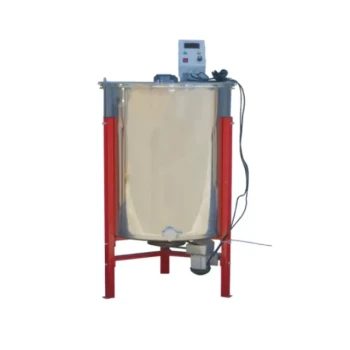
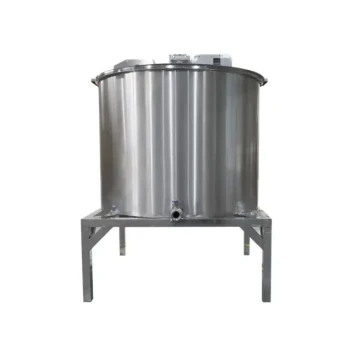
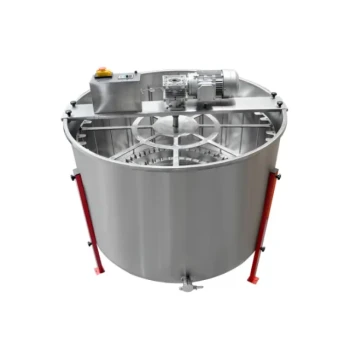
It is crucial to distinguish the benchtop centrifuge used for analysis from the industrial centrifuge (or honey extractor) used in production.
Purpose of Extraction
As noted in supplementary contexts, industrial centrifuges are used to expel raw honey from the honeycomb for harvest. Their goal is volume recovery and preserving wax structure, whereas the benchtop centrifuge is a precision tool strictly for preparing small analytical samples.
Making the Right Choice for Your Goal
To ensure your honey analysis yields valid results, consider the specific requirements of your testing protocol:
- If your primary focus is Optical Analysis (e.g., Diastase): You must ensure the centrifuge speed and duration are sufficient to produce a perfectly clear supernatant, as any turbidity will skew spectrophotometric results.
- If your primary focus is Equipment Selection: Ensure you are selecting a laboratory-grade benchtop unit designed for sample preparation, not a high-capacity industrial extractor designed for comb processing.
The benchtop centrifuge is the gatekeeper of analytical clarity, transforming a complex, particulate-heavy mixture into a clean sample ready for precise measurement.
Summary Table:
| Feature | Laboratory Benchtop Centrifuge | Industrial Honey Extractor |
|---|---|---|
| Primary Goal | Sample clarification for analysis | Bulk honey harvesting from combs |
| Mechanism | High-speed separation of precipitates | Centrifugal force to expel raw honey |
| Key Outcome | Clear supernatant for optical precision | Maximum volume recovery of honey |
| Target User | Quality control labs & researchers | Commercial apiaries & producers |
Elevate Your Honey Quality Control with HONESTBEE
Precision in analysis is the foundation of premium honey production. At HONESTBEE, we empower commercial apiaries and distributors with the specialized tools needed for every stage of the industry—from the lab to the production floor.
Our comprehensive wholesale portfolio includes:
- Advanced Machinery: Hive-making equipment and high-efficiency honey-filling machines.
- Beekeeping Essentials: A full spectrum of professional tools and industry consumables.
- Cultural Merchandise: Unique honey-themed products to expand your brand's reach.
Whether you are scaling your extraction facility or refining your analytical capabilities, our expert team is ready to supply the equipment that drives your success.
Contact HONESTBEE today to discuss your wholesale needs
References
- Nurettin Akgün, Latif Kelebekli. Physicochemical properties, total phenolic content, and antioxidant activity of chestnut, rhododendron, acacia and multifloral honey. DOI: 10.1007/s11694-021-00937-3
This article is also based on technical information from HonestBee Knowledge Base .
Related Products
- electric honey extractor honey centrifuge 3 frame honey extractor stainless steel honey frame extractor
- Manual Hand Crank 4 Frame Honey Extractor Centrifuge for Beekeeping
- Professional 4 Frame Self Reversing Electric Honey Extractor for Beekeeping
- Honey Concentrating and Filtering Dehumidifier Machine 2T Capacity for Honey
- Professional Honey Filter with Tripod Support Stand
People Also Ask
- What are the characteristics of electric honey extractors? Boost Your Apiary Efficiency with Automated Technology
- What are the disadvantages of using an electric honey extractor? Weighing Cost, Power, and Comb Safety
- What are the advantages of an electric honey extractor? Boost Efficiency and Scale Your Honey Production
- What are the technical advantages of electric honey extractors? Maximize Yield and Protect Your Bee Colony
- How does an electric honey extractor affect the quality of honey? Preserve Flavor & Purity with Precision Extraction