Pollen traps operate on a principle of precise physical filtration installed directly at the hive entrance. By forcing returning foragers to navigate through grids, fences, or plastic plates with specifically sized apertures, the device mechanically strips pollen pellets from the bees' hind legs, causing the pellets to fall into a collection drawer below while allowing the bee to enter the hive.
The core mechanism relies on geometric barriers—often mesh or star-shaped holes—to intercept and collect approximately 50% of incoming pollen loads. This automated separation enables large-scale production of high-purity pollen and environmental monitoring without completely severing the colony's protein supply.
The Mechanics of Physical Separation
Precision Aperture Design
The efficacy of a pollen trap relies entirely on geometric control.
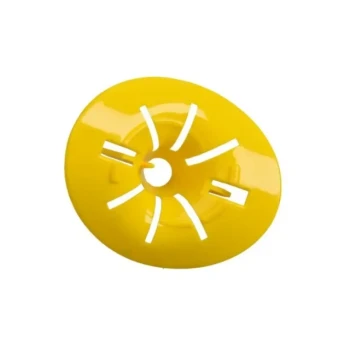
The trap utilizes a barrier—typically a grid, mesh, or plastic plate with star-shaped holes—placed at the hive entrance.
These openings are calibrated to be just wide enough for a worker bee to squeeze through, but too narrow to accommodate the pollen loads attached to their corbiculae (pollen baskets).
Mechanical Stripping Action
As the forager pushes through the barrier, the walls of the aperture act as a physical scraper.
The friction brushes against the hind legs, dislodging the pollen pellets.
Gravity then takes over, causing the dislodged pellets to fall through a secondary screen into a dedicated collection tray, separating the biological material from the insect.
Industrial-Grade Preservation
In large-scale or industrial settings, the mechanism extends beyond simple stripping.
Advanced traps incorporate dry collection trays designed to minimize the impact of environmental humidity.
This is critical for preventing microbial contamination and preserving the biochemical activity of the pollen before it is processed.
Operational Strategy and Yield
Controlled Interception Rates
Pollen traps are designed to be non-destructive to the colony's long-term health.
They typically target an interception rate of approximately 50% of the total pollen brought in.
This ensures that while commercial quantities are gathered, enough protein remains for the colony to feed its larvae and sustain normal breeding activities.
Dual-Purpose Utility
While primarily used for obtaining raw material for consumables, the mechanism serves a secondary technical purpose.
It provides a systematic method for monitoring foraging intensity and analyzing floral diversity.
By activating traps over specific time periods, operators can assess the richness of the surrounding landscape based on the volume and variety of pollen collected.
Understanding the Trade-offs
Nutritional Balance
While the 50% interception rate is the standard, prolonged use can still stress the colony.
If the trap is left active during periods of low floral abundance, the colony may suffer from protein deficiency, impacting brood rearing.
Operators must actively manage trap schedules to match local bloom cycles.
Moisture Sensitivity
Despite design improvements, the collected pollen is highly susceptible to moisture.
If the collection drawer does not have adequate airflow or is not emptied frequently, the pollen can degrade quickly.
High humidity leads to microbial growth, rendering the harvest unsuitable for commercial food standards or accurate research analysis.
Making the Right Choice for Your Goal
When implementing pollen traps, your operational focus dictates how you manage the mechanism:
- If your primary focus is Commercial Production: Prioritize industrial-grade traps with dry collection trays to maximize shelf-life and prevent biochemical degradation of the raw material.
- If your primary focus is Environmental Monitoring: Utilize traps with star-shaped apertures for precise sampling intervals to identify plant species and assess landscape biodiversity without disrupting colony behavior.
Successful pollen collection requires balancing mechanical efficiency with the biological needs of the hive.
Summary Table:
| Feature | Mechanical Principle | Commercial Benefit |
|---|---|---|
| Precision Apertures | Star-shaped holes sized for worker bees | Ensures efficient pollen stripping while allowing bee entry. |
| Interception Rate | 50% geometric barrier filtration | Maximizes yield without compromising colony protein supply. |
| Collection Trays | Gravity-fed moisture-controlled drawers | Prevents microbial growth and preserves biochemical activity. |
| Monitoring Utility | Systematic sampling of foraging intensity | Provides data on floral diversity and landscape richness. |
Scale Your Apiary Success with HONESTBEE
Maximize your collection efficiency and product quality with HONESTBEE's industrial-grade solutions. We cater specifically to commercial apiaries and distributors, offering a comprehensive wholesale portfolio that includes:
- Precision Machinery: Advanced hive-making and honey-filling machines.
- High-Quality Hardware: Durable pollen traps and specialized beekeeping tools.
- Industry Consumables: A wide array of essential supplies for large-scale operations.
- Cultural Merchandise: Unique honey-themed products to diversify your brand.
Ready to enhance your production capacity? Contact HONESTBEE today to access premium equipment and expert support tailored to your business needs.
References
- Hannelie Human, Huoqing Zheng. Miscellaneous standard methods for<i>Apis mellifera</i>research. DOI: 10.3896/ibra.1.52.4.10
This article is also based on technical information from HonestBee Knowledge Base .
Related Products
- Removable Plastic Pollen Trap With Ventilated Tray for Bees Pollen Collector
- 30 cm Plastic Entrance Hole Bee Pollen Trap and Collector
- Plastic Bee Pollen Trap Strips Comb Catcher Collector
- 8 Frame and 10 Frame Propolis Trap Collector Screen for Propolis Collection
- Professional Bucket Style Wasp and Moth Pheromone Trap
People Also Ask
- What are the design principles and advantages of pollen traps in the collection of bee pollen? Boost Your Apiary Yield
- What is the function of professional pollen traps in evaluating honey plants? Quantifying Pollination and Crop Potential
- What functions do pollen traps serve for bee bread production? Optimize Your Raw Material Collection
- What maintenance and pest prevention measures should be taken for pollen traps? Protect Your Hive and Harvest Quality
- How does the use of pollen traps in honeybee hives enhance crop fertilization? Boost Your Yield Through Induced Activity