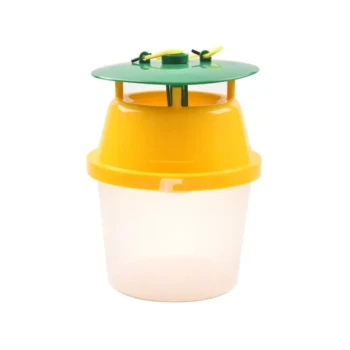
Establishing a reliable benchmark requires absolute precision. The necessity of alcohol or sugar wash processes lies in their ability to physically or chemically separate Varroa mites from honey bees with near-perfect accuracy. This rigorous separation generates the exact infestation ratios required to serve as precise regression targets for training and validating neural network models.
Core Insight: Visual estimation is insufficient for scientific benchmarking. The wash process acts as the definitive "ground truth" by physically disrupting the mite's attachment mechanisms, ensuring that AI systems are trained on scientifically rigorous data rather than approximations.
The Mechanics of Accurate Separation
Disrupting Physical Attachment
Varroa mites are not merely resting on the host; they are physically secured. Mites attach to the honey bee cuticle using tarsal suckers that create a powerful suction force.
To establish a benchmark, this bond must be broken. Fluids like industrial alcohol or 70% ethyl alcohol act as efficient stripping solvents. They rapidly dissolve the sticky substances adhering the mite to the bee and disrupt the suction mechanism.
The Role of Agitation
Chemical dissolution alone is often insufficient for total accuracy. The wash process utilizes physicochemical action, combining the solvent with continuous physical agitation.
This shaking motion dislodges the mites once their grip has been loosened. The mites are then suspended in the liquid or filtered into a separate container, allowing for a complete count that visual inspection of live bees cannot provide.
Why AI Needs This Benchmark
Establishing a Regression Target
In the context of developing technology, the data from these washes serves a critical function: it provides a precise regression target.
When training neural networks to detect parasites, the model needs to know the "correct" answer to adjust its algorithms. The high-precision counts yielded by wash methods provide this undeniable standard.
Ensuring Scientific Rigor
For an AI system to be trusted, it must be validated against a scientifically sound standard.
Because the wash process relies on physical separation rather than estimation, it eliminates human error and visual bias. This ensures that the infestation levels used to train AI are based on empirical reality, facilitating the creation of robust and accurate detection systems.
Understanding the Trade-offs
Sample Loss vs. Data Accuracy
The primary trade-off of the most accurate method—the alcohol wash—is the mortality of the bee sample. Unlike visual inspections, this method sacrifices a specific number of bees (typically around 300) to gain precise data.
Methodological Differences
While both alcohol and sugar washes aim for separation, the alcohol method is generally regarded as the most accurate, reliable, and economical fixing agent.
Sugar washes are non-destructive but may not always achieve the same level of "cleaning and fixing" as alcohol, which dissolves adhesive substances. However, for the purpose of high-precision analysis where sample loss is acceptable, alcohol remains the gold standard.
Making the Right Choice for Your Goal
When deciding how to gather data for your operation or technical development, consider the following:
- If your primary focus is training AI or scientific study: Prioritize the alcohol wash method to generate the most accurate regression targets and ground-truth data possible.
- If your primary focus is routine backyard monitoring: You may opt for the sugar shake method to preserve colony population, acknowledging a potential slight reduction in separation precision.
Ultimately, the validity of any high-tech detection model depends entirely on the accuracy of the low-tech physical wash used to verify it.
Summary Table:
| Method | Accuracy Level | Sample Survival | Primary Application |
|---|---|---|---|
| Alcohol Wash | Very High (Gold Standard) | No (Sample Mortality) | AI Training & Scientific Research |
| Sugar Shake | Moderate to High | Yes (Non-destructive) | Routine Monitoring & Backyard Beekeeping |
| Visual Inspection | Low (Estimation) | Yes | Quick Field Checks (Not for Benchmarking) |
Maximize Your Colony Health with HONESTBEE Precision Tools
At HONESTBEE, we understand that high-precision Varroa management is the backbone of successful commercial beekeeping. Whether you are a large-scale commercial apiary or a global distributor, our comprehensive wholesale offering provides the professional-grade beekeeping tools and machinery needed to implement rigorous monitoring standards.
From industrial-strength hive-making and honey-filling machines to essential consumables and honey-themed cultural merchandise, we equip you with everything required to scale your operations efficiently. Empower your business with the industry gold standard.
Contact our expert team today to discuss your wholesale needs
References
- Yassine Kriouile, Lamine Bougueroua. Nested object detection using mask R-CNN: application to bee and varroa detection. DOI: 10.1007/s00521-024-10393-x
This article is also based on technical information from HonestBee Knowledge Base .
Related Products
- Varroa Easy Check Mite Tester Kit Counter Alcohol Wash Jar
- Durable 12V Oxalic Acid Vaporizer for Varroa Mite Treatment Beehive Beekeeping Tool
- Oxalic Acid Vaporizer 12V for Bee Varroa Mite Treatment
- Adjustable Formic and Acetic Acid Dispenser for Bee Mite Treatment
- Compact Circular Bee Mite Treatment Dispenser
People Also Ask
- What tools are utilized within an Integrated Pest Management (IPM) strategy for honeybees? Optimize Colony Health
- What is the significance of standardized detection tools in Varroa control? Data-Driven Beekeeping Strategies
- Why is surfactant added to 70% alcohol for Varroa detection? Ensure Accurate Mite Counts for Professional Beekeeping
- What is the purpose of using white filter cloth for Varroa mite screening? Enhance Detection and Accuracy
- How does a specialized Varroa mite tester with sugar powder facilitate mite diagnosis? Precise B2B Hive Health Solutions