The use of sticky test boards is a fundamental requirement for accurate data collection in apiculture research. These boards are necessary to quantitatively monitor the "natural drop" of Varroa destructor mites. Without this tool, researchers cannot precisely measure parasitic pressure or establish valid correlations between mite loads and physiological changes in the bees, such as hemocyte profiles measured via flow cytometry.
Sticky boards provide a secure, physical record of mite populations that would otherwise be lost to cleaning behaviors or re-infestation. They transform a biological observation into quantifiable statistical data, enabling the precise evaluation of infestation levels and treatment efficacy.
The Mechanics of Accurate Data Collection
Capturing "Natural Drop"
To study Varroa impact, you must measure the natural drop, which is the rate at which mites fall off bees due to death or grooming.
Sticky boards are the only reliable method to capture this specific metric. They provide a physical count of mites falling over a set period (e.g., 24 hours), offering a direct index of the colony's infestation level.
Preventing Data Loss via Cleaning
Honey bees are hygienic; they naturally remove debris and dead pests from the hive.
Without an adhesive surface, worker bees would carry fallen mites out of the hive before they could be counted. The sticky layer traps the mite immediately, preventing the colony's cleaning behavior from skewing the data.
Neutralizing Environmental Variables
Internal hive conditions are dynamic, often characterized by strong air currents and ventilation caused by bee wings.
The adhesive force secures the mites against these air currents. This ensures that the count reflects the actual drop rate, rather than the number of mites that happened not to blow away.
Biological Isolation and Safety
Preventing Re-parasitization
Not all mites that fall from bees are dead; some may simply be dislodged.
The sticky board acts as a permanent trap. It prevents live mites from crawling back up into the colony to re-attach to a host, thereby breaking the re-infection cycle during the monitoring period.
Non-Invasive Monitoring
Studying internal colony health often requires disruptive techniques.
Sticky boards allow for continuous assessment without dismantling the bee cluster or sacrificing live bees. This non-invasive approach is crucial for long-term seasonal monitoring where colony stress must be minimized.
Facilitating Advanced Research
Correlating Mite Load with Physiology
As noted in the primary research context, accurate counting is required to draw scientific conclusions.
Researchers use the data from sticky boards to establish correlations between external parasite pressure and internal physiological markers. specifically, this data helps quantify how mite loads impact hemocyte profiles (immune cell counts) in the bees.
Enhancing Visual Identification
The physical design of the board is critical for laboratory analysis.
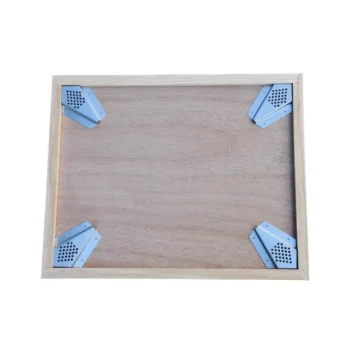
These boards typically feature a white background. This contrast allows laboratory personnel to visually identify and count the tiny, dark mites with high precision, distinguishing them from other hive debris.
Understanding the Trade-offs
The Necessity of the Screen Interface
Sticky boards are most effective when paired with screened bottom boards.
The screen allows mites to fall through while keeping the bees separate from the sticky surface. Without the screen, bees would get stuck to the board; without the sticky board beneath the screen, mites might survive the fall and crawl back into the hive.
Indication vs. Absolute Count
It is important to recognize that sticky boards measure the drop, not the total live population on the bees.
While the correlation is strong, the sticky board provides a statistical sample of the infestation dynamics. It requires consistent monitoring over time to build an accurate picture of the colony's health trajectory.
Making the Right Choice for Your Goal
To apply this to your specific project, consider the following:
- If your primary focus is Scientific Research: You must use sticky boards to generate the quantitative data needed to correlate mite pressure with internal biomarkers like hemocyte profiles.
- If your primary focus is Treatment Efficacy: Use sticky boards before and after intervention to mathematically calculate the "percent kill" or efficiency of your pest control protocol.
- If your primary focus is Colony Management: Rely on sticky boards as a non-invasive early warning system to track seasonal population trends without disturbing the hive cluster.
The sticky test board turns the invisible process of mite shedding into a tangible, countable metric that drives decision-making.
Summary Table:
| Feature | Purpose in Varroa Research | Benefit to Data Accuracy |
|---|---|---|
| Adhesive Surface | Traps fallen mites permanently | Prevents bees from cleaning away evidence |
| White Background | High-contrast visual field | Enables precise counting and identification |
| Natural Drop Capture | Quantifies mite fall rate | Provides a direct index of infestation levels |
| Non-Invasive Design | Monitors without hive disruption | Minimizes colony stress during long-term studies |
Elevate Your Apiary Management with HONESTBEE
Precise data is the backbone of healthy, productive colonies. At HONESTBEE, we specialize in supporting commercial apiaries and distributors with high-quality, professional-grade beekeeping equipment designed for precision and durability.
Whether you are conducting rigorous scientific research or managing large-scale operations, our comprehensive wholesale portfolio offers everything you need:
- Advanced Monitoring Tools: High-contrast sticky boards and screened bottom boards.
- Industrial Machinery: Specialized hive-making and honey-filling machines.
- Essential Consumables: A full spectrum of beekeeping hardware and honey-themed merchandise.
Partner with HONESTBEE to enhance your operational efficiency and colony health.
Contact Our Expert Team Today to discuss our wholesale solutions and how we can support your business growth.
References
- William J. Marringa, James B. Burritt. Honey Bee Hemocyte Profiling by Flow Cytometry. DOI: 10.1371/journal.pone.0108486
This article is also based on technical information from HonestBee Knowledge Base .
Related Products
- Langstroth Solid Bottom Board for Beekeeping
- Solid Bottom Board Australian Pine Wood Langstroth Bottom Board for Wholesale
- HONESTBEE Durable Frame Wiring Board with Integrated Tensioner
- HONESTBEE Professional Frame Wiring Board and Jig
- HONESTBEE Wooden Bee Escape Board with Triangle Mesh Design for Beekeeping
People Also Ask
- What are the functions of solid bottom boards for a beehive? Essential Thermal Protection and Winter Survival Tips
- What is the purpose of a solid bottom board for bee hives? Enhance Hive Health and Winter Survival
- How does climate influence the choice between a solid and screened bottom board? Optimize Your Hive for Local Weather
- What is the primary function of a bottom board in a modern modified beehive system? Essential Foundation Guide
- What are the characteristics of a solid bottom board for a beehive? Boost Colony Health and Thermal Insulation