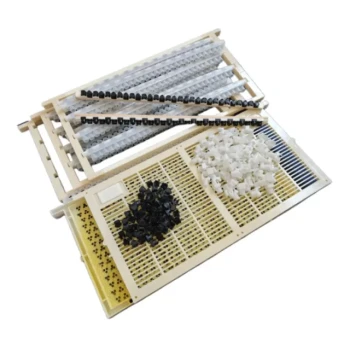
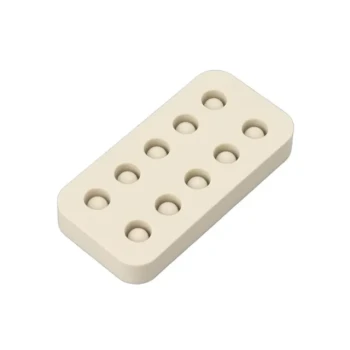
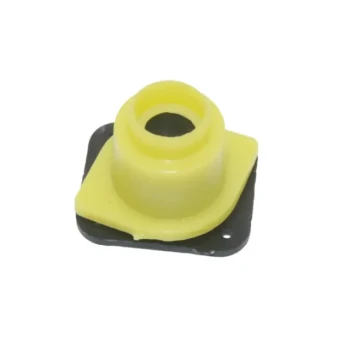
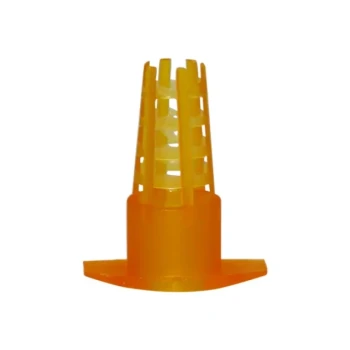
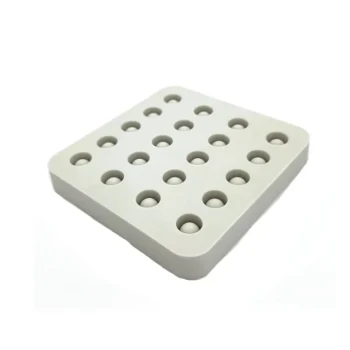
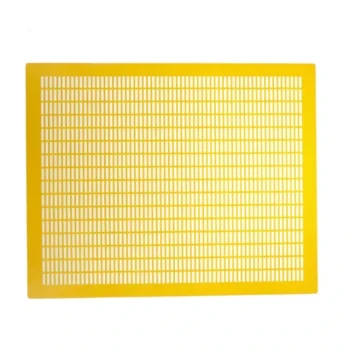
The operational mechanism of artificial queen cells relies on biological mimicry to standardize and scale royal jelly production. By physically simulating the natural environment required for queen rearing, these consumables trick the colony into activating a mass feeding response, allowing for the systematic collection of royal jelly rather than reliance on sporadic natural occurrences.
The Core Insight Artificial queen cells act as a bridge between biological instinct and industrial efficiency. They function by creating a "super-stimulus" environment that compels nurse bees to secrete royal jelly at volumes far exceeding the needs of a natural hive, transforming a reproductive behavior into a predictable production process.
The Biological Mechanism of Action
Simulating the Queen Rearing Environment
The primary function of an artificial queen cell is to replicate the physical geometry of a natural queen cup. This structural imitation provides the necessary "hardware" foundation that signals to the colony that a new queen can be reared.
Inducing the Hyper-Feeding Instinct
The mechanism is activated by grafting, the process of transferring a larva of a specific age (typically 1-2 days old) into the artificial cup. This visual and chemical cue triggers the nurse bees' biological imperative to feed the potential queen.
Accumulation and Secretion
Once triggered, nurse bees secrete large quantities of royal jelly to fill the cup. Because the artificial cell is designed as a focused repository, the jelly accumulates rapidly around the larva, creating a harvestable reservoir within a standardized container.
Enabling Industrial Scalability
High-Density Configuration
In a natural setting, queen cells are few and scattered. Artificial cells allow beekeepers to arrange cups at high density on a single hive frame. This concentration significantly increases the biological output per colony by maximizing the number of active production sites simultaneously.
Transitioning to Stable Output
The use of standardized consumables moves production from a variable biological event to a controlled industrial process. This allows for precise control over total yield and enables a consistent, repetitive workflow that is impossible with natural comb structures.
Operational Considerations and Trade-offs
Material Acceptance is Critical
The efficiency of the mechanism depends entirely on the bees accepting the artificial cup. To prevent rejection, these consumables are often manufactured from beeswax or feature a beeswax coating. Without this organic interface, the colony may clean out or ignore the grafted larvae.
Strict Timing Dependencies
The operational success of these cells is bound by time. Beekeepers must harvest systematically (often every 48 to 72 hours) to capture the jelly at peak volume. Delaying collection allows the larva to consume the product or the jelly to degrade, rendering the artificial cell ineffective.
Optimizing Production Efficiency
To leverage artificial queen cells effectively, align your operational protocols with the colony's biological limits:
- If your primary focus is maximizing volume: Arrange artificial cups at the highest density the colony population can support to fully utilize the available workforce of nurse bees.
- If your primary focus is process reliability: Ensure all artificial cups are coated with high-quality beeswax to maximize the acceptance rate of grafted larvae and prevent wasted slots on the frame.
The efficacy of artificial queen cells lies in their ability to turn the hive's natural reproductive drive into a manageable, scalable resource.
Summary Table:
| Feature | Mechanism of Action | Industrial Benefit |
|---|---|---|
| Structural Mimicry | Replicates natural queen cup geometry | Induces nurse bees' hyper-feeding response |
| High-Density Array | Clusters multiple cells on a single frame | Maximizes biological output per hive |
| Standardized Grafting | Uses 1-2 day old larvae as chemical cues | Creates a predictable, repeatable harvest cycle |
| Material Interface | Beeswax coating/composition | Ensures colony acceptance and minimizes rejection |
Scale Your Royal Jelly Production with HONESTBEE
At HONESTBEE, we specialize in empowering commercial apiaries and global distributors with the high-performance tools needed for industrial success. From high-density artificial queen cells to advanced hive-making and honey-filling machinery, our comprehensive wholesale portfolio is designed to optimize every stage of your operation.
Whether you are looking for premium beekeeping consumables or specialized hardware, we provide the expertise and equipment to turn biological potential into profitable efficiency. Ready to upgrade your apiary’s output?
Contact HONESTBEE Today to explore our full spectrum of professional beekeeping solutions.
References
- Dimitrios Kanelis, Andreas Thrasyvoulou. A suggestion for royal jelly specifications / Prijedlog globalnih standarda za matičnu mliječ. DOI: 10.1515/aiht-2015-66-2651
This article is also based on technical information from HonestBee Knowledge Base .
Related Products
- Plastic Chinese Queen Grafting Tool for Bee Queen Rearing
- No Grafting Queen Rearing Kit: System for Royal Jelly Production and Queen Rearing
- Brown Nicot Queen Cell Cups for Breeding Queen Bees Beekeeping
- Clear Black Plain Polystyrene Queen Bee Grafting Cell Cups No Lug for Bee Queen Cup
- 10-Cell Silicone Beeswax Bee Queen Cups Forming Mold
People Also Ask
- Why is it necessary for migratory beekeeping enterprises to utilize professional queen bee rearing tools? Boost Resilience
- What specialized tools and frame configurations are needed for larval grafting during queen rearing, and how are queen cells properly spaced? Master the essentials for efficient queen production
- What are the benefits of using a queen grafting tool for queen rearing? Master Precision for Superior Bee Genetics
- What is grafting in queen rearing? Take Control of Your Apiary's Genetics
- What are the steps involved in using a queen grafting tool? A Guide to Successful Queen Rearing