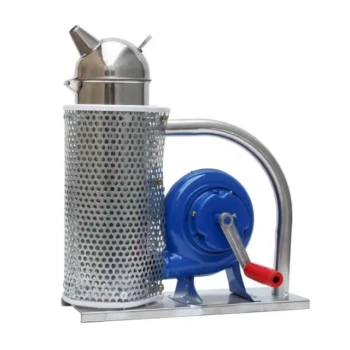
Beekeeping smokers operate by fundamentally altering the sensory environment of the hive to suppress defensive aggression. By emitting cool smoke, the device interrupts the transmission of alarm pheromones and simultaneously triggers an engorgement instinct, rendering the colony docile for safe handling.
The smoker functions as a biological "communication jammer." It prevents the colony from coordinating a defensive response while diverting their attention toward resource preservation, creating a safe window for operational maintenance.
The Biological Mechanisms of Action
To understand the smoker's utility, one must look beyond the tool itself and examine the physiological responses it triggers within the bee.
Interruption of Chemical Signaling
Honeybees rely heavily on olfactory signals to communicate threats. When a guard bee senses danger, it releases alarm pheromones to recruit others for defense.
The smoke effectively masks these pheromones. By disrupting this chemical transmission, the smoker isolates the alarm signal, preventing the colony from organizing a unified attack.
Triggering the Engorgement Instinct
The presence of smoke simulates the conditions of a forest fire, a primal threat to the colony's survival. This triggers an immediate evolutionary response: the bees attempt to save their resources.
Bees retreat into the hive to gorge on honey. This physiological distraction not only shifts their focus away from the beekeeper but also physically makes them lethargic and less capable of stinging due to distended abdomens.
Secondary Operational Benefits
While the primary use of the smoker is behavior management, the composition of the smoke offers additional advantages for colony hygiene.
Parasite and Disease Control
The utility of the smoker extends to pest management. Specific substances within the smoke, combined with the heat generated during combustion, can act as a control agent against parasitic mites.
This makes the smoker a dual-purpose tool. It facilitates immediate safe handling while contributing to the long-term reduction of disease rates and mite populations within the hive.
Operational Trade-offs and Limitations
While the smoker is indispensable, improper application can be detrimental. You must distinguish between effective suppression and harmful agitation.
The Necessity of Cool Smoke
The primary reference emphasizes the emission of cool smoke. While heat is a component of the chemical reaction, the smoke reaching the bees must be cool to avoid physical injury.
Hot smoke can singe wings, melt wax, and incite panic rather than calm. The objective is to trigger a specific instinct, not to inflict thermal damage on the workforce.
Volume vs. Control
More smoke is not always better. Supplementary data suggests that successful operation relies on emitting a controlled amount of smoke.
Excessive smoking can over-stress the colony or disrupt the hive environment too drastically. The operator must balance sufficient pheromone masking with minimum disruption to the hive's internal atmosphere.
Optimizing Smoker Usage for Hive Management
The smoker is a precision instrument, not a blunt object. Your approach should vary based on your immediate objective.
- If your primary focus is Colony Inspection: Prioritize the use of cool, white smoke to gently mask pheromones and trigger the feeding response without overheating the bees.
- If your primary focus is Health Maintenance: Select fuel sources that generate smoke with known miticidal properties to assist in reducing parasitic loads while working.
Mastering the smoker requires balancing sufficient suppression of defense mechanisms with the preservation of the colony's physical health.
Summary Table:
| Mechanism | Physiological Effect | Primary Benefit |
|---|---|---|
| Pheromone Masking | Disrupts olfactory alarm signals | Prevents coordinated defensive attacks |
| Engorgement Instinct | Bees gorge on honey for survival | Induces lethargy and reduces stinging ability |
| Thermal Regulation | Emission of cool smoke | Prevents physical injury to wings and wax |
| Chemical Action | Use of specific fuel additives | Aids in parasite (mite) and disease control |
Elevate Your Commercial Beekeeping with HONESTBEE
For commercial apiaries and professional distributors, the right equipment is the difference between efficiency and loss. At HONESTBEE, we specialize in providing high-performance beekeeping machinery and tools designed to streamline your operations. From precision-engineered smokers to industrial honey-filling machines and specialized hive-making hardware, our comprehensive wholesale portfolio is built to support large-scale success.
Why partner with HONESTBEE?
- Full Spectrum Supply: Access everything from essential consumables to heavy-duty machinery.
- Industry Expertise: We cater specifically to the needs of professional distributors and large-scale apiaries.
- Global Reliability: Durable tools that meet the rigorous demands of modern beekeeping.
Ready to scale your operation with premium beekeeping solutions? Contact HONESTBEE Today to discuss our wholesale offerings and how we can add value to your business.
References
- J. Christopher Brown. Responding to Deforestation: Productive Conservation, the World Bank, and Beekeeping in Rondonia, Brazil. DOI: 10.1111/0033-0124.00273
This article is also based on technical information from HonestBee Knowledge Base .
Related Products
- Stainless Steel Honey Bee Smoker Hive and Honeycomb Smoker for Beekeeping
- Miniature Stainless Steel Bee Smoker for Beekeeping
- Professional Bee Smoker with Elongated Spout and Durable Bellows for Beekeeping
- Electric Bee Smoker European Style Bee Hive Smoker for Beekeeping
- Galvanized Beekeeping Smoker for Honey Bee and Apiculture
People Also Ask
- What are bee smokers made out of? Choose the Right Material for Your Apiary
- Why is a stainless steel bee smoker considered indispensable? Master Hive Management with Cool Smoke Technology
- What type of bee smoker is recommended for a beginner? Top Picks for Easy Hive Management
- Why is a specialized bee smoker considered a critical tool for apiary safety? Master Hive Control & Productivity
- How should a beekeeper use a smoker when approaching a hive? A Guide to Calm, Safe Inspections