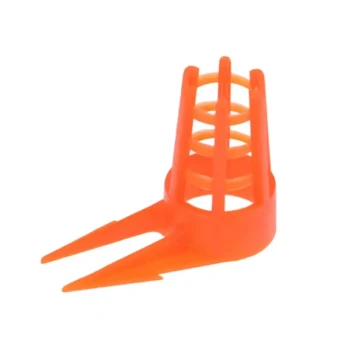
Water-pit blockers operate as a physical containment strategy. They function by creating a liquid barrier around the base of beehive stands, effectively isolating the hive from the ground. This mechanism physically prevents access for ground-crawling insects, specifically ants, which lack the biological ability to traverse water.
By establishing a "moat" around the hive, water-pit blockers serve a dual purpose: they provide a non-chemical secondary defense zone against predators and passively regulate the microclimate to support larval health.
The Defensive Mechanism
Exploiting Biological Limitations
The primary operational principle is the exploitation of a fundamental biological constraint.
Ants and similar ground-crawling pests are generally unable to cross liquid surfaces. By placing the hive stand legs into water-filled pits or barriers, you create an impassable gap that these insects cannot bridge.
Establishing a Secondary Defense Zone
This liquid barrier forms a secondary defense zone around the apiary.
While the bees defend the hive entrance, the water-pit blocker protects the structural access points. This effectively blocks the entry path for invaders before they can reach the colony.
Environmental Regulation Benefits
Modulating Local Humidity
Beyond defense, these blockers play a crucial role in environmental regulation.
The standing water in the pits evaporates over time, increasing the local humidity in the immediate vicinity of the hive. This is particularly valuable during dry seasons when ambient humidity drops.
Supporting Larval Development
This passive increase in moisture has a direct biological impact on the colony.
Adequate humidity is essential for honey bee larval development. The water-pit blockers help maintain the necessary moisture levels to ensure the brood develops closely to optimal standards.
Understanding the Trade-offs
Dependence on Liquid Presence
The system is entirely reliant on the presence of liquid.
If the water evaporates completely during an intense dry season without replenishment, the barrier instantly fails. This necessitates regular monitoring to ensure the "moat" remains functional.
Proximity Limitations
The humidity benefit is localized.
The regulation of humidity is restricted to the immediate area surrounding the hive stand. It is a micro-climate adjustment rather than a solution for the entire apiary environment.
Making the Right Choice for Your Goal
To effectively utilize water-pit blockers, align their use with your specific apiary challenges:
- If your primary focus is pest exclusion: Ensure the water level is constantly maintained to prevent ants from finding a dry bridge to the hive stand.
- If your primary focus is brood health: Utilize these blockers specifically during dry seasons to artificially boost humidity and support larval growth.
This simple, low-tech solution provides a critical intersection of physical security and environmental support for your colonies.
Summary Table:
| Feature | Operational Mechanism | Key Benefit |
|---|---|---|
| Pest Exclusion | Liquid moat exploits biological limitations of crawling insects | Stops ants and ground predators from reaching the hive |
| Climate Support | Passive evaporation of standing water | Increases micro-local humidity for optimal larval growth |
| Defense Strategy | Secondary physical containment zone | Provides non-chemical protection at structural access points |
| Maintenance | Regular liquid replenishment | Ensures continuous functionality during intense dry seasons |
Secure Your Apiary Productivity with HONESTBEE
Are you looking to enhance your apiary's defenses while optimizing brood health? HONESTBEE is your premier partner in professional beekeeping. We specialize in catering to commercial apiaries and distributors, providing a comprehensive wholesale inventory that ranges from high-quality hive stands and protective tools to advanced hive-making and honey-filling machinery.
Whether you need essential industry consumables or specialized hardware, our expert team is ready to supply the equipment your business needs to thrive. Contact HONESTBEE today to discuss our wholesale offerings and discover how our end-to-end beekeeping solutions can maximize your operations.
References
- Enrique Rodríguez Balam, Miguel Pinkus Rendón. Apicultura, entorno y modernidad en localidades de Yucatán, México. DOI: 10.5007/2175-7925.2015v28n3p143
This article is also based on technical information from HonestBee Knowledge Base .
Related Products
- 5 Gallon Pail Opener Bucket Opener Tool for Honey Bucket
- Heavy-Duty Ergonomic Grip Galvanized Pollen Shovel
- Professional Dual Action Queen Excluder Scraper for Beekeeping
- Yellow Plastic Bucket Pail Perch for Beekeeping
- Solar Beeswax Melter Easy Solar Wax Melter for Beeswax
People Also Ask
- What is a bucket opener? The Essential Tool for Safe and Efficient Lid Removal
- Is it advisable to use a screwdriver instead of a bucket opener? Avoid Injury and Container Damage
- What are the benefits of using a bucket opener? Boost Safety & Efficiency in Your Operations
- What are the main benefits of using a bucket opener? Enhancing Safety and Preservation
- How does a bucket opener contribute to food safety and product quality? Ensure a Clean, Contaminant-Free Seal Break