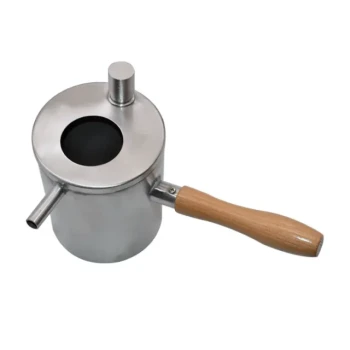
Industrial-grade bee smokers operate by generating a controlled stream of "cold smoke" to simulate a natural fire signal within the hive. This triggers a deep-seated biological instinct in honeybees to consume honey, inducing a lethargic state that significantly reduces their defensive aggression. By mitigating the colony's natural response to intrusion, these tools allow harvesting to proceed safely and efficiently without harming the bee population.
The bee smoker functions as a critical bio-control device, utilizing cool smoke to mask alarm pheromones and trigger a feeding response. This dual action protects the operator from injury while ensuring colony survival and preserving the commercial purity of the harvested honey.
The Biological Operational Principle
Triggering the Survival Instinct
The primary operational principle is the simulation of a forest fire signal. When the bees detect the smoke, their biological instinct drives them to gorge on honey reserves in preparation for potential hive abandonment. This consumption of honey makes the bees physically sluggish and docile, drastically lowering their ability and willingness to attack.
Intercepting Chemical Communication
Beyond the feeding instinct, the smoke acts as an olfactory jamming signal. It temporarily numbs the bees' olfactory senses and masks the alarm pheromones typically released by guard bees. By blocking these chemical signals, the smoker prevents the rapid spread of aggressive behavior throughout the rest of the colony.
Synergistic Control Methods
In advanced industrial settings, smokers are sometimes used in conjunction with specific light sources. While the smoke manages olfactory triggers, low-attraction red or green lights reduce visual stimulation. This multi-sensory approach further suppresses defensive behaviors during complex harvesting operations.
Critical Functions in Industrial Harvesting
Ensuring Operator and Environmental Safety
The function of the smoker extends beyond simple pacification; it creates a secure working environment. By suppressing aggression, it protects operators from stings and reduces the need for physically intrusive measures. Furthermore, replacing traditional open flames with contained smokers eliminates the risk of accidental forest fires, protecting the natural nectar sources required for future production.
Preservation of Colony Continuity
A key function of the industrial smoker is ensuring the stability of the apiary. Unlike aggressive methods that can cause colony collapse, controlled smoking ensures that approximately 96.9% of the colony remains in the hive. This high retention rate prevents the colony from abandoning the hive after harvesting, ensuring the continuity of production cycles.
Protecting Product Purity
Industrial-grade smokers are designed to burn specific fuels—such as charcoal, dried manure, or plant resins like galbanum—to produce clean, dense smoke. Unlike open fires which produce ash and uncontrolled odors, these devices prevent contaminants from falling into the honey. This maintains the commercial purity and market value of the raw material by avoiding soot and off-flavors.
Understanding the Trade-offs: Cold Smoke vs. Open Flame
The Criticality of Temperature Control
It is vital to distinguish between "smoke" and "heat." Industrial smokers are engineered to produce cold or cool smoke. High-temperature smoke or open flames can physically burn individual bees and damage sensitive larvae or the queen, threatening the hive's reproductive future.
Preventing Resource Depletion
While traditional open-flame methods may seem simpler, they pose a severe risk of damaging the bee population and the surrounding ecosystem. The trade-off for using professional equipment is the requirement for specific fuels and maintenance, but the return is a sustainable operation that does not destroy its own biological assets.
Making the Right Choice for Your Goal
When integrating smoking tools into your harvesting workflow, consider your primary operational objectives:
- If your primary focus is Colony Sustainability: Utilize cold smoke to prevent thermal damage to larvae and the queen, ensuring the colony remains intact (high retention rates) for the next season.
- If your primary focus is Product Quality: Ensure your smoker uses clean-burning fuels (like ceramic smokers with plant resins) to prevent ash and foreign odors from contaminating the honey.
- If your primary focus is Operator Safety: Combine the use of a bee smoker with industrial-grade protective gear to manage both the olfactory and physical risks of the harvesting environment.
By controlling the hive's biological response rather than fighting it, you transform a hazardous extraction process into a sustainable management routine.
Summary Table:
| Feature | Industrial Bee Smoker Function | Biological Impact on Bees |
|---|---|---|
| Pheromone Control | Masks alarm pheromones (isopentyl acetate) | Prevents the spread of defensive signals |
| Feeding Trigger | Simulates a forest fire signal | Induces honey consumption and lethargy |
| Temperature | Produces controlled "cool smoke" | Prevents thermal damage to larvae and queen |
| Product Purity | Clean-burning fuel (resins/charcoal) | Prevents honey contamination from ash/soot |
| Colony Stability | High retention rate (~96.9%) | Prevents hive abandonment post-harvest |
Elevate Your Apiary's Efficiency with HONESTBEE
Are you looking to scale your commercial honey production or expand your distribution network? HONESTBEE is your strategic partner for professional-grade beekeeping solutions. We provide commercial apiaries and distributors with a comprehensive wholesale catalog, including:
- High-Performance Machinery: Advanced hive-making and honey-filling machines.
- Professional Tools: Industrial-grade smokers and protective gear designed for safety and durability.
- Premium Consumables: Specialized fuels and essential industry supplies.
- Cultural Merchandise: Unique honey-themed retail products to diversify your brand.
Don't compromise on colony health or product purity. Let our experts help you optimize your harvesting workflow with the industry's most reliable equipment.
Contact HONESTBEE Today to Discuss Your Wholesale Needs
References
- Hadaro Hando Filmon. Market value chain of honey production in Northern Ethiopia. DOI: 10.5897/ajar2023.16485
This article is also based on technical information from HonestBee Knowledge Base .
Related Products
- Professional Bee Smoker with Elongated Spout and Durable Bellows for Beekeeping
- Heavy-Duty Bee Smoker with Durable Plastic Bellows for Beekeeping
- Heavy Duty Manual Bee Smoker Blower for Beekeeping
- Premium Traditional Copper Bee Smoker with Bellows
- Stainless Steel Honey Bee Smoker Hive and Honeycomb Smoker for Beekeeping
People Also Ask
- What roles do bee smokers and precision tools play in honey harvesting? Master Safety and Quality Control
- Why is a professional bee smoker considered an essential tool for hive management and safety? Master Colony Control.
- Why is the use of professional bee smokers and specialized fuel essential? Protect Honey Purity & Colony Safety
- Why is a professional Smoker essential during routine apiary inspections? Enhance Safety and Operational Efficiency
- What is the mechanism by which a professional bee smoker assists in colony management? Boost Hive Safety and Efficiency