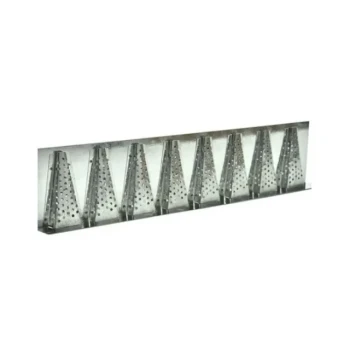
The practical significance of adjusting the entrance hole size in a rational hive lies in its ability to artificially bolster the defensive capacity of a stingless bee colony. By narrowing the entrance, you create a physical bottleneck that allows a small number of guard bees to effectively repel a much larger force of predators and parasites.
This simple adjustment acts as a force multiplier for colony security, ensuring that vulnerable or newly established hives can survive predator pressure and environmental stress before their internal population develops a full natural defense system.
Bolstering Colony Defense
The primary function of manipulating the entrance size is to compensate for a colony's temporary vulnerability.
The Bottleneck Principle
Narrowing the entrance reduces the surface area that guard bees must defend. This physical restriction forces intruders to enter single-file or in limited numbers, negating any numerical advantage a predator might have.
Protection During Critical Transitions
Colonies are most susceptible immediately following a transfer to a new box or after a swarming event. During these sensitive periods, a smaller entrance is crucial for preventing the infiltration of phorid flies and other parasites that target weakened hives.
Deterring Large Predators
Beyond small parasites, a restricted entrance blocks larger threats such as wasps. By physically sizing the aperture to barely accommodate the resident bees, you create a hard barrier that larger pests simply cannot bypass.
Environmental and Structural Regulation
Adjusting the entrance affects the internal microclimate and biological integrity of the hive.
Thermal Efficiency in Winter
During overwintering phases, narrowing the flight hole acts as a crucial insulation technique. This prevents cold winds from penetrating the hive, allowing the bee cluster to maintain a constant, viable temperature with less energy expenditure.
Propolis Reinforcement
Stingless bees naturally use propolis (plant resins) to shape their entrances for protection and antimicrobial benefits. A properly sized artificial entrance supports this behavior, allowing bees to rapidly seal gaps and create specialized funnel structures that further limit intruder access.
Understanding the Trade-offs
While narrowing the entrance is vital for protection, it is important to recognize the potential downsides of permanent restriction.
Ventilation vs. Insulation
A hole that is too narrow for too long in hot climates may restrict airflow. This can lead to overheating or excessive moisture buildup inside the rational hive, which creates a breeding ground for fungi.
Traffic Congestion
If a colony grows strong and the entrance remains restricted, it can create a bottleneck for foragers. This reduces the efficiency of pollen and nectar collection, potentially stalling colony growth during peak resource seasons.
Making the Right Choice for Your Goal
The size of the entrance should not be static; it must evolve with the needs of the colony.
- If your primary focus is colony establishment (post-transfer): Narrow the entrance significantly to prioritize defense against phorid flies until the colony demonstrates strong activity.
- If your primary focus is overwintering survival: Reduce the aperture to the minimum size necessary for ventilation to prevent heat loss and block cold drafts.
- If your primary focus is maximizing foraging efficiency: Gradually widen the entrance as the colony population stabilizes, allowing for high-volume traffic without compromising security.
Success in stingless beekeeping requires viewing the entrance not just as a door, but as a dynamic valve that balances security, climate control, and resource intake.
Summary Table:
| Factor | Small Entrance (Defensive) | Large Entrance (Productive) |
|---|---|---|
| Primary Goal | Protection & Insulation | Foraging Efficiency & Cooling |
| Predator Risk | Low (Limits access for flies/wasps) | High (Easier for intruders to enter) |
| Climate Control | Retains heat; blocks drafts | High ventilation; prevents moisture |
| Traffic Flow | Restricted (Slow entry/exit) | Optimized (High volume foraging) |
| Best Used During | New splits, winter, or pest attacks | Peak honey flow & hot summer days |
Secure Your Apiary’s Success with HONESTBEE
Protecting your stingless bee colonies starts with the right equipment and expert knowledge. At HONESTBEE, we specialize in supporting commercial apiaries and distributors with a comprehensive range of high-quality beekeeping solutions.
Whether you need specialized hive-making machinery, precision honey-filling equipment, or a steady supply of essential industry consumables, we provide the tools you need to maximize your yield and protect your colonies. From hardware to honey-themed cultural merchandise, our wholesale portfolio is designed to help your business thrive.
Ready to scale your beekeeping operations? Contact us today to discover how HONESTBEE can deliver value to your business with our premium wholesale offerings.
References
- Anderson José Antonietti, Mário César Sedrez. Mapeamento de abelhas-sem-ferrão em uma Área de Preservação Permanente do Sul do Brasil. DOI: 10.35700/ca8042-512929
This article is also based on technical information from HonestBee Knowledge Base .
Related Products
- Multi-Functional Rotary Hive Entrance Disc for Beekeeping
- Multi-Functional Sliding Hive Entrance for Beekeeping
- Professional Reversible Beehive Hive Entrance
- Steel Round Disc Entrance Reducer for Flexzion Bee Hive Nuc Box Gate
- Beehive Entrance Discs Plastic Bee Entrance Disc for Bee Hives
People Also Ask
- What are the main features of the steel top entrance disc for hives? Master Hive Access Control
- What is the purpose of the steel entrance disc? Master Hive Traffic Control & Security
- What role does the size of the entrance play in hive ventilation? Master Beehive Climate Control
- What roles does the hive entrance (piquera) play in beehive management and colony health? Essential Guide for Pro Apiaries
- Where is the hive entrance typically located? Optimize Your Hive's Health and Honey Production