Basic Fuchsine serves as a vital selective staining agent in the preparation of honey microscopic slides. Its primary application is to treat pollen grains and spores found in honey sediment, drastically improving visual contrast to allow for the precise identification, differentiation, and counting of these microscopic elements.
Effective honey analysis often hinges on the visibility of minute, semi-transparent structures. Basic Fuchsine acts as a critical tool for quality control, selectively highlighting pollen and spores to ensure laboratory personnel can accurately determine the honey's floral variety and overall quality.
Enhancing Visual Precision
The core challenge in honey microscopy is the natural translucency of pollen and spores. Without intervention, these elements can blend into the background, making analysis prone to error.
Increasing Contrast and Clarity
Basic Fuchsine addresses this by significantly enhancing the contrast and clarity of the sediment.
By staining the target elements, it creates a distinct visual separation between the biological markers (pollen and spores) and the surrounding medium.
Selective Targeting
The dye is defined as a selective staining agent.
This means it specifically targets pollen and spores rather than staining the entire slide uniformly. This selectivity is crucial for reducing visual noise and focusing the analyst's attention on relevant biological structures.
The Role in Classification and Counting
The application of this dye is not merely aesthetic; it is functional. It directly supports the quantitative and qualitative data required for honey certification.
Accurate Identification
With the clarity provided by the dye, laboratory personnel can identify and differentiate various types of pollen.
This differentiation is the basis for determining the botanical origin of the honey (e.g., confirming if it is truly Acacia or Manuka).
Precise Element Counting
The dye enables the accurate counting of pollen and honeydew elements.
These counts are the statistical foundation used to verify the honey's variety and ensure it meets specific quality standards.
Common Pitfalls in Analysis
While Basic Fuchsine is a powerful tool, understanding the risks of improper application or omission is essential for accurate results.
The Risk of Low Contrast
Attempting to analyze honey sediment without a staining agent often leads to under-counting or misidentification.
The reference highlights that the dye "significantly enhances" clarity, implying that unstained samples lack the definition necessary for reliable professional analysis.
Complexity of Differentiation
Without the selective staining provided by Basic Fuchsine, differentiating between similar structures becomes difficult.
Accurate counting relies on the ability to distinguish between different pollen types and honeydew elements, a process that is prone to error if visual definition is compromised.
Making the Right Choice for Your Goal
The use of Basic Fuchsine is a standard for laboratories aiming for high-precision results in honey analysis.
- If your primary focus is Botanical Verification: Use Basic Fuchsine to clearly differentiate pollen types and confirm the specific floral source of the honey.
- If your primary focus is Quality Control: Rely on the dye's contrast enhancement to generate accurate counts of honeydew elements and spores for regulatory compliance.
By integrating this selective staining agent, you transform a general microscopic observation into a rigorous analytical process.
Summary Table:
| Feature | Role of Basic Fuchsine in Honey Analysis |
|---|---|
| Primary Function | Selective staining agent for pollen grains and spores |
| Key Benefit | Significantly increases visual contrast and clarity |
| Target Elements | Biological markers (pollen, spores, honeydew elements) |
| Analytical Goal | Precise identification, differentiation, and quantitative counting |
| Quality Impact | Enables accurate botanical origin verification (e.g., Manuka, Acacia) |
Elevate Your Honey Quality Standards with HONESTBEE
Precise analysis is the cornerstone of premium honey production. At HONESTBEE, we understand the technical demands of commercial apiaries and distributors. We provide a comprehensive suite of professional beekeeping tools, specialized honey-filling machinery, and essential consumables designed to optimize your workflow. Whether you are looking to verify botanical origins or scale your distribution with high-efficiency equipment, our team is here to support your growth.
Ready to enhance your apiary's efficiency and product value?
Contact HONESTBEE Today to explore our wholesale solutions and industry-leading equipment.
References
- Aslı Özkök, Kadriye Sorkun. CHEMOMETRIC EVALUATION OF THE GEOGRAPHICAL ORIGIN OF TURKISH PINE HONEY. DOI: 10.3153/fh18027
This article is also based on technical information from HonestBee Knowledge Base .
Related Products
- Solar Beeswax Melter Easy Solar Wax Melter for Beeswax
- Heavy-Duty Ergonomic Grip Galvanized Pollen Shovel
- HONESTBEE AC Powered Wire Embedder with Alligator Clips
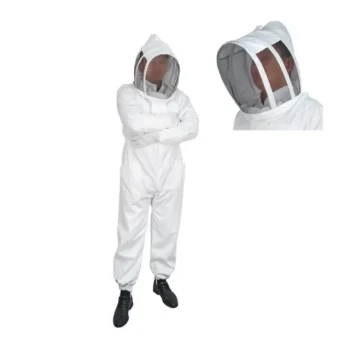
- Professional Beekeeper Suit with Square Folding Cotton Veil
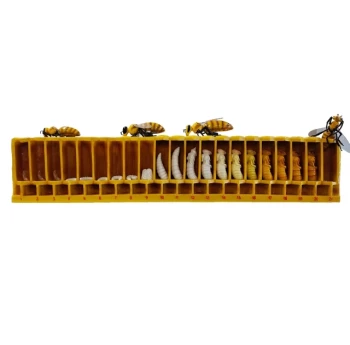
- Honey Bee Lifecycle Model: A Detailed Honeycomb Display of Bee Development
People Also Ask
- How does a solar melter work to process beeswax? The Eco-Friendly Way to Pure Wax
- What is a solar wax melter and how does it work? Harness the Sun for Pure Beeswax
- What are the benefits of using a solar wax melter? Harness the Sun for Pure, Cost-Effective Beeswax
- What is the purpose of a solar wax melter in beekeeping? Sustainable Wax Processing for Modern Apiaries
- How does a solar-powered frame wax melter work? Harness the Sun for Sustainable Beekeeping