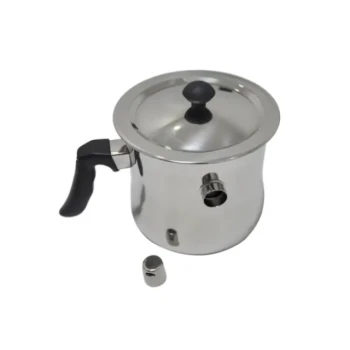
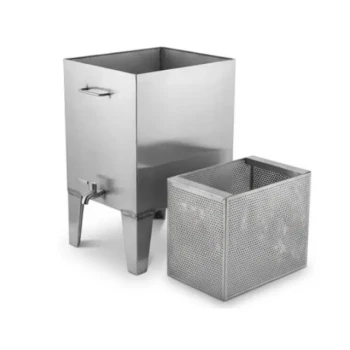
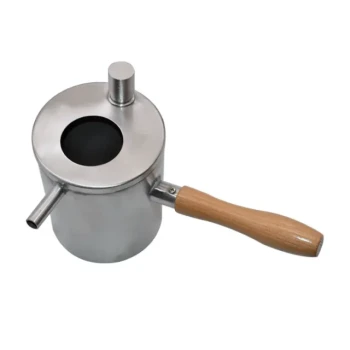
A solar melter functions as a passive, gravity-fed filtration system. It operates by placing raw beeswax on a perforated upper tray inside an insulated box, which is sealed with a glass lid. The sun's energy heats the interior, melting the wax so it drips through the perforations into a lower water-filled container, leaving solid debris behind.
Core Takeaway By leveraging the greenhouse effect, a solar melter raises internal temperatures to 80–90°C (approx. 175–195°F) to melt wax without the danger of overheating or burning it. This method uses gravity and water displacement to naturally separate pure beeswax from hive impurities, producing high-quality blocks with zero fuel cost.
The Principles of Operation
The Greenhouse Effect
The melter relies on a transparent cover, typically glass or heavy plastic, to trap solar radiation. Sunlight passes through the cover and is absorbed by the interior surfaces, converting light energy into heat. Because the box is insulated and sealed, this heat cannot escape, creating an internal environment significantly hotter than the outside air.
Gentle Thermal Processing
Unlike boiling or direct heat, solar melters warm the wax gradually. This slow heating process is critical for quality. It preserves the natural color and aromatic properties of the beeswax, preventing the darkening that often occurs with high-heat rendering methods.
The Filtration Process
Gravity-Fed Separation
Inside the melter, the raw material (cappings or comb) is placed on an upper tray or basket. This tray is perforated or fitted with a filter. As the wax liquefies, gravity pulls it down through the mesh. Large impurities, such as cocoon skins, dead bees, and propolis, are too solid to pass through and remain trapped on the upper tray.
The Water Bath Purification
The melted wax drips into a catch pan located at the bottom of the unit. According to the primary reference, this lower container is partially filled with water. This step is vital for secondary filtration:
- Debris Settlement: Fine dirt and water-soluble residues sink into the water.
- Wax Isolation: Since beeswax is less dense than water, it floats on the surface.
Solidification
As the sun sets and the air cools in the evening, the temperature inside the melter drops. The floating layer of liquid wax slowly solidifies into a clean cake. The dirty water underneath can simply be poured off, leaving a block of purified wax.
Understanding the Trade-offs
While effective, solar melters are not the universal solution for every situation. You must consider these limitations:
Weather Dependency
The system is entirely reliant on direct sunlight. On cloudy days or during cooler seasons, the internal temperature may not reach the melting point of beeswax (approx. 62°C/144°F), stalling the process completely.
Efficiency with Old Comb
Solar melters are excellent for "cappings" (fresh wax) but less efficient for old, dark brood combs. The "slumgum" (old cocoons and debris) in brood comb acts like a sponge, absorbing and holding onto a significant amount of wax that a solar melter cannot extract without mechanical pressure.
Throughput Volume
This is a slow, batch-processing method. It is ideal for hobbyists or side-line operations but lacks the high-volume speed required for large-scale industrial rendering.
Making the Right Choice for Your Goal
To get the most out of a solar melter, align your usage with the device's strengths:
- If your primary focus is Wax Quality: Use the solar melter exclusively for wax cappings and light-colored comb to produce premium, light-colored wax suitable for cosmetics or candles.
- If your primary focus is Efficiency: Enhance the unit's thermal absorption by painting the interior black, adding insulation, and tilting the unit to face the sun directly.
- If your primary focus is Volume: Do not rely on a solar melter for old brood frames; use a steam melter or wax press for those to ensure maximum extraction.
A solar melter creates a synergy between simple thermodynamics and gravity, delivering the cleanest possible wax with the least amount of active labor.
Summary Table:
| Feature | Solar Wax Melter Mechanism |
|---|---|
| Energy Source | Natural solar radiation (Greenhouse effect) |
| Operating Temp | 80–90°C (175–195°F) |
| Filtration Method | Gravity-fed mesh tray & water bath settlement |
| Best Raw Material | Fresh wax cappings and light-colored comb |
| Key Benefit | Preserves natural color and aroma; zero fuel cost |
| Limitation | Weather dependent; lower efficiency for old brood comb |
Maximize Your Wax Harvest with HONESTBEE
At HONESTBEE, we specialize in empowering commercial apiaries and beekeeping distributors with high-efficiency solutions. Whether you are looking for specialized wax-processing machinery or looking to stock premium beekeeping tools, we provide the full spectrum of equipment to scale your operation.
Why partner with HONESTBEE?
- Comprehensive Wholesale Range: From hive-making machinery to honey-filling systems.
- Industrial Durability: Equipment designed to handle high-volume processing with ease.
- Marketing Support: Access a wide array of honey-themed cultural merchandise to enhance your retail brand.
Ready to upgrade your apiary’s productivity? Contact us today to explore our wholesale catalog!
Related Products
- Solar Beeswax Melter Easy Solar Wax Melter for Beeswax
- Beeswax Melter for Candle Making Honey Bee Wax Melter
- Steam Beeswax Melter Wax Warmer for Wax Processing
- Electric Commercial Beeswax Melter for Factory Use
- Professional Stainless Steel Wax Melter for Beekeeping and Crafts
People Also Ask
- What is a solar wax melter and how does it work? Harness the Sun for Pure Beeswax
- What are the benefits of using a solar wax melter? Harness the Sun for Pure, Cost-Effective Beeswax
- What is the purpose of a solar wax melter in beekeeping? Sustainable Wax Processing for Modern Apiaries
- How does a solar-powered frame wax melter work? Harness the Sun for Sustainable Beekeeping
- What are the main features of a solar wax melter? A Complete Guide to Sustainable Wax Rendering