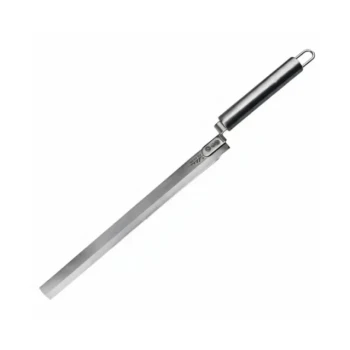
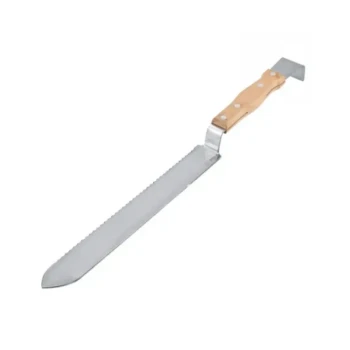
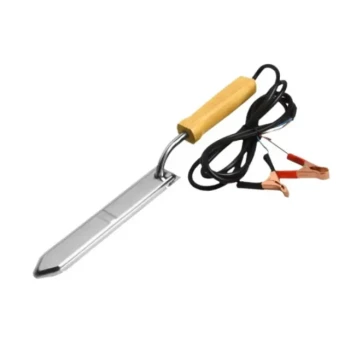
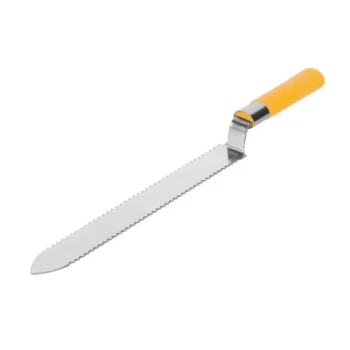
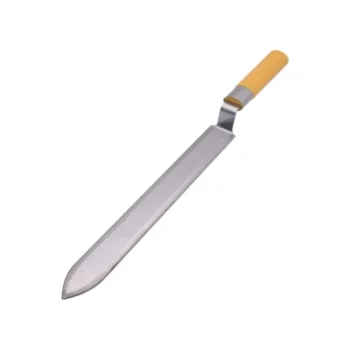
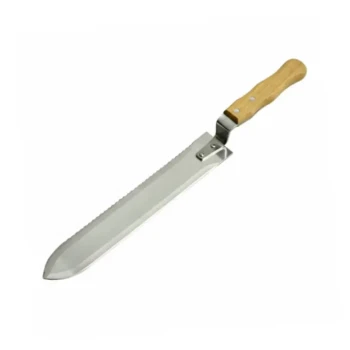
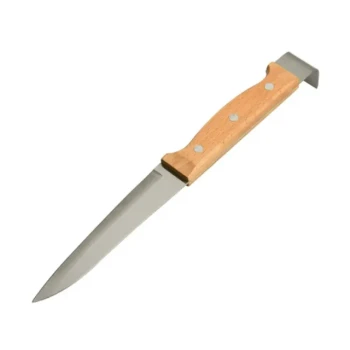
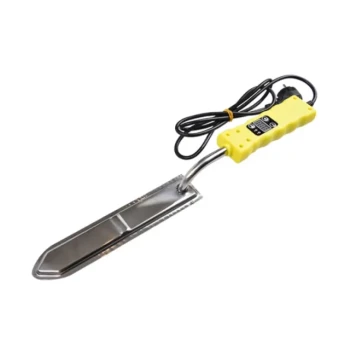
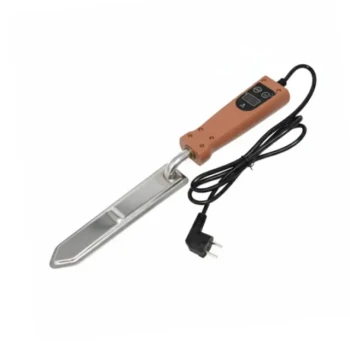
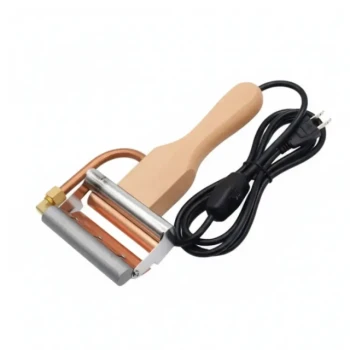
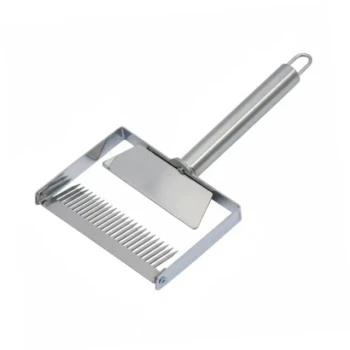
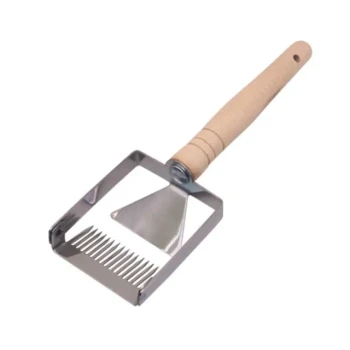
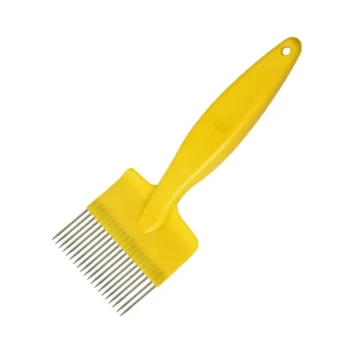
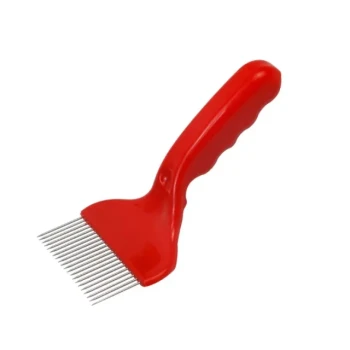
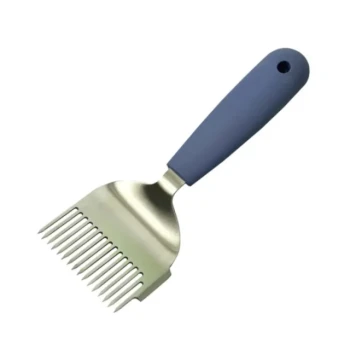
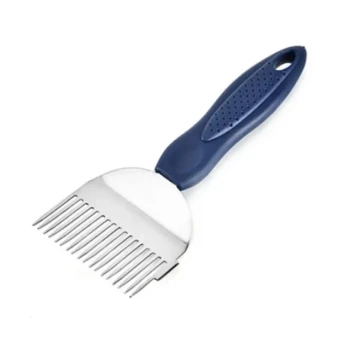
The primary difference between a cold and a heated uncapping knife is the method used to breach the wax surface. A cold uncapping knife relies entirely on mechanical force and blade sharpness to shear off wax cappings, requiring significant physical exertion. In contrast, a heated knife utilizes an integrated heating element to thermally melt the wax as it cuts, allowing the blade to glide through the comb with minimal resistance.
The heated uncapping knife transforms a physically demanding chore into a fluid process by using heat to reduce friction, making it the superior choice for efficiency, while the cold knife remains a viable, simple solution for low-volume harvesting.
The Mechanics of Uncapping
The Function of the Tool
Regardless of the type, the uncapping knife serves a critical function: removing the thin layer of wax seals that honeybees secrete over mature honey.
This removal is a physical prerequisite for extraction. It exposes the honey cells, allowing the honey to flow out during straining or to be spun out via centrifugal force in an extractor.
How a Cold Knife Operates
A cold knife is a manual tool. It functions much like a standard kitchen knife but is sized specifically for honey frames.
Because it lacks a heat source, the operator must use sawing motions and physical pressure to cut through the wax. This method preserves the honey's natural temperature but demands more time and effort per frame.
The Heated Advantage
A heated uncapping knife, often electric, introduces thermal energy to the cutting edge.
The heat softens and melts the wax cappings upon contact. This allows the blade to slice smoothly and quickly, significantly reducing the "drag" felt by the beekeeper.
Operational Efficiency and Workflow
Speed and Volume
The primary value proposition of the heated knife is speed. The references highlight that a heated tool saves significant time compared to manual cold tools.
For beekeepers processing multiple frames, the heated knife allows for a rapid workflow, preventing the bottleneck that often occurs at the uncapping station.
Preserving Comb Integrity
Using an uncapping knife properly helps preserve the structure of the honeycomb.
By slicing cleanly rather than tearing, the comb remains intact. This is essential so the frames can be reused by the bees or withstand the forces of a centrifugal extractor.
Understanding the Trade-offs
Simplicity vs. Complexity
The cold knife offers ultimate simplicity. It requires no power source, has no electronic components to fail, and can be used anywhere.
However, the trade-off is physical fatigue. Using a cold knife on a large number of frames can be exhausting and slow.
Precision and Control
While a heated knife moves faster, it requires careful handling. The heat allows it to cut deeply with little force, so the operator must be precise to avoid cutting too deep and damaging the cell walls.
Additionally, a heated knife relies on an external power source, limiting mobility compared to the completely autonomous cold knife.
Making the Right Choice for Your Harvest
Selecting the correct tool depends on your volume and your available resources.
- If your primary focus is low-volume or remote harvesting: A cold knife provides a reliable, portable solution that requires no electricity and costs less to maintain.
- If your primary focus is efficiency and minimizing fatigue: A heated knife is the necessary choice to process frames quickly and reduce the physical strain of the uncapping process.
The right tool is simply the one that balances your need for speed with your operational scale.
Summary Table:
| Feature | Cold Uncapping Knife | Heated Uncapping Knife |
|---|---|---|
| Mechanism | Manual force and sawing motion | Thermal melting and slicing |
| Physical Effort | High - requires manual exertion | Low - glides through wax |
| Processing Speed | Slow - ideal for small batches | Fast - optimizes high-volume workflow |
| Power Requirement | None - fully portable | Electricity / Power source required |
| Best Use Case | Low-volume or remote harvesting | Commercial apiaries and efficiency-focused setups |
Streamline Your Honey Production with HONESTBEE
At HONESTBEE, we understand that efficiency is the backbone of a successful commercial apiary. Whether you are looking for high-precision heated uncapping knives or advanced honey-filling machinery, our comprehensive wholesale portfolio is designed to meet the demands of large-scale distributors and professional beekeepers.
Why partner with HONESTBEE?
- Full Spectrum Supply: From essential beekeeping consumables to specialized hive-making hardware.
- Operational Excellence: Our tools are engineered to reduce labor fatigue and maximize your harvest yield.
- Global Distribution: We provide reliable, high-quality equipment to scale your business.
Ready to upgrade your harvesting equipment? Contact us today to discover how our professional beekeeping solutions can enhance your efficiency and growth.
Related Products
- Professional All-Stainless Steel Uncapping Knife for Beekeeping
- Professional Z-Shaped Multi-Function Uncapping Knife for Beekeeping
- Professional 12V DC Electric Uncapping Knife for Beekeeping
- Professional Serrated Double-Sided Uncapping Knife for Beekeeping
- Professional Stainless Steel Double-Sided Honey Uncapping Knife
People Also Ask
- What is the use of a bee knife? Essential for Efficient Honey Harvesting
- What is an uncapping knife and its function in honey harvesting? Essential Tips for Efficient Extractions
- What is the function of uncapping knives or uncapping forks? Expert Tools for Honey Harvesting Productivity
- How do sustainable harvesting consumables support hive conservation? Boost Colony Health & Commercial Yield
- What is the function of an uncapping knife in the honey extraction process? Unlock Efficiency and Preserve Comb Integrity