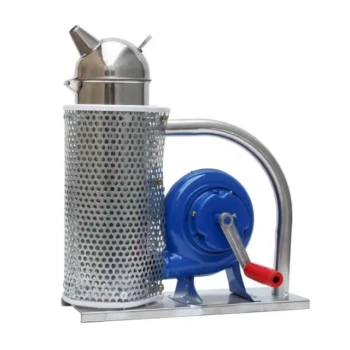
The primary function of a beekeeping smoker is to produce cool, white smoke that disrupts the colony's defensive communication and induces a calm, sedated state. By masking alarm pheromones and triggering an instinctual feeding response, the smoker creates a safe window for the beekeeper to perform inspections with minimal aggression from the hive.
Core Insight: The smoker acts as a biological "communication jammer." It prevents guard bees from coordinating a defensive response while simultaneously distracting the workforce with a survival instinct to consume honey.
The Biological Mechanisms of Smoke
To understand how a smoker protects you, you must understand how it alters the bees' sensory environment and behavior.
Jamming the Alarm Signal
Honeybees rely heavily on chemical signals, specifically alarm pheromones, to communicate danger. When a guard bee identifies a threat, it releases these pheromones to rally the colony for defense.
Smoke effectively masks these chemical scents. By filling the air with the smell of combustion, the smoker prevents the alarm signal from spreading, leaving the rest of the colony unaware of the intrusion and preventing a mass attack.
The Evolutionary Fire Response
Smoke triggers a deep-seated evolutionary instinct in bees: the fear of a forest fire. When bees detect smoke, they do not attack; they prepare to evacuate.
Their immediate reaction is to consume stored honey. They gorge themselves on resources in case they need to abandon the hive. This distraction shifts their focus from defending the hive to survival preparation.
Physical Sedation
The consumption of honey has a physical side effect that benefits the beekeeper. As the bees fill their abdomens with honey, they become physically heavier and slower.
Furthermore, a distended abdomen makes it mechanically difficult for a bee to curl its body to sting. This results in a colony that is not only distracted but also physically less capable of defensive action.
Operational Best Practices
The effectiveness of a smoker relies entirely on the quality of the smoke and the timing of the application.
Characteristics of Effective Smoke
Your goal is incomplete combustion. You want cool, thick, white smoke. This type of smoke is non-toxic and effectively masks pheromones without harming the insects.
If the smoke is blue, thin, or hot, the fuel is burning too cleanly or running low. This can singe the bees' wings and agitate them rather than calming them.
The "Wait" Technique
Smoke is not instantaneous. After applying a few gentle puffs to the main entrance and upper entrances, you must wait approximately one to two minutes.
This delay allows the smoke to circulate through the hive and gives the bees time to begin the honey-feeding process. Opening the hive immediately after smoking often negates the benefits.
Continuous Maintenance
A common error is letting the smoker go out during an inspection. You should gently puff the bellows every 5 to 10 minutes to keep the fire smoldering.
It is significantly easier to add fuel to a lit smoker than to relight one while covered in bees. Monitor your fuel levels closely; if smoke volume decreases, add kindling immediately.
Understanding the Trade-offs
While essential, the smoker is a stressor for the hive. Misuse can lead to negative outcomes.
The Risk of "Hot Smoke"
If your fuel runs low, the smoker may begin to emit dark, hot smoke or even sparks. This is dangerous.
Hot smoke burns the bees and melts their wings. Instead of calming the hive, pain will trigger an intense defensive reaction that pheromone masking cannot suppress.
Over-Smoking the Colony
More smoke is not always better. Excessive smoke can disorient the bees to the point of chaos or contaminate the honey with a smoky flavor.
Apply smoke sparingly. If the bees are already calm, you may not need to apply smoke at all. Use the minimum amount necessary to maintain control.
Making the Right Choice for Your Goal
How you utilize the smoker should change based on the specific condition of the hive and your inspection goals.
- If your primary focus is a Routine Check: Apply minimal smoke at the entrance and wait; if the bees remain calm on the frames, do not apply more.
- If your primary focus is a Full Inspection/Manipulation: Ensure the smoker is fully fueled for long duration and apply smoke periodically between frames to maintain the "masking" effect.
- If your primary focus is an Aggressive Colony: Apply smoke more liberally at all entrances and wait a full 2 minutes before opening to ensure maximum honey consumption and sedation.
Mastering the smoker is about balancing the disruption of alarm signals with the minimal amount of stress required to work safely.
Summary Table:
| Feature | Biological Effect | Practical Benefit |
|---|---|---|
| Pheromone Masking | Jams alarm chemical signals | Prevents coordinated colony attacks |
| Fire Instinct | Triggers honey consumption | Distracts bees with survival behavior |
| Physical Sedation | Distends abdomens with honey | Makes bees heavier and harder to sting |
| Cool White Smoke | Non-toxic sensory disruption | Calms bees without singeing or agitation |
Scale Your Apiary Operations with HONESTBEE
Maximize your beekeeping efficiency and safety with professional-grade tools from HONESTBEE. As a premier wholesale partner for commercial apiaries and distributors, we provide the full spectrum of equipment needed to manage large-scale operations successfully.
Our value to your business includes:
- Comprehensive Inventory: From high-capacity honey-filling machines and hive-making hardware to essential consumables.
- Wholesale Expertise: Tailored solutions for distributors seeking reliable, bulk supply chains.
- Industry Excellence: Specialized tools and honey-themed cultural merchandise to diversify your brand.
Contact HONESTBEE Today to discover how our equipment can streamline your hive management and boost your productivity.
References
- ERIKA MAYR. ESCUCHEMOS A LAS ABEJAS / LECCIONES DE LA COLMENA. DOI: 10.56255/ma.v1i21.515
This article is also based on technical information from HonestBee Knowledge Base .
Related Products
- Stainless Steel Honey Bee Smoker Hive and Honeycomb Smoker for Beekeeping
- Miniature Stainless Steel Bee Smoker for Beekeeping
- Professional Bee Smoker with Elongated Spout and Durable Bellows for Beekeeping
- Electric Bee Smoker European Style Bee Hive Smoker for Beekeeping
- Galvanized Beekeeping Smoker for Honey Bee and Apiculture
People Also Ask
- What are bee smokers made out of? Choose the Right Material for Your Apiary
- Why is a stainless steel bee smoker considered indispensable? Master Hive Management with Cool Smoke Technology
- What type of bee smoker is recommended for a beginner? Top Picks for Easy Hive Management
- When should you add more fuel to the bee smoker? Watch for This Critical Smoke Signal
- What is the best material for a bee smoker? Choose the Right Fuel for a Calm Hive