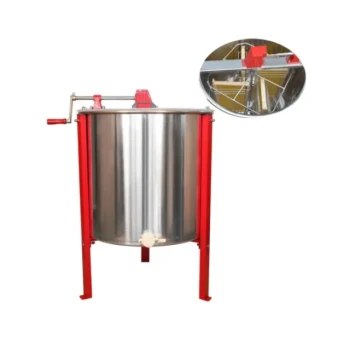
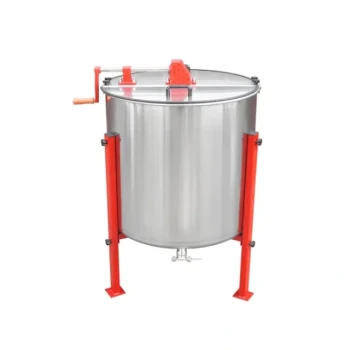
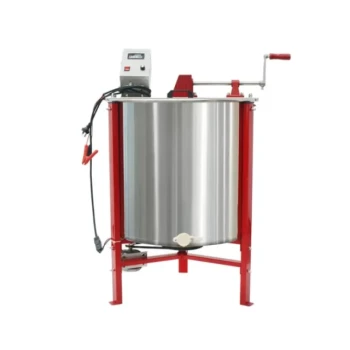
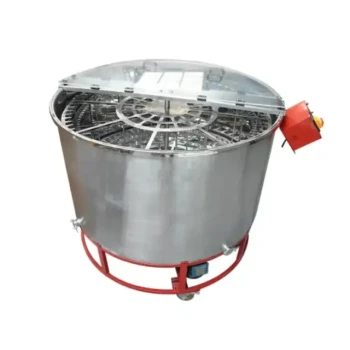
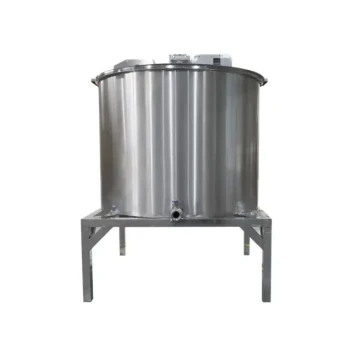
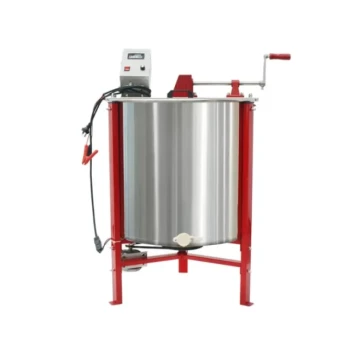
The primary function of a manual extractor is to separate honey from the honeycomb using physical centrifugal force generated by a hand-operated mechanism. By relying on manual power rather than motorized components, this equipment minimizes mechanical disturbance and prevents excessive aeration during the harvest. This specific method of extraction ensures the integrity of natural phytochemical components, such as polyphenols and alkaloids, is maintained for subsequent analysis or consumption.
Core Takeaway A manual extractor is not merely a harvesting tool; it is a preservation device. It utilizes controlled centrifugal force to extract fluid honey while protecting the microscopic chemical structure of the honey and the physical structure of the wax comb.
Preserving Chemical Integrity
The most critical technical advantage of a manual extractor is its impact on the honey's chemical composition.
Minimizing Mechanical Disturbance
Motorized extraction can introduce heat and excessive agitation. Manual extraction avoids this, preventing the "battering" of the honey fluid.
Preventing Aeration
By controlling the speed manually, you prevent excessive air from being whipped into the honey. This reduces oxidation, which can degrade sensitive compounds over time.
Protecting Phytochemicals
The gentle nature of this process preserves the natural phytochemical profile. Specifically, it maintains the integrity of polyphenols and alkaloids, which are essential for accurate laboratory analysis and nutritional value.
The Mechanics of Efficient Recovery
Beyond chemical preservation, the manual extractor serves a vital mechanical function in the apiary workflow.
Utilization of Centrifugal Force
The device spins the frames to create an outward force. This pulls the honey out of the cells without the need for destructive crushing or pressing.
Preservation of the Comb
Because the frames are spun rather than crushed, the wax honeycomb remains intact. This allows the frames to be returned to the hive, saving bees the significant energy cost of rebuilding the comb.
Controlled Extraction Speed
The hand crank allows the operator to feel the resistance of the frames. This tactile feedback allows for immediate speed adjustments to ensure the comb is not damaged by spinning too fast.
Understanding the Trade-offs
While manual extractors offer superior control and preservation, they come with inherent operational limitations.
Physical Exertion
The process requires significant physical effort from the operator. Spinning the crank for extended periods can be fatiguing, particularly with high-viscosity honey.
Scalability Limits
Manual extraction is time-consuming compared to motorized alternatives. It is generally not feasible for commercial operations managing a high volume of hives (typically over 10-20).
Variable Consistency
Because the speed relies on human input, the centrifugal force may vary slightly throughout the process. A motorized unit provides a constant, uniform RPM that manual operation cannot perfectly mimic.
Making the Right Choice for Your Goal
To determine if a manual extractor aligns with your specific needs, consider your end-goal for the honey.
- If your primary focus is Laboratory Analysis: You must use a manual extractor to ensure the polyphenols and alkaloids remain unaltered by heat or aeration.
- If your primary focus is Hobbyist Beekeeping: This tool provides a cost-effective, off-grid solution that preserves your wax combs for reuse.
- If your primary focus is Commercial Volume: A manual extractor will likely become a bottleneck; consider motorized options despite the higher cost.
Select the tool that balances your need for purity with your capacity for physical labor.
Summary Table:
| Feature | Manual Extractor Benefit | Impact on Honey/Comb |
|---|---|---|
| Mechanism | Hand-operated centrifugal force | Minimizes aeration and oxidation |
| Chemical Preservation | No heat or high-speed agitation | Maintains polyphenols and alkaloids |
| Comb Integrity | Non-destructive spinning | Frames are reusable, saving bee energy |
| Operational Control | Tactile feedback via hand crank | Prevents comb damage from over-spinning |
| Best Use Case | Laboratory analysis & hobbyists | Ensures maximum purity and cost-efficiency |
Scale Your Apiary with HONESTBEE Precision Equipment
At HONESTBEE, we understand that whether you are a research lab requiring chemical purity or a growing distributor, the quality of your tools defines the quality of your honey.
We provide a comprehensive wholesale range of beekeeping tools, machinery, and essential consumables—from manual and motorized extractors to advanced honey-filling and hive-making machines. Our mission is to support commercial apiaries and distributors with durable equipment that maximizes yield without compromising the natural profile of your harvest.
Ready to upgrade your production? Contact us today to explore our wholesale catalog and see how our expertise can drive your business forward.
References
- Farid Khallouki, Robert W. Owen. HPLC-ESI-MS and GC-EI-MS Identification and Quantitation of Polyphenolics and Alkaloids in Moroccan Jujube Honeys. DOI: 10.2478/jas-2020-0029
This article is also based on technical information from HonestBee Knowledge Base .
Related Products
- Stainless Steel 3 Frame Manual Honey Extractor Spinner for Bee Honey Extraction
- HONESTBEE 4 Frame Manual Self Reversing Honey Extractor for Beekeeping
- HONESTBEE 3-Frame Manual Acrylic Honey Extractor
- Stainless Steel Manual 8 Frame Radial Honey Extractor Machine for Beehives
- 6 Frame Manual Stainless Steel Honey Extractor Beekeeping Equipment
People Also Ask
- Which type of honey extractor is generally more durable? Focus on Material & Build Quality for Longevity
- What are the disadvantages of a manual honey extractor? Overcome Efficiency Bottlenecks in Your Apiary
- What is a manual honey extractor? The Essential Guide to Cost-Effective Beekeeping for Beginners
- Why are manual extractors popular among beginner beekeepers? A Guide to Starting Simple & Saving Money
- What are the primary advantages of utilizing a manual honey extractor? Cost-Effective & Gentle Harvesting