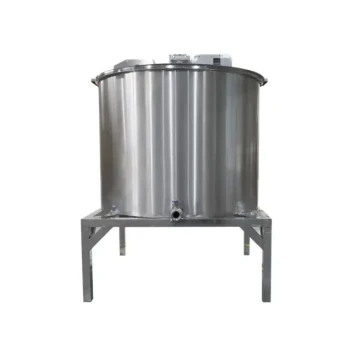
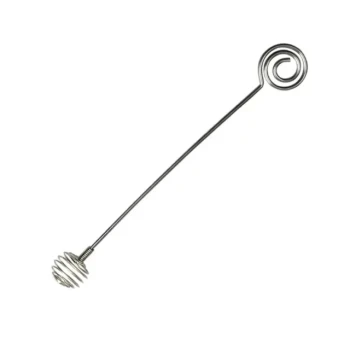
The primary function of an industrial mixer during the homogenization phase is to eliminate variability across large volumes of raw honey. Specifically, it standardizes the ratio of key components, such as glucose to fructose, ensuring they are distributed consistently throughout the entire batch. This process provides the stable, uniform foundation required for successful batch production or experimental testing.
By neutralizing the natural variability of raw materials, industrial homogenization transforms a volatile ingredient into a predictable substrate. This stability is the prerequisite for controlling crystallization and meeting strict regulatory standards.
The Mechanics of Standardization
Establishing Chemical Consistency
Raw honey is naturally variable; different harvests contain different chemical profiles. An industrial mixer mechanically integrates these varying loads to create a single, uniform substance.
The most critical aspect of this process is stabilizing the glucose-to-fructose ratio. Ensuring these sugars are evenly distributed prevents inconsistent physical behaviors in the final product.
The Foundation for Crystallization
Homogenization is not the end goal; it is the preparation for the next phase. The mixer creates a stable baseline essential for crystallization control.
For products like creamed honey, consistent physical properties are non-negotiable. Without a homogenized base, the controlled crystallization process would be erratic, leading to texture defects in the finished good.
Strategic Blending and Compliance
Managing GM Pollen Content
Beyond texture, homogenization is a vital tool for regulatory compliance. Processors use industrial mixing to scientifically blend batches to control the concentration of specific constituents.
This is particularly relevant for Genetically Modified (GM) pollen. By blending batches, processors can ensure GM pollen content remains below legal thresholds, such as the 0.9 percent limit.
Mitigating Labeling Risks
Precise blending allows producers to navigate complex entry standards for specific target markets.
If regulations define GM pollen as a natural constituent, keeping levels below the threshold avoids mandatory warning labels. This technological approach protects the brand's marketability and ensures adherence to international standards.
Common Pitfalls to Avoid
Overlooking Raw Material Variability
A common mistake in honey processing is assuming that raw batches are sufficiently uniform without intervention.
Skipping or under-utilizing the homogenization phase retains the inherent variability of the raw material. This leads to unpredictable crystallization rates and potential regulatory violations if component concentrations spike in specific pockets of the batch.
Making the Right Choice for Your Goal
To maximize the value of your industrial mixing process, align your homogenization strategy with your specific production targets:
- If your primary focus is High-Quality Creamed Honey: Prioritize the uniform distribution of glucose and fructose to ensure a predictable and smooth crystallization structure.
- If your primary focus is Market Access and Compliance: Utilize the mixer to blend varying batches, diluting sensitive components like GM pollen to ensure they stay below the 0.9% regulatory threshold.
The industrial mixer is the gatekeeper of quality, converting variable agricultural input into a standardized industrial product.
Summary Table:
| Key Feature | Role in Homogenization | Main Benefit |
|---|---|---|
| Chemical Standardization | Balances glucose-to-fructose ratios | Eliminates raw material variability |
| Crystallization Prep | Creates a stable, uniform substrate | Essential for smooth creamed honey texture |
| Regulatory Blending | Dilutes GM pollen and constituents | Ensures compliance with <0.9% legal limits |
| Risk Mitigation | Eliminates component "pockets" | Avoids labeling issues and batch defects |
Scale Your Honey Production with HONESTBEE Professional Solutions
Achieving the perfect honey consistency and meeting international regulatory standards requires more than just mixing—it requires precision engineering. At HONESTBEE, we specialize in empowering commercial apiaries and global distributors with the high-performance tools needed to succeed.
From advanced honey-filling machines to specialized industrial mixing hardware, our comprehensive wholesale portfolio is designed to transform your raw harvest into a standardized, market-ready product. Whether you are aiming for the perfect creamed honey texture or need to manage GM pollen compliance, our expertise is your competitive advantage.
Ready to optimize your processing facility? Contact us today to explore our full range of beekeeping machinery and essential industry consumables. Let HONESTBEE be your partner in honey processing excellence.
References
- Mario Meixner, Margot Dasbach. Influence of Stirring Parameters on Creaminess of Spring Blossom Honey Measured by Crystal Size, Whiteness Index and Mouthfeel. DOI: 10.3390/foods12010048
This article is also based on technical information from HonestBee Knowledge Base .
Related Products
- Double Wall Honey Heating Stirring Homogenizer Mixing Machine with Various Capacity
- HONESTBEE 72 Frame Industrial Electric Honey Extractor for Beekeeping
- Economy Honey Homogenizer Mixer and Melting Machine for Beekeeping
- Commercial Rotary Honey Filling Machine for Production
- Fully Automatic Honey Filling Packaging Machine for Processing Line
People Also Ask
- What impact do homogenizers or oscillating equipment have on honey microbial detection? Ensure Testing Accuracy
- Why is thorough mechanical stirring and homogenization emphasized in honey processing? Ensure Sample Accuracy
- How do heating equipment and homogenizers liquefy crystallized honey? Expert Guide to Professional Honey Processing
- How does the honey mixer handle different types of honey? Master Viscosity for Perfect Blends
- What are the main components of the honey mixer? Engineered for Gentle, Efficient Honey Processing