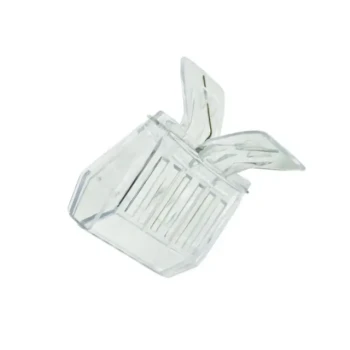
The primary function of artificial queen cups is to serve as the foundational physical vessel for rearing honey bee queens. These cups act as standardized substitutes for natural wax cell bases, providing the essential "carrier" structure to hold grafted larvae and defining the space available for royal jelly provisioning during development.
Core Takeaway: Artificial queen cups do more than hold a larva; they dictate the potential quality of the resulting queen. By mimicking the architecture of natural cells, they determine the internal volume available for royal jelly storage, which directly influences the queen's size, vitality, and reproductive success.
The Role of Architecture in Queen Rearing
Mimicking Natural Stimuli
In a natural hive, worker bees construct wax "cups" when preparing to swarm or supersede a queen. Artificial cups are designed to replicate this specific geometry.
By simulating the base of a natural queen cell, the artificial cup triggers the instinctual behavior of nurse bees. It signals them to accept the grafted larva and begin the intense feeding process required to produce a queen rather than a worker.
A Stable Carrier for Grafting
The cup serves as the core consumable in the transplantation process.
Because larvae are extremely fragile, they require a stable platform. The artificial cup provides a rigid, standardized base that allows beekeepers to transfer larvae from the honeycomb to the rearing frame. This stability is crucial for minimizing mechanical damage during the grafting phase.
The Critical Link to Queen Quality
Internal Volume and Nutrition
The most sophisticated function of the cup is its regulation of food storage. The internal volume of the cup creates the physical constraints for royal jelly accumulation.
A properly sized cup ensures there is ample space for nurse bees to deposit large quantities of royal jelly. Since the quality of a queen is directly correlated to the amount of royal jelly consumed during development, the dimensions of the cup are a deciding factor in the queen's eventual size and fertility.
Standardization for Scalability
Unlike natural cells, which can vary significantly in shape and placement, artificial cups offer mechanical consistency.
This standardization allows for large-scale, commercial production. It ensures that every larva in a rearing batch has access to the same developmental space, leading to uniform hatch rates and consistent queen quality across the apiary.
Understanding the Trade-offs
Material Acceptance vs. Durability
While artificial cups provide structural stability, their material composition can impact acceptance rates.
Plastic cups are durable and reusable, but they lack the natural pheromones of wax. They often require "priming" (coating with a thin layer of beeswax) or passing through a hive for polishing by workers before use to ensure the bees do not reject the graft.
Environmental Sensitivity
The cup acts as the interface between the larva and the hive environment.
In research settings, this is a feature; cups can be coated with specific substances to test for toxicity. However, in production, this means the cup surface must be scrupulously clean. Any residue or chemical contamination on the cup walls can directly inhibit development or kill the larva.
Making the Right Choice for Your Goal
Selecting the right cup strategy depends on the scale and intent of your operation.
- If your primary focus is Commercial Production: Prioritize durable, standardized plastic cups to ensure consistent "take" rates and streamline the workflow for mass grafting.
- If your primary focus is Queen Vitality: Ensure your cups have the maximum internal volume possible to encourage excess royal jelly storage, maximizing the reproductive potential of the virgin queen.
- If your primary focus is Research or Toxicology: Use sterile, chemically neutral cups that allow for precise coating of the inner walls to isolate environmental variables without interference.
The artificial cup is not just a container; it is the structural blueprint that allows a standard larva to transform into a viable queen.
Summary Table:
| Feature | Primary Function | Impact on Queen Quality |
|---|---|---|
| Physical Structure | Acts as a standardized vessel for grafting larvae | Minimizes mechanical damage during transplantation |
| Internal Volume | Dictates the space available for royal jelly storage | Determines queen size, vitality, and reproductive potential |
| Architecture | Mimics natural wax cell geometry | Triggers nurse bee acceptance and feeding behaviors |
| Material Design | Provides a durable, consistent carrier for scaling | Ensures uniform development and predictable hatch rates |
Elevate Your Queen Rearing Success with HONESTBEE
At HONESTBEE, we understand that the quality of your queens defines the strength of your apiary. As a premier provider for commercial apiaries and distributors, we offer a comprehensive wholesale range of professional beekeeping tools, from precision-engineered artificial queen cups to advanced honey-filling machinery.
Whether you are scaling up commercial production or sourcing essential industry consumables, our portfolio of high-performance hardware and specialized hive-making equipment is designed to maximize your efficiency and yield. Empower your beekeeping operation with industry-leading equipment—Contact us today to explore our wholesale solutions!
References
- Abdallah Saad Soliman M. Kamel. Evaluation of Colony Parameters for Queen Rearing under Arid Ecosystem Conditions. DOI: 10.21608/japp.2021.234779
This article is also based on technical information from HonestBee Knowledge Base .
Related Products
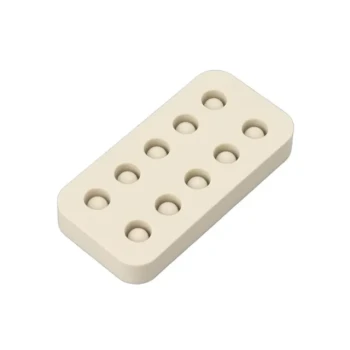
- 10-Cell Silicone Beeswax Bee Queen Cups Forming Mold
- JZBZ Type Wide Base Plastic Queen Cell Cups for Base Mounting and Queen Rearing
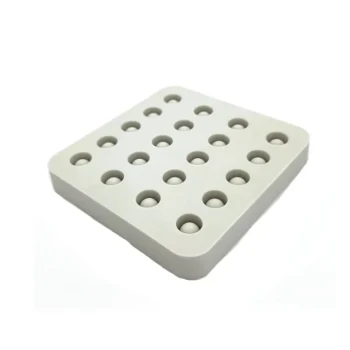
- High-Efficiency 20-Cell Silicone Mold for Beeswax Bee Queen Cup Production
- Brown Nicot Queen Cell Cups for Breeding Queen Bees Beekeeping
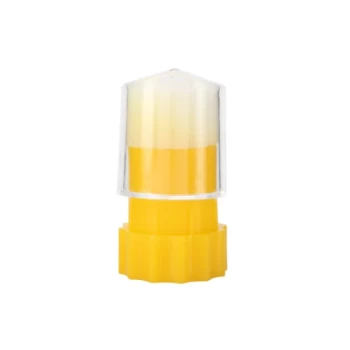
- JZBZ Push-In Queen Cell Cups for Beekeeping
People Also Ask
- How do beeswax queen cell cups function? Optimize Queen Rearing with Biological Mimicry
- What is the biological function of beeswax queen cell cups? Boost Acceptance in Artificial Queen Rearing
- What role do specialized queen rearing tools play in developing mite-resistant honeybee stock? Master Genetic Selection
- What materials are used to make artificial queen cell cups for grafting? Beeswax vs. Plastic Guide
- What roles do specialized queen cell cups play in royal jelly production? Optimize Your Hive's Secretion and Yield