Standardized assembly containers serve as a specialized, controlled infrastructure designed to replace or augment natural storage within artificial honeycombs. Their primary function is to facilitate the mass production and efficient collection of bee bread without requiring the destruction of the hive's natural wax structures.
By introducing a structured, non-natural storage space, these containers allow beekeepers to separate commercial production from the biological integrity of the hive, significantly improving management efficiency.
The Mechanics of the Artificial Honeycomb System
To understand the value of these containers, it is necessary to look at their physical composition and how they alter the hive environment.
The Three-Part Design
The standardized assembly is not a single unit but a composite structure.
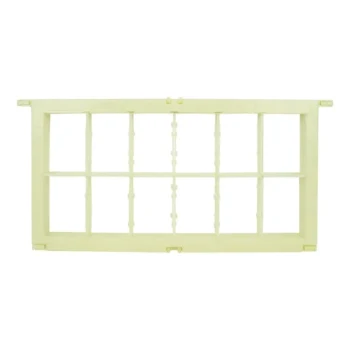
It consists of three specific components: a container, a middle wall, and a fence.
This modular design ensures that the storage space is uniform, which is critical for automation and consistent harvesting.
Creating a Controlled Environment
Unlike natural combs, which bees build according to biological needs, these containers provide a non-natural storage space.
This structure imposes order on the hive's interior, directing bees to store resources in pre-determined zones.
This control allows for precise management of where and how bee bread is deposited.
Operational Benefits for Commercial Beekeeping
The shift to standardized assembly containers addresses the "Deep Need" for scalability and efficiency in modern apiculture.
Streamlined Bee Bread Collection
The most significant advantage is the ability to harvest bee bread individually and in mass quantities.
In traditional setups, extracting bee bread can be labor-intensive and messy.
Standardized containers allow for rapid removal and processing, directly boosting commercial output.
Preservation of Natural Resources
A major pain point in harvesting is the collateral damage to the hive.
Using these containers protects the natural wax combs from being damaged during the collection process.
This ensures the colony does not waste energy rebuilding infrastructure, maintaining the overall health of the hive.
Understanding the Trade-offs
While standardized assembly containers offer efficiency, they represent a divergence from natural beekeeping methods.
The Non-Natural Factor
The primary reference explicitly describes this as a "non-natural storage space."
Beekeepers must consider that introducing artificial structures changes the natural behavior and environment of the bee colony.
Specificity of Application
This equipment is highly specialized for bee bread and artificial honeycombs.
It is distinct from standardized transport containers (like tin drums or bottles) used for liquid honey, and the two systems should not be confused.
Making the Right Choice for Your Goal
Deciding to implement standardized assembly containers depends on your specific production targets.
- If your primary focus is Commercial Bee Bread Production: This system is essential for achieving mass production and high collection efficiency.
- If your primary focus is Traditional Wax Comb Preservation: These containers are the best tool for harvesting resources without damaging the colony's natural architecture.
Standardized assembly containers bridge the gap between biological necessity and industrial efficiency, turning bee bread collection into a scalable process.
Summary Table:
| Feature | Description |
|---|---|
| Core Function | Facilitate mass production and efficient collection of bee bread |
| Components | Three-part modular design: Container, Middle Wall, and Fence |
| Storage Type | Structured, non-natural storage space for environmental control |
| Key Benefit | Harvests bee bread without damaging natural hive wax structures |
| Application | Specialized for commercial artificial honeycomb systems |
Scale Your Apiary Production with HONESTBEE
Maximize your output and protect your hive's integrity with professional-grade solutions. HONESTBEE specializes in supporting commercial apiaries and distributors with a comprehensive wholesale portfolio. Whether you need specialized standardized assembly components, advanced honey-filling machines, or durable beekeeping tools, we provide the machinery and consumables necessary for industrial success.
Ready to optimize your collection efficiency? Contact us today to discuss your wholesale equipment needs and see how our expertise in commercial apiculture can grow your business.
References
- Serhii Velychko, Ján Brindza. Bee stimulation to form protein food reserves. DOI: 10.5219/1562
This article is also based on technical information from HonestBee Knowledge Base .
Related Products
- Heart-Shaped Comb Honey Frame and Honeycomb Cassette
- Hexagonal Bee Honeycomb Silicone Soap Mold by HONESTBEE
- Plastic Honey Comb Frames Cassette Box for Honey
- Stainless Steel Honey Bee Smoker Hive and Honeycomb Smoker for Beekeeping
- Professional Sectional Comb Honey Frame with 250g Cassette System for Beekeeping
People Also Ask
- How are honeybee combs utilized for non-destructive colony monitoring? Master Population Density Tracking
- What is a honeycomb frame? The Key to Modern, Sustainable Beekeeping
- What is the technical purpose of exchanging honeycomb frames? Master Apiary Equalization for Growth
- What frame to use for honeycomb? Choose the Right System for Pure, Edible Comb
- What is the significance of sampling honeycomb frames and hive bottoms? A Guide to Scientific Sanitation Monitoring