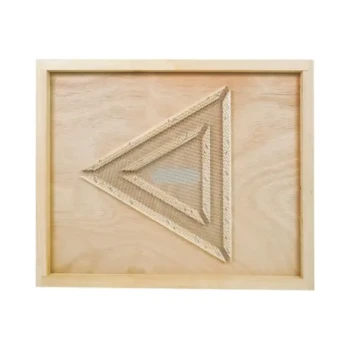
The primary function of a sticky board is to serve as a physical capture mechanism that creates an accurate, quantitative record of Varroa mite mortality. By placing an adhesive-coated surface at the bottom of the hive, these boards securely trap mites dislodged by chemical treatments or natural grooming. This prevents the parasites from crawling back onto the host bees or being removed by the colony's hygienic behavior, ensuring every fallen mite is retained for analysis.
Sticky boards transform a biological event—the falling of a mite—into verifiable data. By preventing re-infestation and removal, they provide the standardized physical evidence necessary to calculate daily drop rates and objectively measure the effectiveness of Varroa control treatments.
The Mechanics of Capture and Retention
To evaluate control efficiency, you need a precise count of how many mites are being eliminated. Sticky boards facilitate this through two specific mechanisms.
Securing the Sample
The board is coated with an adhesive substance or oil. This coating "locks in" mites immediately upon contact. Without this adhesive layer, fallen mites could drift, be blown away, or simply crawl away, rendering the count inaccurate.
Preventing Re-infestation
Mites that are affected by treatments but not immediately killed may fall off the bees. The sticky board prevents these stunned parasites from recovering and climbing back up into the colony structure to re-infect the host bees.
Neutralizing Hygienic Interference
Worker bees exhibit cleaning behaviors and will actively remove debris—including dead mites—from the hive floor. The sticky board traps the mites in a way that prevents bees from removing them before the beekeeper can perform a count, ensuring the data sample remains intact.
The Role in Quantitative Analysis
The sticky board is not just a trap; it is the physical basis for the statistical analysis of hive health.
Calculating Drug Efficacy
When evaluating a new treatment, the sticky board provides the proof of performance. By counting the mites trapped on the board after a treatment application, you can perform a quantitative analysis of the drug's impact. High counts post-treatment generally indicate the chemical is successfully dislodging the parasites.
Establishing Daily Drop Rates
The boards allow for the calculation of an "average daily mite drop." This metric is critical for establishing a baseline of infestation severity before treatment begins and monitoring the decline of the population over time.
Non-Invasive Monitoring
Because the boards are placed at the bottom of the hive (often under a screen), they allow for continuous data collection without opening the brood nest or consuming live bee samples. This makes them ideal for long-term seasonal monitoring.
Integration with Hive Hardware
For the sticky board to function correctly as an evaluation tool, it is often paired with specific hive components.
The Screened Bottom Board
Sticky boards are frequently used in conjunction with screened bottom boards featuring a mesh (typically around 3mm).
Physical Separation
The mesh allows mites dislodged by treatments to fall through onto the sticky board below. Crucially, this barrier prevents the bees from coming into contact with the adhesive or the waste on the board, maintaining hive hygiene while preserving the sample.
Understanding the Limitations
While sticky boards are the standard for non-invasive monitoring, relying on them requires an understanding of their operational constraints.
Interpretation Required
The board provides raw data (a number of mites), not a diagnosis. A high drop count could mean a very effective treatment, or it could mean an extremely high infestation level. The data must be interpreted in context.
Debris Accumulation
The adhesive captures everything that falls, not just mites. Hive debris, pollen, and wax scales will also stick to the board. This can make the visual identification and counting of mites labor-intensive and requires a trained eye to distinguish parasites from general hive waste.
Making the Right Choice for Your Goal
To get the most value out of sticky boards, align your usage with your specific objective.
- If your primary focus is determining treatment success: Compare the mite drop counts from before the treatment to the counts immediately following application to calculate the specific "knock-down" rate.
- If your primary focus is seasonal monitoring (IPM): Calculate the average natural mite fall over a specific period (e.g., 3 days) to determine if the infestation threshold has been reached to warrant intervention.
- If your primary focus is scientific sampling: Ensure the board is used with a screened barrier to prevent bee interference, guaranteeing that the count represents a total unadulterated sample of fallen mites.
Effective Varroa management relies not on guessing, but on measuring; the sticky board is the fundamental tool that turns mite mortality into measurable metrics.
Summary Table:
| Feature | Primary Function & Benefit |
|---|---|
| Capture Mechanism | Uses adhesive to lock in fallen mites, preventing recovery or drift. |
| Data Accuracy | Prevents bees from removing dead mites, ensuring an intact sample for counting. |
| Quantitative Metric | Enables the calculation of daily mite drop rates and treatment efficacy. |
| Non-Invasive | Collects data via screened bottom boards without disturbing the brood nest. |
| IPM Tool | Helps determine if infestation thresholds are met for chemical intervention. |
Maximize Your Apiary Productivity with HONESTBEE
Accurate Varroa monitoring is the cornerstone of a healthy colony, but having the right equipment is what makes management efficient. At HONESTBEE, we specialize in supporting commercial apiaries and distributors with a full spectrum of professional-grade beekeeping tools.
Whether you need precision screened bottom boards, high-capacity honey-filling machines, or bulk consumables, our wholesale offerings are designed to scale your operations and improve hive health.
Ready to upgrade your beekeeping infrastructure? Contact HONESTBEE Today to discuss our comprehensive equipment solutions and how we can add value to your business.
References
- GHADA S. REFAEI. EVALUATION OF SOME NATURAL SUBSTANCES AGAINST VARROA DESTRUCTOR INFESTING HONEYBEE, APIS MELLIFERA IN EGYPT. DOI: 10.21608/ejar.2011.173973
This article is also based on technical information from HonestBee Knowledge Base .
Related Products
- Langstroth Screen Bottom Board for Beekeeping Wholesale
- Compact Circular Bee Mite Treatment Dispenser
- Varroa Easy Check Mite Tester Kit Counter Alcohol Wash Jar
- Adjustable Formic and Acetic Acid Dispenser for Bee Mite Treatment
- Australian Pine Wood Langstroth Screen Bottom Board for Wholesale
People Also Ask
- What is the primary function of a screen bottom board? Achieve Accurate Varroa Mite Assessment in Your Apiary
- Why is the combination of a screen bottom board and a sticky trap board essential for monitoring Varroa mite? Guide
- What role do screen bottom boards and monitoring inserts play in assessing Varroa mite mortality and maintaining hive hygiene in Langstroth hives?
- What is the primary function of a standard screen bottom board when assessing honeybee grooming behavior? - Key Mite Data
- Why might a screen bottom board be less effective for pest control? Understanding the 'Mixed Sunlight' Complication