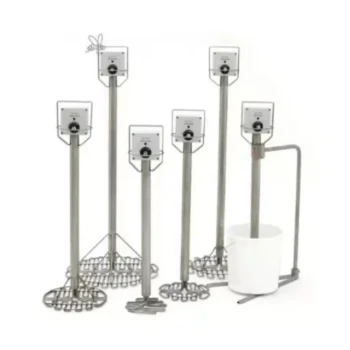
The primary function of temperature-controlled heating equipment in honey liquefaction is to precisely elevate the temperature of crystallized honey to its melting point, restoring it to a pourable, transparent liquid state. Crucially, this equipment acts as a safeguard against thermal damage, regulating heat to prevent the destruction of heat-sensitive bioactive components that occurs with uncontrolled boiling or overheating.
Core Takeaway: The true value of this equipment lies not just in melting honey, but in preservation through precision. It allows operators to reverse crystallization physically while chemically maintaining the honey's enzymes, vitamins, and low Hydroxymethylfurfural (HMF) levels, ensuring the final product remains biologically active and commercially viable.
Restoring Physical Consistency
The immediate goal of liquefaction is to alter the physical state of the honey from a solid or semi-solid granule back to a fluid.
Controlled Crystal Dissolution
Crystallized honey requires thermal energy to break down sugar lattices. Temperature-controlled equipment provides a stable heat source that brings honey to its specific melting point (often around 55°C) to fully dissolve these crystals. This restores the honey to a transparent, liquid form suitable for bottling and consumption.
Ensuring Uniform Viscosity Reduction
Beyond simple melting, heating reduces the natural viscosity of the honey. Specialized equipment ensures this reduction is uniform throughout the batch. Lower viscosity is critical for downstream processing, as it enables the efficient removal of impurities like wax debris and bee parts during filtration.
Elimination of Trapped Air
The heating process assists in the removal of dissolved air and micro-bubbles. By maintaining a constant temperature, the equipment allows air to rise and escape, improving the honey's clarity and preventing issues with accurate volumetric measurement or colorimetric evaluation.
Preserving Biological Integrity
The deep need for specialized equipment stems from honey's fragility; it is a living biological product that is easily damaged by excess heat.
Protecting Heat-Sensitive Enzymes
Honey contains valuable bioactive components, including enzymes and vitamins, which are the primary indicators of its nutritional quality. Direct boiling or unregulated heating destroys these components. Precise temperature regulation ensures the heat remains below the threshold where these active substances degrade.
Managing HMF Levels
Overheating causes fructose to decompose into Hydroxymethylfurfural (HMF), a compound used as an indicator of poor quality or excessive processing. Regulatory standards often limit HMF (e.g., 20 mg/100g for bulk honey). Controlled heating ensures the process stays within safe thermal limits to keep HMF levels low and compliant.
Prevention of Localized Overheating
Standard heating methods often create "hot spots" where honey near the heat source burns while the center remains cold. Industrial constant temperature equipment utilizes mechanisms like water baths or air convection to provide uniform heat distribution, preventing localized degradation of the product.
Understanding the Trade-offs
While temperature-controlled equipment is essential for quality, it requires careful management of processing variables.
The Balance of Time and Temperature
There is an inherent trade-off between the speed of liquefaction and the preservation of quality. Higher temperatures melt crystals faster but exponentially increase the risk of HMF spikes and enzyme loss. Using this equipment requires patience; a lower, strictly controlled temperature over a longer period is always superior to high-heat "shortcuts."
Equipment Limitations
Even the best equipment cannot reverse damage once it occurs. If the equipment is set incorrectly or if the circulation of heat is blocked, thermal stratification can still occur. Operators must ensure the equipment is properly calibrated and that the honey is agitated or circulated if the batch size is large.
Making the Right Choice for Your Goal
To maximize the utility of temperature-controlled heating, align your settings with your specific processing objectives.
- If your primary focus is Nutritional Value: Set your equipment to the lowest effective temperature to melt crystals, prioritizing the preservation of enzymes over processing speed.
- If your primary focus is Commercial Aesthetics: Utilize the equipment to hold honey at a stable temperature that facilitates fine filtration, ensuring maximum clarity and shelf appeal.
- If your primary focus is Regulatory Compliance: Use the precise temperature controls to strictly monitor thermal exposure, ensuring HMF levels remain well below the 40 mg/100g limit for bottled honey.
By utilizing precise thermal control, you transform a risky heating process into a consistent method for delivering high-quality, biologically active honey.
Summary Table:
| Feature | Primary Function | Key Benefit |
|---|---|---|
| Thermal Precision | Controlled crystal dissolution at ~55°C | Restores clarity and prevents HMF spikes |
| Uniform Heating | Prevents localized hot spots | Avoids thermal damage to bioactive enzymes |
| Viscosity Control | Uniform reduction in thickness | Enables efficient filtration and air removal |
| Quality Assurance | Maintains nutritional integrity | Ensures regulatory compliance and shelf appeal |
Elevate Your Honey Quality with HONESTBEE
Maximize the value of every batch with professional-grade thermal solutions. As a leading provider for commercial apiaries and distributors, HONESTBEE offers a comprehensive range of beekeeping tools, specialized machinery, and honey-processing equipment.
Whether you need precision honey-filling machines, industrial-scale heating solutions, or essential consumables, our portfolio is designed to enhance your efficiency and product integrity. Let us help you deliver biologically active, high-quality honey to your customers.
Ready to scale your production? Contact our experts today to find the perfect equipment for your business.
References
- Adam Roman, Katarzyna Roman. Factors influencing consumer behavior relating to the purchase of honey part 2. Product quality and packaging. DOI: 10.2478/jas-2013-0027
This article is also based on technical information from HonestBee Knowledge Base .
Related Products
- Professional Thermostatic Conical Honey Melter
- Heavy Duty Stainless Steel Honey Processing Machine Decrystallizing Tank
- Silicone Rubber Honey Drum Heating Belt
- Professional Electric Honey Uncapping Knife with Heated Digital Temperature Control for Beekeeping
- Honey Concentrating Vacuum Heating Thickening Machine Dehumidifier for Honey
People Also Ask
- What is melter honey used for? A Low-Cost Ingredient for Bakers and Brewers
- How does a honey melter address the issue of crystallized honey in storage? Restore Flow and Quality Efficiently
- How do you melt a bucket of honey? Safely Reliquefy Crystallized Honey Without Damage
- When is a honey melter necessary? Optimize Your Facility's Workflow for Crystallized Honey
- What factors should be considered when selecting a heater for honey containers? Optimize Your Warming Efficiency