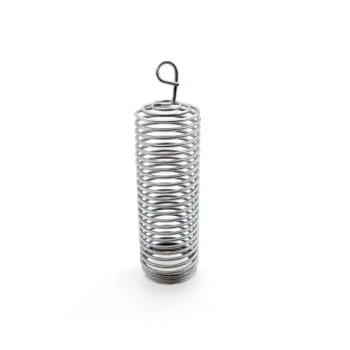
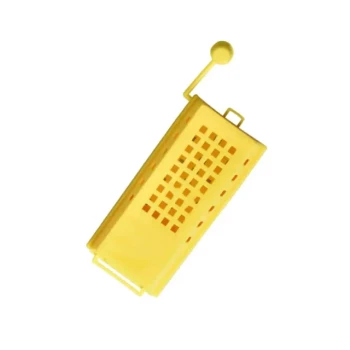
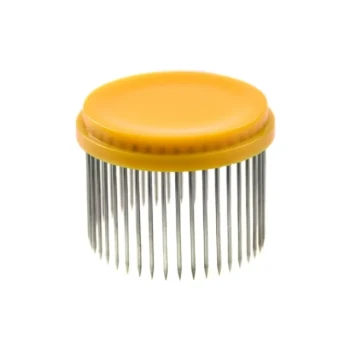
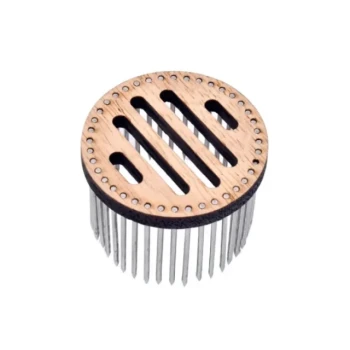
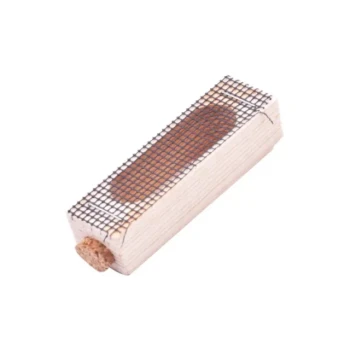
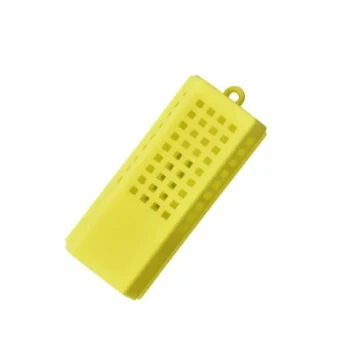
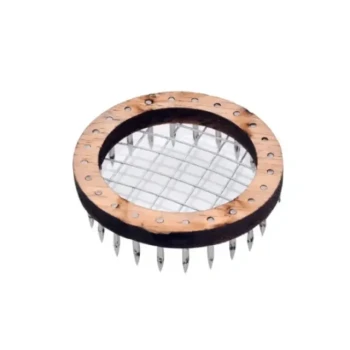
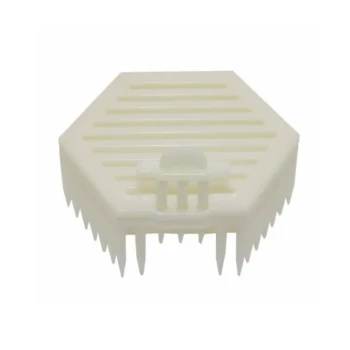
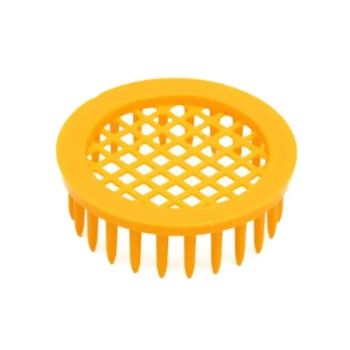
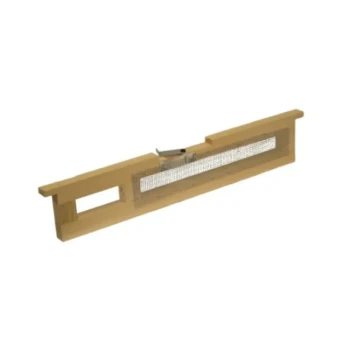
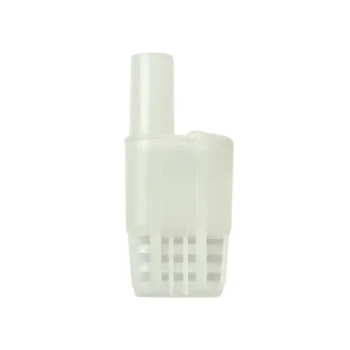
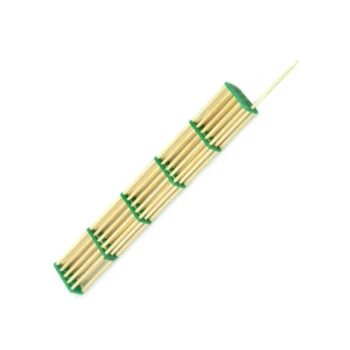
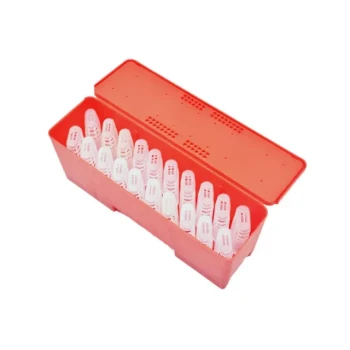
The primary mechanism of a queen introduction cage is a dual-function system that acts as both a physical shield and a chemical filter. It physically separates the fertilized queen from hostile worker bees to prevent immediate execution, while simultaneously allowing her pheromones to diffuse through the mesh to rewrite the colony's social order.
By decoupling physical contact from chemical exposure, the cage transforms a potential invasion event into a gradual integration process. This controlled environment allows the colony to acclimate to the new queen's scent profile safely, raising introduction success rates to as high as 85 percent.
The Principles of Safe Introduction
Physical Protection
The immediate danger to a new queen is the existing colony's defensive instinct. The cage provides a robust physical barrier that completely isolates the queen from the workers.
Without this separation, the resident bees would perceive the new queen as a foreign intruder. This usually triggers an immediate "balling" response, where workers surround and overheat or sting the queen to death.
Chemical Diffusion
While the mesh prevents physical contact, it is specifically designed to be permeable to air. This creates a channel for chemical communication between the queen and the hive.
The queen's pheromones slowly drift out of the cage, gradually permeating the hive environment. Over time, this scent signals her reproductive viability to the workers, shifting their behavior from aggression to acceptance.
The Candy Plug Delay
To automate the release process, many cages incorporate a consumable timing mechanism, often a plug made of hard candy.
Worker bees must eat through this plug to reach the queen, a task that typically forces a delay of 1 to 2 days. This buffer period is critical, ensuring the queen is not released until the chemical integration process is complete.
Understanding the Trade-offs
Success is Not Guaranteed
While the cage significantly improves odds, it is not a magic solution. The primary reference notes a success rate of roughly 85 percent, meaning distinct risks remain.
If the cage releases the queen too early, or if the colony is particularly aggressive (e.g., due to the presence of laying workers), the integration may fail despite the cage's mechanics.
The "OD" Factor
The cage facilitates odor exchange, but this relies on the queen having strong pheromones. A weak or poorly mated queen may not produce enough chemical signal to subdue the colony through the mesh, leading to rejection upon release.
Making the Right Choice for Your Goal
To maximize the effectiveness of a queen introduction cage, align your approach with your specific objective:
- If your primary focus is maximizing survival rates: Ensure the cage utilizes a candy plug or similar delay mechanism to force a minimum 24-48 hour acclimatization period.
- If your primary focus is preserving genetics: Use the cage strictly for isolation during transport or banking to prevent accidental injury before the introduction phase begins.
- If your primary focus is restoring colony order: Monitor the workers' behavior on the cage mesh; do not release the queen until they stop biting the wires and begin feeding her.
The cage is not just a container; it is a biological negotiation tool that buys time for nature to take its course.
Summary Table:
| Mechanism Component | Primary Function | Impact on Colony Success |
|---|---|---|
| Physical Mesh | Prevents "balling" and physical attacks | Ensures 100% immediate queen survival |
| Chemical Permeability | Allows pheromone diffusion and scent acclimation | Reconditions worker bee behavior from aggression to acceptance |
| Candy Plug | Provides a 24–48 hour automated delay | Forces a critical buffer period for chemical integration |
| Trophic Access | Enables workers to feed the queen through wire | Sustains the queen while testing worker receptivity |
Scale Your Apiary Operations with HONESTBEE
Are you a commercial apiary or distributor looking to improve hive success rates and streamline production? HONESTBEE is your strategic partner for professional-grade beekeeping solutions.
We provide a comprehensive wholesale portfolio designed for industry leaders, including:
- Precision Equipment: Hive-making and honey-filling machinery to automate your workflow.
- Quality Tools: High-performance queen introduction cages and essential hardware.
- Industry Consumables: A full spectrum of supplies to maintain large-scale colony health.
From specialized beekeeping tools to honey-themed cultural merchandise, we deliver the reliability and volume your business demands. Contact us today to explore our wholesale offerings and enhance your apiary's productivity!
References
- Айнур Алдиярова, J. B. Dosbolat. METHODS FOR IMPROVING REPRODUCTIVE AND PRODUCTIVE ABILITIES OF QUEEN BEE IN THE SOUTH OF KAZAKHSTAN. DOI: 10.52578/2305-9397-2023-3-2-226-233
This article is also based on technical information from HonestBee Knowledge Base .
Related Products
- Durable Galvanized Steel Spring Queen Bee Cage
- Professional Queen Bee Introduction and Transport Cage
- Professional Queen Cage with Sliding Gate and Feeder Plug
- Professional Round Push-In Queen Cage with Metal Tines
- Premium Wood and Steel Push In Queen Cage
People Also Ask
- Why are specialized queen bee cages used for the banking of mated queen bees? Maximize Commercial Apiary Storage Efficiency
- What is the mechanism of action for using temporary queen bee cages? Master Successful Queen Introduction
- What is the step-by-step process for installing a queen bee's cage onto a frame? Ensure Hive Acceptance Safely
- What is the optimal placement for a queen bee cage? Essential Strategies for Successful Re-queening
- What are the advantages and disadvantages of introducing a queen bee by embedding the cage? Boost Your Queen Acceptance