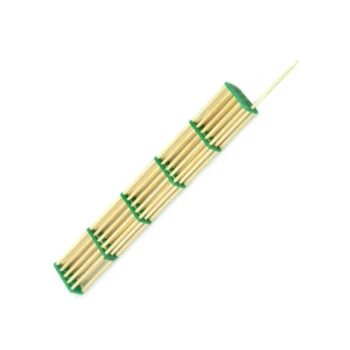
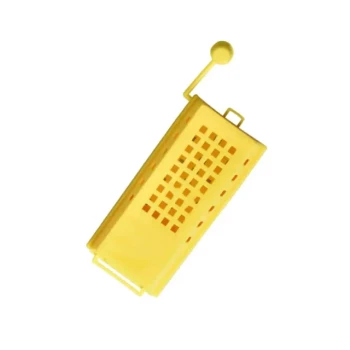
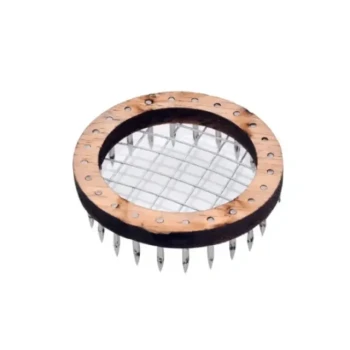
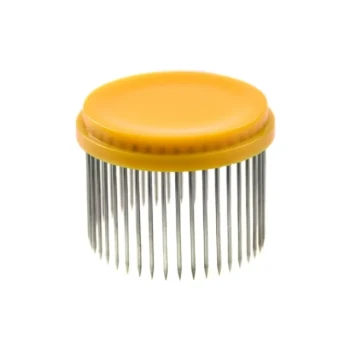
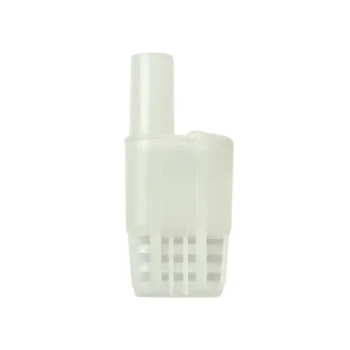
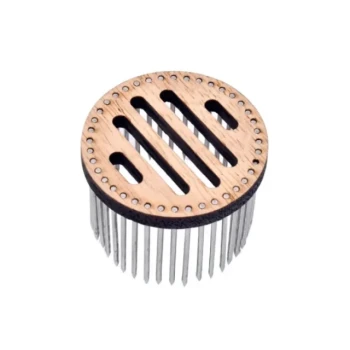
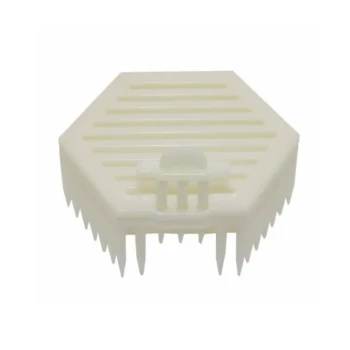
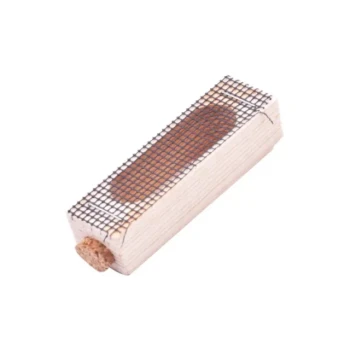
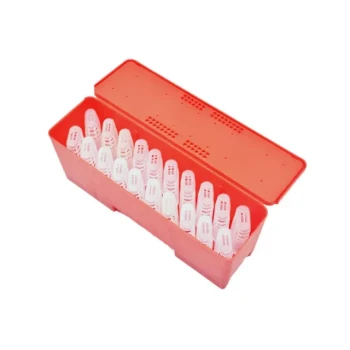
The primary purpose of a Queen Confinement Cage is standardization through restriction. This tool physically confines a queen bee to a single hive frame, compelling her to lay eggs within a controlled area. By restricting her movement, researchers ensure that all eggs are deposited closely together in time, resulting in brood (larvae and pupae) that are synchronized to the exact same developmental age.
By eliminating the natural variability of egg-laying timing, this technique guarantees that every biological sample collected is at an identical stage of development, which is a prerequisite for precise scientific analysis.
The Mechanics of Synchronization
Restricting the Queen
In a natural hive setting, a queen moves freely, laying eggs across various frames over distinct periods. This creates a mix of developmental stages throughout the colony.
To counter this, the Queen Confinement Cage isolates the queen on a specific frame. This restriction forces the synchronization of egg-laying activity to a single location.
Creating Uniform Cohorts
The direct result of this confinement is a "cohort" of samples that are age-matched.
Because the eggs are laid within a known, narrow window, the resulting larvae and pupae develop in parallel. This removes the variable of time from the equation.
Applications in High-Precision Research
Ensuring Morphological Accuracy
precise morphological comparisons require subjects to be physically identical in terms of growth.
If samples vary in age even slightly, natural developmental differences can be mistaken for experimental results. The cage ensures that any observed physical differences are genuine, not a result of one sample being older than another.
Enabling High-Resolution Imaging
Advanced imaging studies often require rigorous standardization to visualize internal structures accurately.
By using samples from a Queen Confinement Cage, researchers ensure that the biological baseline is consistent. This is essential for maintaining the integrity of high-resolution data.
The Pitfall of Uncontrolled Sampling
The Risk of Developmental Variation
The most common error in apicultural sampling is assuming that brood found on the same frame are effectively the same age.
Without the use of a confinement cage, "timing differences" naturally occur as the queen wanders. This introduces hidden variables into the dataset.
Compromising Data Integrity
When developmental variations are not eliminated, the data becomes "noisy."
Comparing a larva that is 12 hours older than another can skew results significantly. The confinement technique is the only way to strictly guarantee the elimination of these variations.
Making the Right Choice for Your Goal
To maximize the validity of your research, you must align your sampling method with your analytical needs.
- If your primary focus is Morphological Comparison: Use confinement to ensure that physical traits are compared across subjects of the exact same chronological age.
- If your primary focus is High-Resolution Imaging: Rely on synchronized laying to provide a uniform baseline, ensuring clear and comparable visuals of internal anatomy.
The Queen Confinement Cage is not just a physical barrier; it is a tool for enforcing temporal rigor on a biological process.
Summary Table:
| Feature | Function in Research | Benefit for Data Integrity |
|---|---|---|
| Spatial Restriction | Confines queen to a single frame | Ensures all eggs are laid in a controlled, known area. |
| Temporal Control | Limits the laying window | Creates age-matched cohorts of larvae and pupae. |
| Standardization | Eliminates developmental lag | Removes "noise" caused by age variations in samples. |
| Precision Imaging | Provides uniform biological baseline | Guaranteed consistency for high-resolution morphological data. |
Elevate Your Beekeeping Operations with HONESTBEE Professional Equipment
At HONESTBEE, we understand that precision is the foundation of success for both commercial apiaries and research-focused distributors. Whether you are conducting high-resolution apicultural studies or managing large-scale honey production, our comprehensive wholesale portfolio has you covered.
Why Partner with HONESTBEE?
- Specialized Machinery: From advanced hive-making tools to high-efficiency honey-filling machines.
- Full-Spectrum Supplies: A complete range of beekeeping tools, equipment, and essential industry consumables.
- Cultural & Commercial Value: Unique honey-themed merchandise to expand your market reach.
Ready to enhance your efficiency and scale your business with premium beekeeping solutions? Contact us today to explore our wholesale offerings and discover how HONESTBEE can support your growth.
References
- Tamás Sipos, Sándor Keszthelyi. Comparative micro-computed tomographic analysis of the structure of brood cells and its effect on the development of the pupae of honey bee (Apis mellifera). DOI: 10.14411/eje.2023.002
This article is also based on technical information from HonestBee Knowledge Base .
Related Products
- Professional Bamboo Queen Isolation Cage
- Professional Queen Cage with Sliding Gate and Feeder Plug
- Durable Galvanized Steel Spring Queen Bee Cage
- Professional Queen Bee Introduction and Transport Cage
- Professional Multi-Functional Queen Bee Cage
People Also Ask
- Why are specialized queen bee cages used for the banking of mated queen bees? Maximize Commercial Apiary Storage Efficiency
- What is the mechanism of action for using temporary queen bee cages? Master Successful Queen Introduction
- How does the side ventilation design of a queen bee cage impact the safety of the queen during long-distance transport?
- What should you do if the queen is still in the cage and the worker bees have not accepted her? Protect Your Colony from Queen Rejection
- What technical precaution must be taken regarding the mesh or grill side of a queen bee cage? Ensure Queen Survival