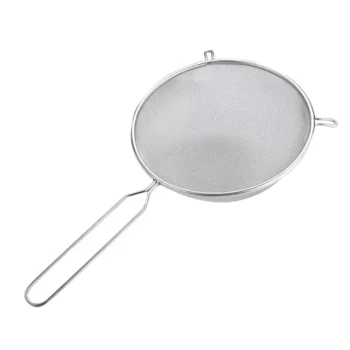
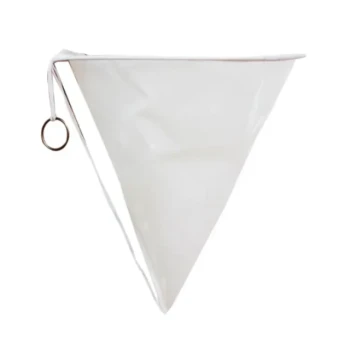
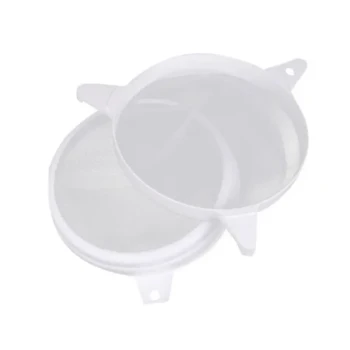
The primary purpose of using honey filters and strainers is to ensure the final product meets high standards of aesthetics and hygiene.
These tools provide a critical form of mechanical filtration, removing large physical impurities such as beeswax honeycomb, bee debris, and other particulate matter from the liquid honey before it is bottled for distribution.
Core Takeaway: Filtration is the bridge between raw harvesting and a consumable product. It is not about chemically altering the honey, but about mechanically refining its clarity and purity to ensure it is visually appealing, safe to eat, and commercially viable.
The Mechanics of Purification
Removing Physical Debris
The harvesting process inevitably introduces foreign matter into the honey. Whether you are using a "crush and strain" method or a centrifugal extractor, the liquid will contain solid byproducts.
The straining process effectively intercepts bits of beeswax, bee bread fragments, and general hive debris. This is the first line of defense in converting raw hive output into liquid food.
Enhancing Visual Clarity
Beyond simply removing large chunks, filtration addresses the "polish" of the product. High-precision filters utilize fine physical barriers to catch smaller particles.
This significantly enhances the clarity and visual purity of the honey. For the consumer, clear honey signals a professionally processed product, directly influencing its market appeal.
Quality Control and Safety
Meeting Food Safety Standards
Filtration is not just cosmetic; it is a matter of compliance. In professional settings, multi-layered precision meshes are used to remove forest contaminants and environmental impurities.
This rigorous filtration ensures the honey meets modern food safety regulations. By eliminating physical contaminants, producers improve consumer confidence in the safety and professionalism of the brand.
Protecting Sensory Quality
For specialized varieties, such as stingless bee honey, filtration is even more critical. It protects the medicinal and commercial quality of the product.
By removing specific impurities like wax cappings and larvae parts, the producer preserves the honey's intended taste and texture, ensuring high sensory standards are maintained during the primary processing stage.
Common Pitfalls to Avoid
Neglecting the "Rough" Filter
A common mistake is assuming fine filtration is the only step needed. Attempting to pass raw honey immediately through a fine mesh can clog equipment instantly.
Effective processing often requires a staged approach. Beekeepers typically use coarse strainers to catch large wax cappings first—especially when using the "crush & strain" method—before moving to finer filtration for clarity.
The Trade-off of Equipment Complexity
There is a balance between simple tools and professional clarity. Basic harvesting might use simple funnels and gravity strainers, which are effective but slow.
Professional "high-precision" filters offer superior clarity and speed but require more complex equipment. Producers must weigh the need for commercial-grade clarity against the cost and maintenance of specialized filtration gear.
Making the Right Choice for Your Goal
Whether you are a hobbyist or a commercial producer, the filtration stage defines the final character of your honey.
- If your primary focus is Commercial Distribution: Prioritize high-precision multi-layered filters to maximize clarity, meet food safety regulations, and ensure the product appeals to the mass market.
- If your primary focus is Small-Scale or Home Use: Utilize the "crush & strain" method with a double strainer to effectively remove wax and debris without the need for expensive centrifugal equipment.
Filtration is the defining step that transforms raw hive resources into a trusted, professional-grade food product.
Summary Table:
| Feature | Purpose | Key Benefits |
|---|---|---|
| Debris Removal | Eliminates wax, bee parts, and hive particles | Ensures hygienic and safe consumption |
| Visual Polishing | Increases liquid transparency and clarity | Enhances market appeal and professionalism |
| Safety Compliance | Meets rigorous food grade regulations | Boosts consumer confidence and brand trust |
| Quality Preservation | Maintains intended sensory and medicinal traits | Protects flavor profile and texture |
Elevate Your Honey Production with HONESTBEE
Transform your raw harvest into a premium, market-ready product with HONESTBEE’s professional-grade filtration solutions. As a leading partner for commercial apiaries and distributors, we provide a comprehensive range of high-precision honey filters, strainers, and advanced honey-filling machinery designed to maximize purity and operational efficiency.
From specialized hardware to essential consumables, our wholesale offerings cater to every scale of the beekeeping industry. Contact us today to discover how our equipment can streamline your processing and help you deliver the highest standard of honey to your customers.
Related Products
- Professional Stainless Steel Honey Filtering Machine with Water Bath Heating for Beekeeping
- Electric Double Wall Honey Filtering Machine Purifier Equipment for Honey Processing Plant
- Professional Stainless Steel Honey Filter with Support Handle
- Professional Honey Filter with Tripod Support Stand
- Professional Cone-Shaped Honey Filter with Reinforced Steel Ring
People Also Ask
- What is the best way to filter honey? A Guide to Quality, Clarity, and Raw Preservation
- Is it necessary to filter honey after extraction? A Guide to Straining vs. Raw Honey
- Why is filtering honey an important step in honey processing? Ensure Purity, Clarity & Marketability
- Why do people filter honey? For Clarity, Stability, and Consumer Appeal
- What are the benefits of using honey filters? Achieve Purity, Efficiency, and Market Appeal