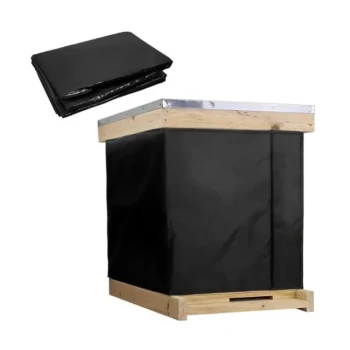
Double-walled insulated beehives function as a superior thermal barrier, specifically designed to maintain a stable internal microclimate. In harsh winter environments, their primary role is to drastically reduce the colony's energy consumption by ensuring the interior remains both warm and dry.
Core Takeaway The critical value of double-walled insulation is energy conservation. By minimizing heat loss, the colony is required to expend significantly less metabolic energy to survive winter, preserving honey stores and ensuring the physical stability needed for rapid population growth in early spring.
The Mechanism of Thermal Protection
Stabilizing the Internal Environment
The fundamental purpose of a double-walled structure is to isolate the colony from external weather variability.
Unlike standard single-walled hives, this design maintains a dry and warm internal environment. This stability is critical, as fluctuations in temperature and moisture are primary stressors that can compromise colony health during overwintering.
Reducing Metabolic Demand
Honeybees do not hibernate; they actively generate heat to maintain a core cluster temperature of approximately 95 degrees Fahrenheit.
To generate this heat, bees consume honey and vibrate their wing muscles (shivering). A double-walled hive acts as a thermal break, significantly lowering the metabolic effort required to maintain that core temperature.
Impact on Colony Lifecycle
Preventing Starvation via Energy Conservation
The leading cause of winter colony loss is often starvation, not just the cold itself.
Because the bees in an insulated hive do not have to work as hard to heat the space, they burn through their honey stores at a much slower rate. This conservation of resources directly reduces the risk of the colony starving before forage becomes available again.
Facilitating Early Spring Development
The benefits of double-walled insulation extend beyond mere survival in the winter.
By providing a stable physical environment, these hives support rapid colony development in early spring. A consistent internal temperature allows the queen to begin laying eggs earlier and more safely, giving the colony a head start on the season.
Understanding the Trade-offs: Structural vs. Additive Insulation
While double-walled hives offer superior intrinsic protection, it is helpful to understand how they compare to other methods of thermal management.
Integrated vs. Temporary Solutions
Double-walled and polystyrene hives offer a permanent, structural solution to cold stress.
In contrast, standard Langstroth wooden hives rely on the natural insulating properties of wood, which may be sufficient for arid regions or mild winters but often require specialized hive wraps in colder climates. Wraps serve a similar function—reducing wind penetration and absorbing solar heat—but require seasonal labor to install and remove.
Operational Efficiency Considerations
While insulation is vital for survival, standard wooden hives are often favored for their operational efficiency.
Standard hives are designed for modularity, facilitating easy inspections and mechanized honey extraction. When choosing double-walled systems, one must ensure that the thermal benefits do not come at the cost of the management efficiency found in standard commercial infrastructure.
Making the Right Choice for Your Goal
The decision to utilize double-walled insulated hives depends on the severity of your local climate and your specific management goals.
- If your primary focus is overwintering survival: Prioritize double-walled or polystyrene hives to minimize honey consumption and reduce the risk of starvation in harsh climates.
- If your primary focus is rapid spring buildup: Utilize insulated hive structures to create the stable, warm physical environment necessary for early brood rearing.
- If your primary focus is operational scalability: Consider standard modular hives supplemented with external hive wraps to balance thermal protection with mechanized efficiency.
Ultimately, the goal of the double-walled design is to transform winter from a struggle for survival into a period of conservation and preparation.
Summary Table:
| Feature | Double-Walled Insulated Hive | Standard Single-Walled Hive |
|---|---|---|
| Primary Role | Superior thermal barrier & energy conservation | Structural housing with natural wood insulation |
| Energy Demand | Low; minimal honey consumption for heat | High; bees must work harder to maintain cluster temperature |
| Microclimate | Stable, dry, and warm internal environment | Prone to temperature fluctuations and moisture |
| Spring Development | Faster; supports early and safe brood rearing | Slower; dependent on external weather stabilization |
| Best Use Case | Harsh winters and maximizing survival | Arid or mild climates; operational scalability |
Maximize Your Colony’s Potential with HONESTBEE
At HONESTBEE, we specialize in empowering commercial apiaries and distributors with the tools needed to thrive in any climate. Our comprehensive wholesale catalog includes everything from advanced hive-making and honey-filling machinery to high-performance beekeeping equipment designed for efficiency and durability.
Whether you are scaling your operations or sourcing essential consumables for your distribution network, our expertise ensures you get the specialized hardware and cultural merchandise your business demands. Let us help you transform winter survival into seasonal success.
Contact us today to explore our wholesale solutions and elevate your apiary's performance!
References
- Róbert Chlebo. Changes in Slovakian Beekeeping. DOI: 10.1080/0005772x.2010.11417370
This article is also based on technical information from HonestBee Knowledge Base .
Related Products
- Professional Insulated Winter Hive Wrap for Beekeeping
- Professional Insulated Plastic Bee Hives
- In-Hive Dual Compartment Frame Bee Feeder for Targeted Colony Nutrition
- Inner Beehive Cover for Beekeeping Bee Hive Inner Cover
- Long Langstroth Style Horizontal Top Bar Hive for Wholesale
People Also Ask
- What are the steps to properly wrap a beehive for winter? Ensure Your Colony Survives the Cold
- When is the best time to wrap a beehive for winter? A Guide to Perfect Winterization Timing
- How do professional insulation wraps provide protection for bee colonies? Optimize Winter Survival & Energy Efficiency
- What are the technical benefits of using winter wraps for beehive insulation? Boost Colony Survival & Hive Health
- What are the benefits of using insulated covers for hives? Ensure Colony Survival and Health