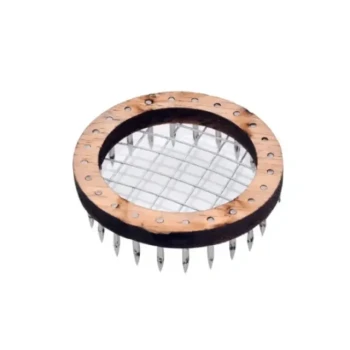
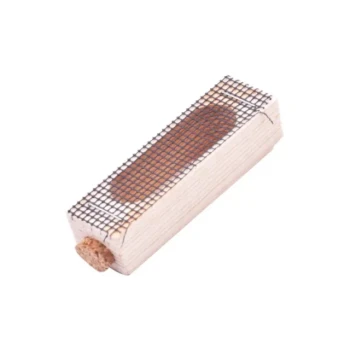
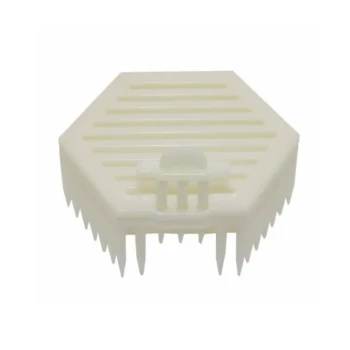
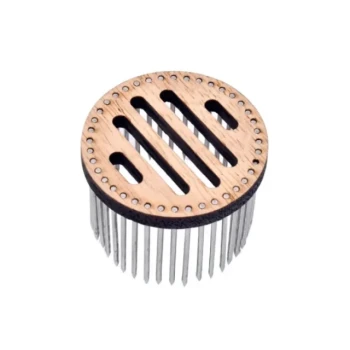
Wooden mesh comb cages act as breathable isolation units used during the final developmental stage of honeybee brood. They are specifically designed to house brood frames within an incubator, ensuring that emerging bees remain contained while still receiving the necessary heat and humidity to survive.
The definitive value of these cages is the ability to obtain honeybee samples of a precise, known age. By isolating frames immediately prior to emergence, researchers prevent bees from mixing with other colonies or escaping, without impeding the airflow required for normal pupal development.
The Mechanics of Isolation
Preserving Environmental Consistency
The mesh structure is a functional design choice, not merely aesthetic. It facilitates adequate airflow across the surface of the comb.
This permeability ensures the efficient transfer of temperature and humidity from the incubator to the brood. This allows the pupae to experience the ambient environment required for healthy emergence.
Physical Containment and Separation
Once the brood emerges, the cage acts as a strict physical barrier. It prevents the new worker bees from escaping into the general incubator space.
Crucially, it prevents these new bees from mixing with other colonies that may be stored in the same incubator. This ensures genetic and colony-specific integrity is maintained during the experiment.
Why Precision Matters in Incubation
Establishing Known Age
In scientific research, the physiological state of a bee changes rapidly after emergence. These cages allow for the collection of samples with a precise known age.
By isolating the frame right before hatching, researchers can timestamp the exact moment of emergence. This eliminates variables caused by unknown birth times in a general hive population.
Integrating with Incubator Systems
The cage is designed to work in tandem with constant temperature and humidity incubators. While the incubator maintains the critical 35°C temperature and 40% relative humidity, the cage ensures the bees remain localized.
This combination ensures that worker bee pupae develop normally under controlled conditions, resulting in experimental samples with stable physiological states.
Clarifying the Toolset: Common Confusions
Mesh Comb Cages vs. Queen Confinement Cages
It is critical to distinguish mesh comb cages from Queen Confinement Cages (QCC). While both isolate bees, they serve opposite purposes.
Mesh comb cages are used outside the hive (in incubators) to facilitate emergence. QCCs are used inside the hive to restrict egg-laying and interrupt the brood cycle.
Understanding the Role of Mite Control
You generally do not use mesh comb cages for mite control; that is the function of the QCC. By stopping brood production, QCCs force mites like Tropilaelaps mercedesae into a dispersal phase where they are exposed to treatment.
Mesh comb cages are purely for the safe emergence and collection of bees, not for managing parasitic loads on the queen or colony.
Making the Right Choice for Your Goal
To select the correct equipment, you must define the specific phase of the honeybee lifecycle you are managing.
- If your primary focus is obtaining age-standardized samples: Use wooden mesh comb cages inside an incubator to isolate emerging workers without disrupting their environment.
- If your primary focus is pest management or brood interruption: Use a Queen Confinement Cage (QCC) to restrict the queen's laying area and expose parasitic mites.
By using wooden mesh comb cages, you transform variable hive emergence into a controlled, measurable scientific process.
Summary Table:
| Feature | Description | Benefit |
|---|---|---|
| Material | Wooden frame with breathable mesh | Ensures optimal airflow and heat transfer |
| Primary Role | Isolation during final development | Provides samples of a precise, known age |
| Containment | Physical barrier within incubator | Prevents mixing of colonies and escapes |
| Environment | Compatible with 35°C/40% RH | Maintains stable physiological states |
| Target Use | Post-capping/Pre-emergence phase | Ensures scientific accuracy in research |
Elevate Your Apiary Operations with HONESTBEE
Precision is the backbone of successful beekeeping and research. At HONESTBEE, we specialize in supporting commercial apiaries and distributors by providing a comprehensive range of high-quality equipment.
Whether you need specialized beekeeping tools, hive-making machinery, honey-filling systems, or essential industry consumables, our wholesale portfolio is designed to meet your large-scale needs. From technical hardware to honey-themed cultural merchandise, we bring value through durability and innovation.
Ready to scale your production? Contact us today to explore our wholesale offerings and discover how HONESTBEE can streamline your operations.
References
- Saad N. Al-Kahtani, El-Kazafy A. Taha. Morphometric study of Yemeni (Apis mellifera jemenitica) and Carniolan (A. m. carnica) honeybee workers in Saudi Arabia. DOI: 10.1371/journal.pone.0247262
This article is also based on technical information from HonestBee Knowledge Base .
Related Products
- Wood and Mesh Push-In Queen Cage
- Classic Wooden and Mesh California Queen Cage
- Hexagonal Direct Comb Introduction Queen Bee Cage
- Premium Wood and Steel Push In Queen Cage
People Also Ask
- When is a queen introduced with a push-in cage ready for full release? Key Signs for Maximum Colony Acceptance
- How are queen cages used to protect newly hatched queens? Secure Your Virgin Queens During Development
- Why are queen cages or grid cages used in bee studies? Achieve Precise Biological Data for Research
- What advantages do push-in queen cages offer? Boost Acceptance Rates for Artificially Inseminated Queens
- What is a push-in queen cage and how does it differ from a standard queen cage? Boosting Your Queen Acceptance Rates