The procedure for grafting and introducing cells begins several hours after establishing the swarm box, once the colony recognizes it is queenless. You must remove the larval frame, graft the larvae into cell cups, and insert the prepared cell frame directly into the center of the box between the pollen and brood resources.
Core Takeaway Success in queen rearing relies on precise timing and resource proximity. You must wait for the colony to settle into a "queenless" state before introducing grafts, and place the new cells centrally between pollen and young larvae to guarantee immediate attention from nurse bees.
Preparing for the Introduction
Timing the Introduction
You cannot introduce cells immediately after creating the swarm box. You must wait several hours after the initial setup.
This delay is critical. It allows the bees to settle and collectively realize they are in a queenless state, which triggers their instinct to rear new queens.
Verifying Bee Density
Before removing any frames, inspect the interior of the box. You must confirm that the frames are covered with bees.
A dense population of bees is required to maintain the temperature and feed the larvae once they are introduced.
The Grafting Procedure
Retrieving the Larvae
Remove the designated frame of larvae from the swarm box. Gently brush the bees off this frame.
Do not shake the frame. Shaking can damage the delicate larvae or dislodge the food (royal jelly) they are resting on.
Transferring to Cell Cups
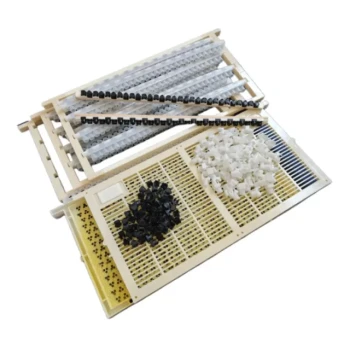
Perform your grafting by transferring larvae into the cell cups. A common configuration involves grafting 54 cells distributed across three bars.
Assembling the Cell Frame
Once the larvae are grafted, slide the bars into a specialized cell frame. This frame secures the bars and mimics the structure of a standard comb for the bees.
Placement and Tracking
Positioning the Cell Frame
Insert the cell frame into the central position of the swarm box.
Crucially, this frame must be placed between the pollen frame and the young larvae frame. This positions the grafts in the area of highest nurse bee activity and nutritional availability.
Final Hive Composition
The frame from which you grafted larvae is not returned to the box.
The swarm box should now contain a total of five combs. This ensures the population density remains high relative to the space.
Documentation
Immediately mark the cell bars. You must record the date and the breeder queen source.
Accurate tracking is essential for evaluating the performance of specific genetic lines later.
Critical Variables and Risks
The Risk of Premature Introduction
If you introduce grafts before the bees have fully realized they are queenless, acceptance rates will drop. The colony needs to feel the "emergency" of being queenless to immediately accept and feed the introduced cups.
The Impact of Placement
Placing the cell frame on the edge of the box is a common error. Nurse bees congregate around pollen and existing brood; if the grafts are not sandwiched between these resources, they may be neglected or cannibalized.
Ensuring High Acceptance Rates
To achieve consistent results, align your procedure with your specific operational goals.
- If your primary focus is maximum acceptance: Ensure the cell frame is strictly located in the center position, flanked by pollen and open brood to draw in nurse bees.
- If your primary focus is genetic tracking: rigorous labeling of the cell bars with the breeder source and date is mandatory before the frame enters the box.
Precision in timing and placement transforms a simple graft into a thriving new queen.
Summary Table:
| Step | Action | Key Requirement |
|---|---|---|
| Timing | Wait several hours after setup | Colony must reach a confirmed "queenless" state |
| Grafting | Transfer larvae to cell cups | Gentle removal without shaking; typically 54 cells |
| Placement | Center of the swarm box | Must be sandwiched between pollen and brood frames |
| Density | Maintain 5 combs total | Ensures high bee-to-cell ratio for optimal feeding |
| Tracking | Label bars immediately | Record date and breeder queen genetic source |
Maximize Your Apiary's Success with HONESTBEE
High-quality queen rearing begins with the right tools and expertise. At HONESTBEE, we specialize in supporting commercial apiaries and distributors by providing a comprehensive wholesale range of beekeeping solutions.
Whether you need specialized grafting tools, hive-making machinery, or honey-filling equipment, our portfolio is designed to enhance your operational efficiency. We also offer a wide array of industry consumables and honey-themed cultural merchandise to help your business grow.
Ready to scale your beekeeping operation? Contact us today to discover how our professional-grade equipment and wholesale offerings can benefit your apiary.
Related Products
- Professional Queen Bee Introduction and Transport Cage
- Nicot Queen Rearing Kit for Beekeeping and Grafting in Nicot System
- JZBZ Style Shipping Cell Protector for Queen Rearing Kit
- Durable Galvanized Steel Spring Queen Bee Cage
- Jenter Queen Rearing Kit Complete Set for Bee Breeding
People Also Ask
- Why are specialized queen bee cages used for the banking of mated queen bees? Maximize Commercial Apiary Storage Efficiency
- What is the mechanism of action for using temporary queen bee cages? Master Successful Queen Introduction
- How is a queen bee released from a queen cage? Ensure Safe Colony Integration & Hive Success
- What materials are required to install a queen bee's cage into a hive? Essential Tools for Successful Queen Integration
- How long should a queen bee stay in the cage before being released? Ensure a Successful Introduction