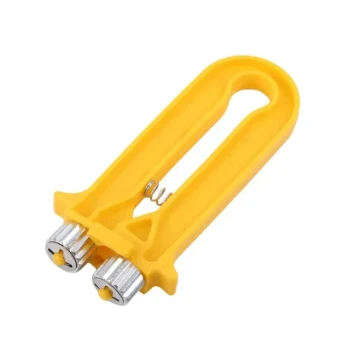
The procedure for using a grafting tool centers on the delicate, manual transfer of very young larvae from worker cells into artificial queen cups to induce queen development. The process involves sliding the tool underneath a freshly hatched larva to scoop it out, then depositing it into a vertically oriented cell cup. Crucially, you must maintain the larva's original orientation throughout the transfer; flipping the larva can cause it to drown in its own fluids, leading to immediate graft failure.
The objective of grafting is to trigger a biological shift through environmental changes. By moving a larva to a vertical cup without physical damage, you stimulate nurse bees to feed it a diet rich in royal jelly, initiating the specific gene expression changes required to produce a queen.
The Mechanics of the Grafting Transfer
Selecting the Candidate
Your process begins by identifying the correct biological material within a donor colony. You must select extremely young larvae—ideally just one day old—to ensure the highest quality queen development. The grafting tool is designed to mimic the curve of the larvae, allowing for a seamless interface with these fragile organisms.
Executing the Scoop
Insert the precision grafting needle or tool into the worker cell containing the selected larva. Slide the tip gently along the cell wall and underneath the larva and its bed of jelly. The goal is to lift the larva purely by supporting it from beneath, rather than pinching or grasping it.
Placement and Orientation
Once the larva is on the tool, transfer it immediately to a manufactured cell cup. Do not flip the larva over. It must be placed in the cup in the exact same orientation it held in the comb. Inverting the larva often results in drowning within the royal jelly or rejection by the nurse bees.
Post-Grafting Colony Management
Initiating Cell Building
Immediately after the transfer is complete, place the frame of grafted cell cups into a cell starter or a queenless hive. The absence of a queen in this environment triggers an emergency impulse in the worker bees to draw out the cells and begin feeding the larvae royal jelly.
Incubation and Capping
Once the nurse bees have accepted the cups and drawn them out, the cells are capped. At this stage, it is standard practice to move the cells to a strong hive. This ensures the developing queens receive the consistent warmth and maintenance required for proper maturation.
The Development Timeline
The entire process operates on a strict biological clock. From the time the egg is laid until the new queen hatches, the cycle takes approximately 16 days. Beekeepers must track this timeline precisely to manage the hive before the new queens emerge.
Understanding the Trade-offs
The Precision Barrier
Manual grafting offers the ability to produce a high volume of queens, but it is technically demanding. It requires excellent vision, a steady hand, and significant dexterity. Without these attributes, the risk of physically damaging the larvae—and therefore failing to produce viable queens—is high.
Equipment and Protection
As the queens approach hatching, the risk of fratricide increases. Beekeepers often employ queen cell protectors or introduction cages. These barriers prevent the first emerged queen from killing her unhatched rivals and stop worker bees from tearing down the cells.
Non-Grafting Alternatives
For beekeepers who find the manual dexterity of grafting impractical, systems like Jenter or Nicot exist. These allow for the creation of moveable queen cells without the risks associated with manual scooping, though they may offer less control over exact numbers compared to manual grafting.
Making the Right Choice for Your Goal
Before starting your queen rearing project, assess your resources and capabilities.
- If your primary focus is large-scale production: Master the manual grafting tool, as it allows for the creation of an unlimited number of portable queen cells.
- If your primary focus is avoiding physical handling: Consider graft-free systems like Jenter or Nicot to bypass the risks of damaging delicate larvae.
- If your primary focus is maximizing success rates: Ensure you use a precision needle and transfer only one-day-old larvae to ensure high biological quality in the resulting queens.
Mastery of the grafting tool is less about force and more about understanding the fragile biology of the hive to guide nature’s course.
Summary Table:
| Stage | Key Action | Critical Requirement |
|---|---|---|
| Selection | Identify 1-day-old larvae | Extreme precision and young age |
| The Scoop | Slide tool underneath larva | Lift from beneath; do not pinch |
| Placement | Deposit in vertical cell cup | Maintain original orientation (No flipping) |
| Initiation | Place in cell starter hive | Queenless environment to trigger royal jelly |
| Maturation | Move to strong finisher hive | Consistent warmth and capping |
| Protection | Apply cell protectors/cages | Prevent fratricide before hatching |
Elevate Your Apiary's Success with HONESTBEE
Mastering queen rearing requires not just skill, but the highest quality tools. HONESTBEE specializes in supporting commercial apiaries and distributors with a comprehensive range of professional beekeeping solutions. From high-precision grafting needles and queen cell protectors to advanced hive-making and honey-filling machinery, we provide the essential equipment and consumables you need to scale your production.
Ready to upgrade your wholesale supply? Contact us today to discover how our premium portfolio of beekeeping hardware and cultural merchandise can drive growth for your business.
Related Products
- Stainless Steel Queen Grafting Tool for Beekeeping and Bee Queen Grafting
- Plastic Chinese Queen Grafting Tool for Bee Queen Rearing
- Stainless Steel Beekeeping Queen Grafting Tool for Honey Bee Rearing
- Plastic Beekeeping Honey Bee Larvae Grafting Tools for Queen Rearing and Chinese Grafting
- Retractable Chinese Queen Rearing Grafting Tools Equipment
People Also Ask
- What are the steps involved in using a queen grafting tool? A Guide to Successful Queen Rearing
- What is grafting in queen rearing? Take Control of Your Apiary's Genetics
- What are the benefits of using a queen grafting tool for queen rearing? Master Precision for Superior Bee Genetics
- What is the step-by-step process for using a queen grafting tool? Master Larva Transfer for Better Queen Rearing
- What is the primary function of a queen grafting tool? Master Precise Larval Transfer for High Queen Acceptance