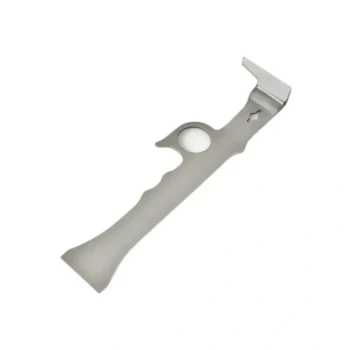
The primary function of a queen grafting tool is to physically transfer young honey bee larvae from standard worker cells into specialized queen cell cups. This instrument is the cornerstone of artificial queen rearing, allowing beekeepers to manipulate extremely fragile larvae with the precision required to breed new queens.
Core Insight: By enabling the gentle relocation of larvae less than 24 hours old, this tool minimizes physical damage to the insect's delicate epidermis. This mechanical precision is the critical factor in achieving high queen cell acceptance rates and ensuring the resulting queens are of high genetic quality.
The Mechanics of Larval Transfer
Precision Relocation
The grafting tool is designed to bridge the gap between natural comb and artificial rearing methods. Its main job is to lift a larva from its original cell and place it into an artificial "queen cup."
This process mimics the natural selection of a queen but gives the beekeeper control over the genetics.
Handling Fragile Biology
Honey bee larvae, particularly those ideal for grafting (under 24 hours old), are incredibly soft and prone to injury. The tool features a specialized fine tip that allows the user to slide underneath the larva.
This design enables a "scooping" motion that supports the larva's body, preventing crushing or tearing during the move.
The Release Mechanism
Once the larva is secured on the tool, it must be deposited into the new cup without trauma.
The tool facilitates a delicate rolling motion or a push-mechanism release. This ensures the larva is placed gently onto the bed of royal jelly in the new cup.
Why Specialized Tools are Necessary
Increasing Acceptance Rates
Nurse bees are highly sensitive to the condition of the larvae they tend. If a larva is damaged during transfer, the bees will reject it.
Using a dedicated grafting tool significantly reduces rejection, leading to a higher percentage of successful queen cells.
Operational Efficiency
Speed and accuracy are vital when working with live brood outside the hive.
These tools are designed to be ergonomic and efficient, reducing the time larvae are exposed to dry air or temperature fluctuations.
Understanding the Trade-offs
The Learning Curve
While the tool is designed for precision, it does not automate the process. It relies entirely on the steady hand and visual acuity of the beekeeper.
Improper use—such as applying too much pressure or failing to moisten the tip—will kill the larvae instantly.
Maintenance Requirements
Because the tool comes into direct contact with the brood, it introduces a vector for contamination.
The tool requires rigorous cleaning before use. Failure to sterilize the tip can introduce pathogens directly into the vulnerable queen cells.
Making the Right Choice for Your Goal
To get the most out of this instrument, align its usage with your specific beekeeping objectives:
- If your primary focus is High-Volume Queen Rearing: Prioritize a tool with a flexible tip to maximize speed and minimize the physical stress on larvae during repetitive transfers.
- If your primary focus is Education and Learning: Use the tool to study the morphology of larvae at different stages, as the lifting process reveals details often hidden in the cell.
The queen grafting tool is not just about moving an insect; it is about preserving the biological viability of the future queen during her most vulnerable stage.
Summary Table:
| Feature | Primary Benefit | Key Operational Insight |
|---|---|---|
| Precision Tip | Minimizes larval damage | Essential for larvae under 24 hours old |
| Scooping Motion | Supports fragile epidermis | Prevents crushing during relocation |
| Release Mechanism | Gentle placement in cups | Increases queen cell acceptance rates |
| Ergonomic Design | Operational efficiency | Reduces exposure to air/temperature fluctuations |
Scale Your Queen Rearing Success with HONESTBEE
Maximize your breeding efficiency and ensure the highest genetic quality with professional-grade tools. HONESTBEE caters to commercial apiaries and distributors with a comprehensive wholesale offering designed for large-scale success. From high-precision queen grafting tools and specialized hive-making machinery to honey-filling systems and essential industry consumables, we provide the full spectrum of equipment needed to thrive in the competitive beekeeping market.
Ready to enhance your operational efficiency? Contact us today to explore our wholesale catalog and expert solutions!
Related Products
- Stainless Steel Queen Grafting Tool for Beekeeping and Bee Queen Grafting
- Stainless Steel Beekeeping Queen Grafting Tool for Honey Bee Rearing
- Plastic Chinese Queen Grafting Tool for Bee Queen Rearing
- Black 2 Pack Beekeeper Queen Grafting Tool for Bee Queen Larva Transferring Needle
- Retractable Chinese Queen Rearing Grafting Tools Equipment
People Also Ask
- What are the steps involved in using a queen grafting tool? A Guide to Successful Queen Rearing
- What is grafting in queen rearing? Take Control of Your Apiary's Genetics
- What are the benefits of using a queen grafting tool for queen rearing? Master Precision for Superior Bee Genetics
- What is the step-by-step process for using a queen grafting tool? Master Larva Transfer for Better Queen Rearing
- What is the primary function of beekeeping grafting tools? Enhance Queen Rearing Efficiency for Commercial Apiaries