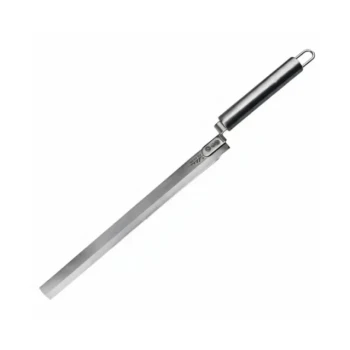
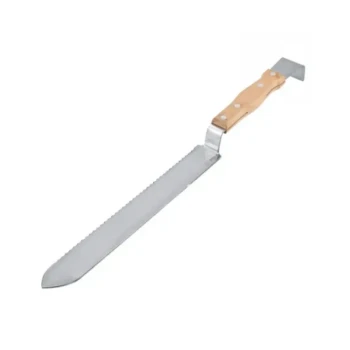
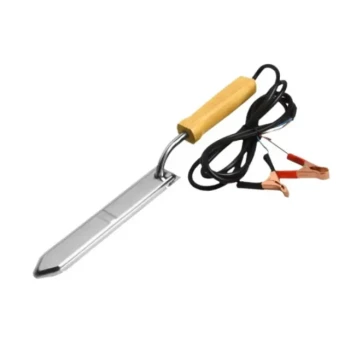
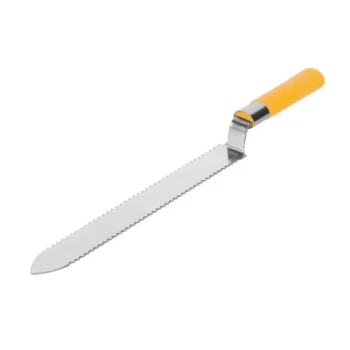
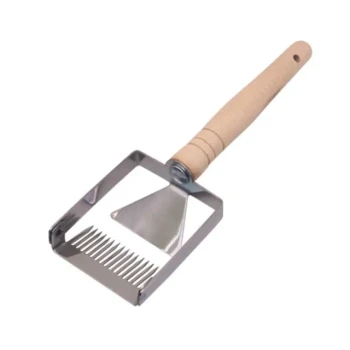
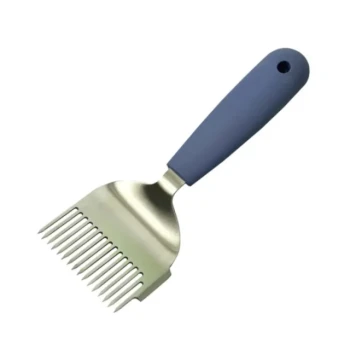
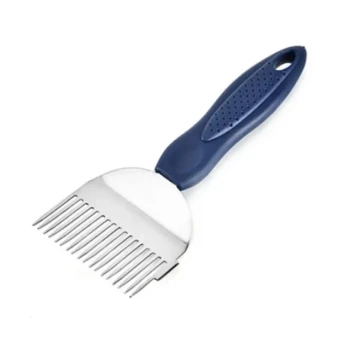
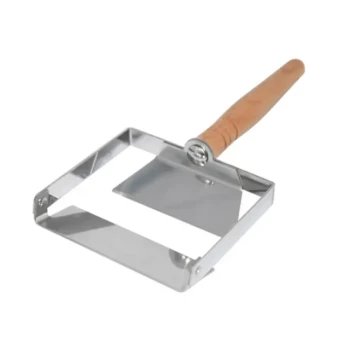
The process of uncapping honeycomb frames involves carefully slicing off the thin layer of wax seals using a heated blade while the frame is stabilized over a collection basin. This prepares the frame for centrifugal extraction by exposing the honey stored within the cells.
The goal of uncapping is to remove the wax barrier to allow honey flow, while keeping the structural integrity of the comb intact for the extraction process.
Setting Up the Workspace
The Stabilization System
To uncap safely, you need a stable platform. Place a board across the top of a large basin or tub.
Drive a nail through the center of the board so that the point faces upward. This nail serves as a pivot point to hold the frame steady during the cutting process.
The Collection Basin
The basin underneath is essential for hygiene and resource recovery.
It catches the wax "cappings" that are sliced off, as well as any honey that drips during the process. Both the wax and the honey can be processed and used later.
Executing the Uncapping Technique
Positioning the Frame
Take the honeycomb frame and rest one of the end bars directly on the upward-pointing nail.
Hold the frame firmly by the top bar. The nail allows you to pivot and rotate the frame easily without it slipping.
The Downward Cut
Using your chosen knife, begin the cut at the top of the frame.
Use a steady, gentle sawing motion as you move the knife downwards. Do not try to force the blade through; let the heat and the sawing action do the work.
Controlling Depth
Precision is key here. Your objective is to shave off only the wax caps.
Avoid cutting deeply into the comb itself. Preserving the cell depth ensures the comb remains strong for the extractor and reduces the rebuilding work for the bees later.
Managing Temperature and Tools
Tool Selection
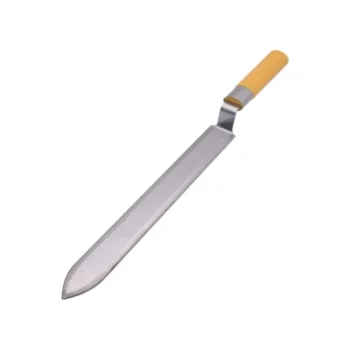
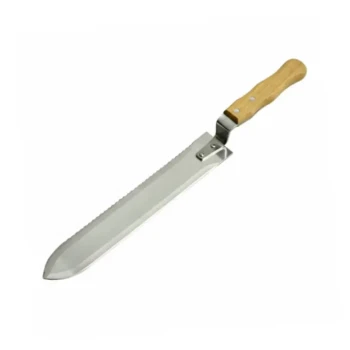
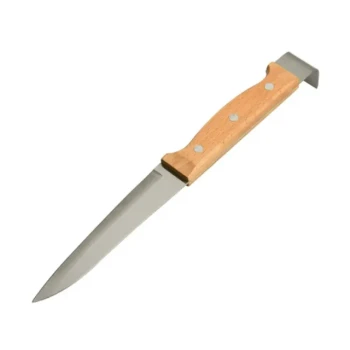
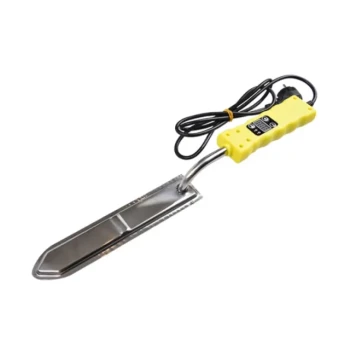
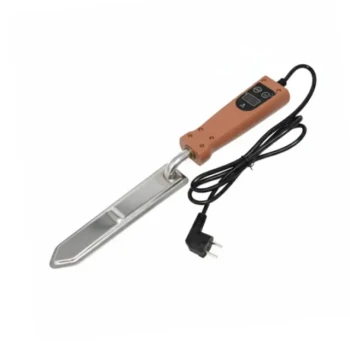
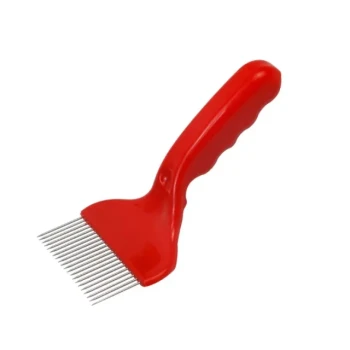
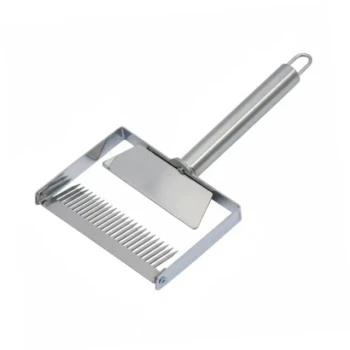
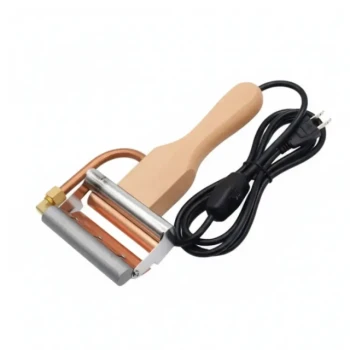
You can use a specialized uncapping knife designed for this specific task.
Alternatively, you can use two standard bread knives. This method requires a container of hot water nearby to heat the blades.
The Two-Knife Method
If using bread knives, keep one knife submerged in the hot water while working with the other.
As soon as the active knife cools down and becomes difficult to use, place it back in the water and swap it for the hot one.
Preventing Contamination
This is a critical quality control step. When you remove a hot knife from the water, you must dry it thoroughly with a towel before touching the comb.
Water must never be allowed to mix with the honey, as moisture can compromise the quality and storage life of your harvest.
Common Pitfalls to Avoid
Introducing Moisture
The most frequent error when using the hot-water method is failing to dry the knife.
Even small amounts of hot water dripping into your honey can alter its moisture content. Always verify the blade is dry before every cut.
Aggressive Cutting
Applying too much pressure or cutting too deep damages the foundation of the comb.
Deep cuts generate excessive loose wax and can weaken the frame, making it more likely to break under the centrifugal force of the extractor.
Making the Right Choice for Your Goal
- If your primary focus is Precision: Use a specialized uncapping knife, as it is designed to glide across the caps with minimal structural damage.
- If your primary focus is Cost-Efficiency: Utilize the two-bread-knife method, but remain disciplined about drying the blades every single time you swap them.
Proper uncapping is the balance between removing the seal effectively and preserving the comb for future seasons.
Summary Table:
| Step | Action | Key Objective |
|---|---|---|
| Setup | Stabilize frame on a pivot nail over a basin | Ensure safety and catch wax cappings/dripping honey |
| Tool Prep | Heat specialized knife or use two-bread-knife method | Achieve smooth cuts through wax seals without tearing |
| Technique | Use a gentle downward sawing motion | Shave off wax caps while preserving cell structure |
| Quality Control | Thoroughly dry heated blades before use | Prevent moisture contamination in the honey harvest |
Maximize Your Honey Harvest with HONESTBEE
Efficient uncapping is just the first step in a successful harvest. At HONESTBEE, we specialize in empowering commercial apiaries and distributors with professional-grade beekeeping solutions. From high-precision uncapping knives and specialized hardware to industrial-scale honey-filling machines and extractors, we provide the full spectrum of tools and consumables needed to scale your operations.
Whether you are looking to upgrade your machinery or stock high-quality beekeeping supplies for resale, our comprehensive wholesale offering ensures you stay competitive in the market. Contact us today to discover how HONESTBEE can streamline your production and enhance your apiary's efficiency.
Related Products
- Professional All-Stainless Steel Uncapping Knife for Beekeeping
- Professional Z-Shaped Multi-Function Uncapping Knife for Beekeeping
- Professional 12V DC Electric Uncapping Knife for Beekeeping
- Professional Serrated Double-Sided Uncapping Knife for Beekeeping
- Professional Stainless Steel Double-Sided Honey Uncapping Knife
People Also Ask
- What is the use of a bee knife? Essential for Efficient Honey Harvesting
- What is an uncapping knife and its function in honey harvesting? Essential Tips for Efficient Extractions
- What is the primary difference between a cold and heated uncapping knife? Choose the Best Tool for Your Honey Harvest
- What is the function of uncapping knives or uncapping forks? Expert Tools for Honey Harvesting Productivity
- How do sustainable harvesting consumables support hive conservation? Boost Colony Health & Commercial Yield