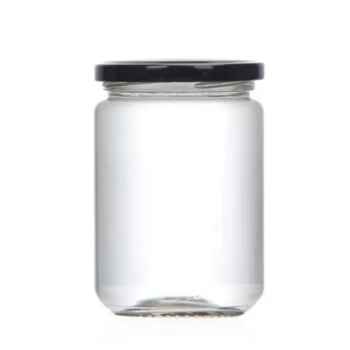
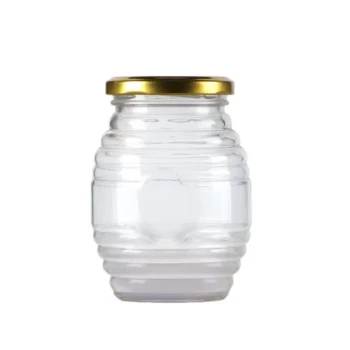
The glass sampling jar with a wire mesh lid serves as the primary mechanical separator in Varroa mite density estimation. It functions as a closed filtration system, allowing you to vigorously shake a sample of bees to dislodge parasites, while the mesh lid acts as a precision sieve to allow mites to fall into a collection tray while keeping the host bees securely trapped inside.
By transforming a biological sample into a mechanical separation process, this tool allows for the quantification of infestation levels. It isolates the parasite from the host through physical agitation and filtration, often enabling non-destructive monitoring where the bee colony remains unharmed.
The Mechanics of Physical Separation
Acting as a Precision Sieve
The core function of the wire mesh lid is selective filtration. The mesh aperture (often approximately 0.5 x 0.5 mm) is engineered to specific tolerances.
This specific size allows dislodged Varroa mites and fine particulate matter, such as powdered sugar, to pass through freely. Simultaneously, it acts as an impassable barrier for the larger honey bees, ensuring they remain contained throughout the procedure.
Facilitating Vigorous Agitation
To obtain an accurate mite count, the parasites must be physically dislodged from the bees' bodies. This requires vigorous shaking, which the glass construction supports.
The rigidity of the glass withstands the force required to create sufficient friction between the bees and the separation medium. This agitation breaks the mites' adhesion to the host, a critical step that must occur before filtration is possible.
Ensuring Accuracy and Safety
Visual Monitoring Capability
The use of glass as the container material provides transparency for real-time visual monitoring.
The operator can observe the condition of the bees and the distribution of the separation medium (such as powdered sugar) during the process. This ensures that the bees are adequately coated and agitated without requiring the jar to be opened.
Enabling Non-Destructive Sampling
In methods like the "sugar shake," the jar's design is critical for preserving the colony.
Because the mesh prevents the bees from escaping during the filtration of mites, the bees remain alive inside the jar. Once the separation process is complete, the beekeeper can return the sample to the hive, making this a sustainable practice for long-term monitoring.
Understanding the Trade-offs
Technique Dependency
The jar is a passive tool; its effectiveness relies entirely on the consistency of the agitation applied by the user.
If the shaking is not vigorous enough, mites will remain attached to the bees, leading to a false low count. Conversely, the "sieve" function works only if the jar is inverted and shaken correctly to allow gravity to assist the filtration.
Mesh Integrity
The accuracy of the estimation is tied directly to the integrity of the wire mesh.
If the mesh is damaged or the aperture size is inconsistent, it may either trap mites (lowering the count) or allow bees to escape. Regular inspection of the lid is necessary to ensure the mechanical separation remains precise.
Making the Right Choice for Your Goal
To maximize the utility of the glass sampling jar in your apiary management:
- If your primary focus is non-destructive monitoring: Utilize the jar with the powdered sugar roll method to dislodge mites via friction while keeping bees alive for reintroduction to the hive.
- If your primary focus is rapid efficiency: Rely on the mesh lid's sieving capability to quickly separate debris and mites from the biomass, ensuring a clean count in the collection tray.
The glass sampling jar is not just a container; it is a calibrated instrument that turns physical agitation into actionable data for hive health.
Summary Table:
| Feature | Function in Mite Estimation | Benefit to Beekeeper |
|---|---|---|
| Wire Mesh Lid | Selective filtration (sieve) | Separates mites from bees while keeping bees contained |
| Glass Body | Rigid & Transparent construction | Allows for vigorous agitation and real-time visual monitoring |
| Mesh Aperture | Precision-sized (approx. 0.5mm) | Ensures only parasites and medium pass through to the tray |
| Design Intent | Mechanical separation system | Enables non-destructive "sugar shake" for sustainable monitoring |
Optimize Your Apiary Health with HONESTBEE Precision Equipment
At HONESTBEE, we understand that accurate data is the foundation of successful beekeeping. As a dedicated partner to commercial apiaries and distributors, we provide more than just tools—we provide the reliability required to maintain healthy colonies.
Our comprehensive wholesale portfolio includes:
- Professional Monitoring Tools: High-clarity sampling jars and precision-engineered mesh lids for accurate mite counts.
- Industrial Machinery: Advanced hive-making, honey-processing, and honey-filling machines to scale your operations.
- Consumables & Hardware: A full spectrum of essential beekeeping supplies and honey-themed cultural merchandise.
Ready to elevate your beekeeping business? Our team is here to support your growth with high-quality equipment and competitive wholesale offerings.
Contact HONESTBEE Today to Discuss Your Wholesale Needs
References
- Gloria DeGrandi‐Hoffman, Emily Watkins deJong. Population growth of Varroa destructor (Acari: Varroidae) in honey bee colonies is affected by the number of foragers with mites. DOI: 10.1007/s10493-016-0022-9
This article is also based on technical information from HonestBee Knowledge Base .
Related Products
- Classic Round Glass Honey Jar with Lid
- Classic Drum Shaped Glass Honey Jar with Airtight Lid
- Hexagonal Glass Honey Jar with Wooden Lid Integrated Dipper Elegant Functional Storage
- Modern Square Glass Honey Jar with Twist Off Lid
- Hexagonal Glass Honey Jars with Metal Lug Caps Elegant Versatile Packaging
People Also Ask
- What is the aesthetic appeal of using glass jars for honey? Elevate Your Brand with Premium Packaging
- What are the advantages of glass containers for honey? Elevate Quality and Market Value with Premium Packaging
- How does the appearance of glass jar packaging affect the sales and perception of honey? Boost Your Premium Brand Value
- Why is a glass jar preferred for packaging honey? Ultimate Protection for Purity & Flavor
- What are the advantages of using high-quality glass containers in the commercial packaging of honey? Boost Premium Value