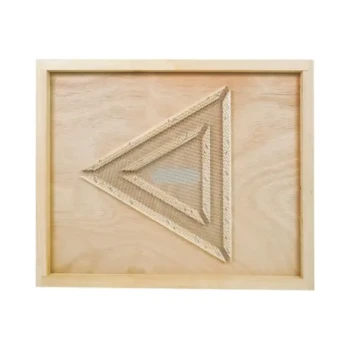
The primary purpose of installing a sticky bottom board coated with medical-grade petroleum jelly is to create a diagnostic tool for monitoring Varroa destructor mite levels. This technique, known as the natural mite fall method, traps mites that die and spontaneously drop from the bees above. The adhesive layer of odorless jelly prevents these fallen mites from being blown away by the wind or removed by scavengers like ants, ensuring they remain in place for the beekeeper to count.
By capturing naturally fallen mites, this device provides the data necessary to estimate the total infestation rate of the colony, helping beekeepers decide when intervention is necessary.
The Mechanics of Mite Monitoring
Capturing Natural Mite Fall
The sticky board operates on the principle that a percentage of mites in a colony die naturally every day.
As these mites fall off the bees, they land on the bottom board. Without an adhesive, these tiny parasites could easily bounce off or fall through gaps. The petroleum jelly secures them immediately upon contact.
Preventing Data Loss
For a mite count to be statistically relevant, the sample must remain undisturbed.
Scavengers, particularly ants, are quick to remove organic debris—including dead mites—from the hive floor. Wind drafts can also clear light debris. The sticky coating ensures that every mite that falls remains available for the census, providing a true reflection of the "drop rate."
Using Odorless Materials
It is critical that the petroleum jelly used is odorless.
Bees rely heavily on pheromones for communication and hive regulation. Using scented products could disrupt the colony's internal signaling or trigger defensive behavior.
Context: The Role of the Bottom Board
The Hive Foundation
While the sticky board is a diagnostic tool, it rests upon or replaces the standard bottom board, which serves as the floor of the colony.
This structure acts as the takeoff and landing platform for foraging bees. It creates the "front door" for entrance and exit.
Structural Considerations
When using any bottom board, proper positioning is essential for hive health.
The colony should be tilted slightly forward. Because the bottom board is open at the front, this tilt prevents rainwater from running into the hive and pooling on the floor, which could otherwise degrade the sticky board or drown the bees.
Understanding the Trade-offs
Monitoring vs. Treatment
It is important to distinguish that a sticky bottom board is a monitoring device, not a treatment method.
While it catches mites, it only catches those that have already died or fallen. It does not actively kill mites attached to bees or reproducing inside capped brood cells. It is a thermometer, not a medicine.
Data vs. Hygiene
There is a functional trade-off between a sticky board and a solid, natural bottom board.
Solid boards allow bees to coat the floor with propolis, a resin that boosts colony immunity and aids pheromone containment. A sticky board covers this surface to gather data, temporarily suspending the natural "self-cleaning" and propolizing behaviors of the colony floor in favor of pest surveillance.
Making the Right Choice for Your Goal
To manage your hive effectively, you must match your equipment to your immediate objective.
- If your primary focus is pest management: Use a sticky bottom board to calculate accurate mite counts, as this data is required to determine if chemical treatment is necessary.
- If your primary focus is general hive health: Utilize a standard solid bottom board to allow bees to coat the surface with propolis and maintain their natural immune defenses.
Accurate monitoring is the prerequisite for effective treatment; you cannot manage what you do not measure.
Summary Table:
| Feature | Purpose/Function | Benefit to Beekeeper |
|---|---|---|
| Petroleum Jelly | Odorless adhesive layer | Traps mites; prevents scavenger removal |
| Natural Mite Fall | Captures dead mites | Provides data for infestation estimates |
| Odorless Grade | Prevents pheromone disruption | Maintains colony communication & peace |
| Forward Tilt | Water drainage | Prevents moisture buildup and data loss |
| Monitoring Tool | Pest surveillance | Identifies when chemical treatment is needed |
Maximize Your Colony Yield with HONESTBEE Professional Equipment
Effective Varroa management starts with the right tools. At HONESTBEE, we empower commercial apiaries and distributors with the high-quality hardware needed to scale operations and protect bee health.
From precision-engineered sticky boards and hive components to industrial honey-filling machines and hive-making machinery, our comprehensive wholesale portfolio covers every stage of the beekeeping lifecycle. Whether you are stocking essential consumables or upgrading your processing line, our team provides the expert support and specialized equipment required for modern, profitable beekeeping.
Ready to elevate your wholesale supply or commercial operation?
Contact HONESTBEE Today for a Full Catalog
References
- Nora Drescher, Sara D. Leonhardt. Inside Honeybee Hives: Impact of Natural Propolis on the Ectoparasitic Mite Varroa destructor and Viruses. DOI: 10.3390/insects8010015
This article is also based on technical information from HonestBee Knowledge Base .
Related Products
- Solid Bottom Board Australian Pine Wood Langstroth Bottom Board for Wholesale
- Langstroth Solid Bottom Board for Beekeeping
- Langstroth Screen Bottom Board for Beekeeping Wholesale
- Australian Pine Wood Langstroth Screen Bottom Board for Wholesale
- HONESTBEE Wooden Bee Escape Board with Triangle Mesh Design for Beekeeping
People Also Ask
- In what conditions is a solid bottom board preferred over a screened bottom board? Maximize Hive Heat and Treatment
- What are the characteristics of a solid bottom board? A Guide to Hive Foundation & Climate Control
- What is the primary function of a solid bottom board on a beehive? Key Benefits for Hive Stability and Insulation
- What is the primary function of a solid bottom board? Essential Thermal Insulation for Cold Climate Beekeeping
- How should a solid bottom board be cleaned? Essential Scraping Tips for Apiary Hygiene