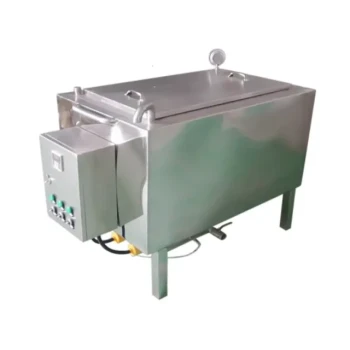
The primary purpose of an industrial-grade electric muffle furnace is to create a strictly controlled, high-temperature environment—typically around 500°C—necessary to completely incinerate the organic components of honey. By subjecting the sample to this consistent heat, the furnace isolates the inorganic mineral residue from sugars and moisture, allowing for a precise measurement of total ash content.
The furnace ensures the complete oxidation of organic matter while preserving the inorganic mineral "fingerprint." This residue is the definitive metric for verifying honey’s botanical origin, geographical source, and freedom from environmental contamination.
The Mechanics of Mineral Isolation
Complete Incineration of Organics
Honey is composed primarily of organic matter, such as sugars and water. To analyze the mineral content, these must be entirely removed.
The muffle furnace heats the sample until all organic components are carbonized and oxidized. This leaves behind only the inorganic mineral residue, or "ash," which can then be weighed and analyzed.
Controlled Thermal Stability
Standard ovens often lack the insulation and power to maintain the high temperatures required for ashing without fluctuation.
An industrial-grade muffle furnace maintains a stable thermal environment, preventing temperature drops that could lead to incomplete combustion. This stability is essential for ensuring that the residue represents the true total mineral content.
Prevention of Sample Loss
One of the critical risks in honey analysis is "splashing" or foaming, which occurs if the temperature fluctuates or rises too rapidly.
The precise control offered by an industrial furnace allows the organic matter to decompose slowly and completely. This prevents the sample from boiling over or sputtering out of the crucible, which would invalidate the weight measurements.
What Ash Content Reveals
Determining Botanical Origin
The amount of ash remaining after incineration is a key physicochemical indicator used to classify honey types.
The furnace allows analysts to distinguish between blossom honey (generally lower mineral content) and honeydew honey (higher mineral content). This distinction is vital for accurate labeling and pricing.
Tracing Geographic Source
The minerals found in honey are directly derived from the soil where the nectar-producing plants grew.
By isolating these minerals, researchers can use the ash content to verify the geographic origin of the honey. The residue reflects the soil fertility and specific environmental conditions of the production region.
Identifying Contamination
An unusually high ash content can sometimes indicate more than just mineral richness; it may signal external issues.
The residue can be analyzed to detect environmental contamination or the presence of impurities. This step is crucial for ensuring the product meets safety and quality standards.
Understanding the Trade-offs
The Risk of Volatilization
While high heat is necessary, excessive temperatures can be detrimental.
If the furnace temperature exceeds the standard protocols (varying between 500°C and 625°C depending on the specific standard used), certain volatile minerals may be lost to the atmosphere. This results in an artificially low ash count.
Time Consumption
The ashing process is not instant; it often requires several hours to achieve a "constant weight."
Operators must balance the need for throughput with the requirement for gradual heating. Rushing the process with higher heat increases the risk of splashing, while too low a temperature results in incomplete oxidation (black ash rather than white/grey).
Making the Right Choice for Your Goal
If your primary focus is Quality Assurance:
- Use the furnace to strictly verify that the ash content falls within the limits set by international standards (like Codex Alimentarius) to ensure purity.
If your primary focus is Origin Tracing:
- Focus on the precision of the weight measurement after ashing; the exact percentage of ash acts as a fingerprint for the soil composition of the harvest location.
If your primary focus is Process Efficiency:
- Prioritize a furnace with programmable ramping capabilities to automate the slow temperature increase, preventing sample splashing without constant manual supervision.
The muffle furnace is the definitive hardware for converting a complex biological product into a measurable mineral baseline.
Summary Table:
| Feature | Function in Honey Ashing | Key Benefit |
|---|---|---|
| High-Temp Incineration | Completely oxidizes organic sugars and water | Isolates pure inorganic mineral residue |
| Thermal Stability | Maintains consistent 500°C–625°C environment | Ensures complete combustion without sample loss |
| Programmable Ramping | Controls heating rate to prevent foaming/splashing | Maintains sample integrity for precise weighing |
| Mineral Fingerprinting | Preserves soil-derived inorganic elements | Verifies botanical origin and geographic source |
Elevate Your Honey Quality Standards with HONESTBEE
At HONESTBEE, we understand that precision is the backbone of a successful beekeeping enterprise. Whether you are a commercial apiary ensuring harvest purity or a distributor verifying premium honey origins, our comprehensive wholesale solutions support your every need. From specialized honey-filling and hive-making machinery to essential consumables and honey-themed merchandise, we provide the tools that turn raw production into professional excellence.
Ready to scale your operation? Contact us today to explore our full spectrum of beekeeping equipment and industrial hardware tailored for the global honey industry.
References
- Ernest Uzodimma Durugbo, Mba Obasi Odim. Pollen Characterization and Physicochemical Analysis of Six Nigerian Honey Samples; Test for Authenticity. DOI: 10.24925/turjaf.v8i9.1863-1870.3477
This article is also based on technical information from HonestBee Knowledge Base .
Related Products
People Also Ask
- Why might a commercial beekeeper prefer an electric beeswax melter? Maximize Profit with Speed & Scale
- What safety precautions should be taken when melting beeswax? A Guide to Flammable Wax Handling
- What types of beeswax melters are available for different scales of beekeeping? Solar vs. Electric Melters Compared
- What are the three popular methods for melting beeswax? Safely Process Your Wax with Ease
- How do you melt beeswax without making a mess? Master Safe & Clean Techniques