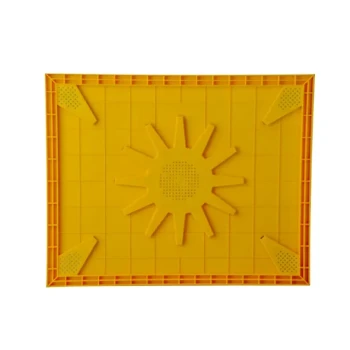
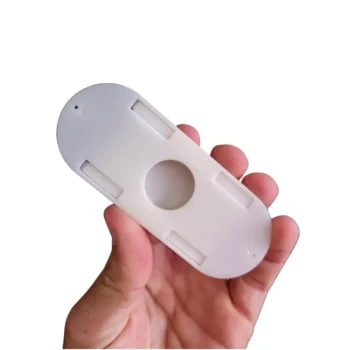
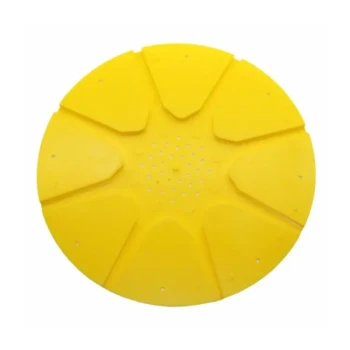
Oiled plastic sticky boards serve as a critical diagnostic interface between the beekeeper and the internal health of the hive. By placing these boards beneath a screened bottom board, you create a trap that captures Varroa mites falling naturally or due to treatment, preventing them from crawling back onto the bees to re-infect the colony. This mechanism transforms a biological event—mite fall—into quantifiable data, allowing for precise daily mortality counts and infestation assessments.
Core Takeaway The primary function of an oiled sticky board is data integrity through retention. Without the adhesive layer, fallen mites could be blown away by ventilation, removed by hygienic bees, or simply crawl back up into the cluster, rendering your infestation counts inaccurate and useless.
The Mechanics of Capture and Retention
Preventing Re-infestation
The most immediate physical purpose of the board is to break the mite's lifecycle. When mites fall off a bee—either naturally or induced by treatments—they are often still alive. The oil (often Vaseline or specific adhesive) traps the mite instantly, ensuring it cannot climb back through the screen to parasitize another host.
Countering Hive Ventilation
Beehives are dynamic environments with significant airflow caused by bee activity and ventilation. The sticky surface acts as a physical anchor, ensuring that dislodged mites are not blown off the board or shifted into corners where they cannot be counted. This stability is essential for maintaining statistical accuracy.
Preserving Evidence
A colony’s natural hygienic behavior often involves removing debris and dead pests. The adhesive layer prevents worker bees (or external scavengers like ants) from carrying the fallen mites away before inspection. This ensures that the "snapshot" of the infestation remains intact for the 24 to 72-hour monitoring window.
The Role in Data-Driven Management
Visual Identification and Counting
Plastic sticky boards are typically white, providing high contrast against the reddish-brown color of Varroa mites. This visual aid is crucial for laboratory personnel or beekeepers to quickly distinguish mites from other hive debris like pollen or wax cappings.
Quantifying Efficacy
These boards are the standard for measuring how well a treatment is working. By comparing mite drops before and after applying a pest control protocol, you can generate a clear "kill rate." This moves pest control from guesswork to a verifiable science.
Non-Invasive Monitoring
Because the board slides under a screened bottom, it is a "passive" monitoring method. It allows you to gather vital data on colony health without opening the hive, smoking the bees, or disrupting the colony's temperature and workflow.
Understanding the Trade-offs
Debris Accumulation
The sticky surface discriminates against nothing; it catches pollen, wax, and dead bees along with mites. In highly active hives, excessive debris can obscure mites, making accurate counting difficult if the board is left in place too long (beyond 72 hours).
Indication vs. Population
It is important to remember that the board measures mite drop, not the total mite population. While there is a correlation, a low drop on a sticky board does not guarantee a mite-free hive, particularly in winter when brood rearing (and mite reproduction) slows down.
Making the Right Choice for Your Goal
- If your primary focus is Routine Monitoring: Use the board for a 24-48 hour period to establish a "natural mite drop" baseline, which helps you decide when to intervene.
- If your primary focus is Treatment Verification: Insert the board immediately after applying medication to confirm that the mite drop increases significantly, proving the chemical is reaching the parasites.
The oiled sticky board is the difference between guessing your hive's parasite load and knowing it.
Summary Table:
| Feature | Functionality | Primary Benefit |
|---|---|---|
| Adhesive Surface | Traps fallen mites instantly | Prevents re-infestation & data loss |
| High-Contrast White | Enhances visual visibility | Facilitates quick & accurate mite counting |
| Passive Placement | Slides under screened bottom | Non-invasive monitoring without hive disruption |
| Stabilization | Anchors mites against airflow | Ensures statistical accuracy despite ventilation |
| Treatment Check | Records 'kill rate' post-application | Quantifies pesticide or treatment efficacy |
Optimize Your Apiary Management with HONESTBEE
At HONESTBEE, we understand that accurate data is the foundation of a healthy apiary. As a premier provider for commercial apiaries and distributors, we offer a comprehensive wholesale range of beekeeping tools, from high-precision monitoring equipment to advanced honey-filling machinery.
Whether you need bulk supplies of professional-grade sticky boards or specialized hive-making hardware, our portfolio is designed to enhance your operational efficiency and protect your colonies. Partner with us to access the high-quality tools and industry consumables your business deserves.
Ready to scale your beekeeping operations? Contact HONESTBEE Today for Wholesale Pricing
References
- Michael L. Smith, David T. Peck. Dynamics of honey bee colony death and its implications for Varroa destructor mite transmission using observation hives. DOI: 10.1007/s13592-023-00991-4
This article is also based on technical information from HonestBee Knowledge Base .
Related Products
- HONESTBEE Multi Exit Plastic Bee Escape Board for Efficient Honey Harvesting
- Professional Durable Two-Piece Plastic Bee Escape
- Efficient Hive Clearing: HONESTBEE 8-Way Plastic Bee Escape
People Also Ask
- How do bee escape boards and fume boards assist in honey harvesting? Optimize Your Harvest with Low-Stress Tools
- How do bee escape boards compare with solar fume boards when clearing bees from honey supers? Speed vs. Simplicity for Commercial Apiaries
- What mechanical methods and tools are used to clear bees from honey supers? Efficient Tools for a Smooth Harvest
- How is a bee escape board used to clear a hive body for honey harvesting? Optimize Your Chemical-Free Harvest
- What is a bee escape board and what problem does it solve? Simplify Your Honey Harvest with Passive Clearing