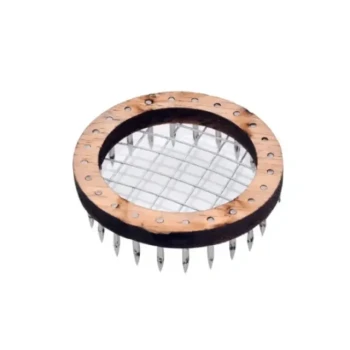
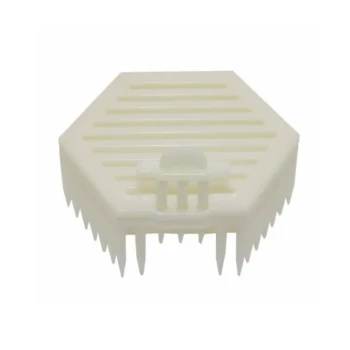
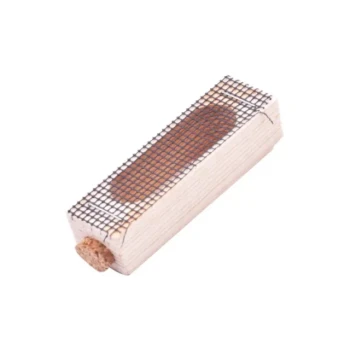
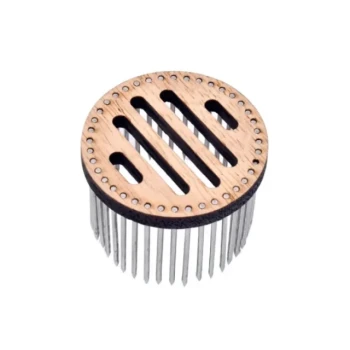
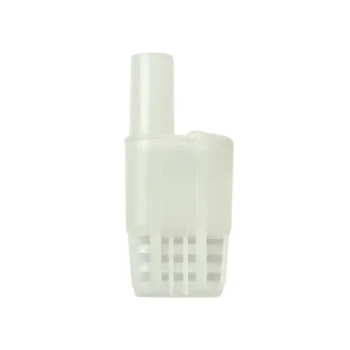
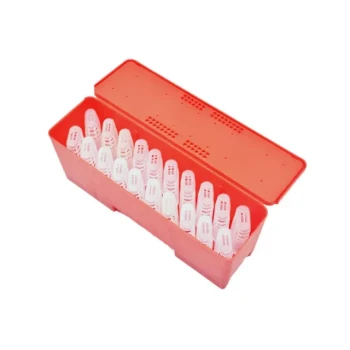
Queen isolation cages are the cornerstone of precision in apiary research. They serve to restrict a queen bee to a specific honeycomb area for a predetermined window of time, typically to ensure synchronized egg-laying. This physical restriction guarantees that all resulting larvae begin their life cycle at the exact same moment, providing researchers with a uniform developmental cohort for highly accurate testing and observation.
By enforcing a strictly controlled egg-laying period, isolation cages eliminate age-related variables in honey bee larvae. This synchronization is the fundamental requirement for any research demanding high-resolution data on developmental biology, toxicology, or disease progression.
Achieving Temporal Precision in Research
Synchronizing Egg-Laying Timelines
The primary function of an isolation cage is to confine the queen to a specific frame for a limited duration, such as six hours. This ensures that all eggs on that frame share an identical developmental starting point.
Without this control, eggs on a single frame could vary significantly in age, making it impossible to conduct precise time-sensitive experiments. Uniformity is the key to producing reliable, repeatable results in a laboratory or field setting.
Standardizing Biological Samples
Researchers require larvae of a precise age, such as exactly 4 days old, to conduct toxicity studies or proteomics analysis. Variations in age can lead to bias in how larvae respond to treatments or environmental stressors.
Isolation cages provide a standardized biological sample set. This allows distributors to supply research institutions with the confidence that their methodology minimizes developmental stage variance.
Facilitating Controlled Behavioral Observations
Simulating Specific Colony Environments
Isolation cages allow researchers to regulate the level of physical contact between the queen and the worker bees. This is critical for studying reproductive inhibition and the impact of queen pheromones on worker ovary activation.
By manipulating these interactions, scientists can observe how chemical communication governs colony hierarchy. These insights are vital for developing advanced colony management solutions for commercial beekeepers.
Monitoring Host-Parasite Interactions
In studies involving Varroa mite parasitism, timing is everything. Researchers use isolation cages to ensure they are observing mite behavior at specific milestones, such as the cell-capping period.
Capturing these moments requires the precise recording of oviposition timing facilitated by the cage. This level of detail is essential for developing new treatments for the industry's most pressing health challenges.
Ensuring Queen Safety and Colony Integration
Protecting the Queen During Transitions
Beyond research, isolation cages act as a protective barrier during the introduction of a new queen to a colony. They prevent worker bees from attacking the queen before they have accepted her pheromone signature.
These cages also serve as essential transport and incubation containers. Using high-quality cages ensures a safe transition into the mating phase, protecting the customer’s investment in premium genetics.
Understanding the Technical Trade-offs
The Impact of Physical Restriction
While isolation cages are necessary for research, they do impose temporary stress on the queen. Restricted movement can briefly interrupt her natural laying patterns, which must be accounted for in the experimental design.
Balancing Worker Access
The design of the cage—specifically the mesh or grid size—is critical. It must be small enough to confine the queen but large enough to allow worker bees to pass through to provide essential care and nutrition to the queen and the brood.
Making the Right Choice for Your Goal
How to Apply This to Your Portfolio
Distributors and wholesalers must select isolation tools that balance research precision with bee welfare. Providing a variety of specialized cages ensures you can meet the diverse needs of both commercial honey producers and high-level research laboratories.
- If your primary focus is high-precision research supply: Prioritize cages with fine-tuned dimensions that ensure total queen confinement for exact synchronization.
- If your primary focus is commercial colony management: Offer cages that emphasize worker bee access and queen safety during colony introduction and transport.
- If your primary focus is one-stop sourcing for resellers: Stock a full-spectrum portfolio of isolation cages to cover everything from Varroa mite studies to pheromone research.
Providing the right tools for queen isolation is the most effective way to ensure your clients achieve the rigorous standards required by modern apicultural science.
Summary Table:
| Application | Primary Function | Research & Commercial Value |
|---|---|---|
| Temporal Precision | Synchronized Egg-Laying | Ensures uniform age cohorts for accurate toxicity and growth testing. |
| Behavioral Studies | Controlled Interaction | Facilitates research on queen pheromones and colony social hierarchies. |
| Disease Management | Precise Timing | Critical for monitoring host-parasite interactions like Varroa mite cycles. |
| Queen Safety | Protective Barrier | Ensures safe introduction and transport, protecting genetic investments. |
Elevate Your Bee Supply Portfolio with HONESTBEE
Are you looking to supply your clients with the precision tools required for modern apiculture? HONESTBEE is your premier partner for high-quality beekeeping machinery and equipment. We cater specifically to commercial apiaries and B2B distributors, offering a one-stop sourcing solution that covers everything from specialized queen isolation cages to honey-filling machines.
Why partner with us?
- Comprehensive Portfolio: Access a full spectrum of industry-leading beekeeping hardware and consumables.
- B2B Excellence: Benefit from competitive wholesale pricing, OEM/ODM support, and deep professional expertise.
- Rapid Fulfillment: Experience ultra-fast delivery and efficient order processing to keep your inventory ready.
Scale your business with a supplier that understands the technical demands of beekeeping research and commercial production.
Contact HONESTBEE Today for a Wholesale Quote
References
- Charlotte Steinigeweg, Jens Pistorius. Impact of a Microbial Pest Control Product Containing Bacillus thuringiensis on Brood Development and Gut Microbiota of Apis mellifera Worker Honey Bees. DOI: 10.1007/s00248-022-02004-w
This article is also based on technical information from HonestBee Knowledge Base .
Related Products
- Professional Bamboo Queen Isolation Cage
- Durable Galvanized Steel Spring Queen Bee Cage
- Professional Queen Cage with Sliding Gate and Feeder Plug
- Professional Queen Bee Introduction and Transport Cage
- Durable Plastic Push In Queen Bee Cage
People Also Ask
- Why are specialized queen bee cages used for the banking of mated queen bees? Maximize Commercial Apiary Storage Efficiency
- What is the mechanism of action for using temporary queen bee cages? Master Successful Queen Introduction
- How does the side ventilation design of a queen bee cage impact the safety of the queen during long-distance transport?
- What should you do if the queen is still in the cage and the worker bees have not accepted her? Protect Your Colony from Queen Rejection
- What technical precaution must be taken regarding the mesh or grill side of a queen bee cage? Ensure Queen Survival