The recommended technique relies entirely on fluid transfer rather than physical force. To mark a queen bee correctly, you must ensure the tip of your marking pen is sufficiently wet so that ink transfers immediately upon gentle contact. You should never apply physical pressure to the queen's body; the goal is to deposit a visible dot on her back using only the surface tension of the ink.
Core Takeaway The safety of the queen depends on a "zero-pressure" application. By ensuring your marking tool is fully primed and wet before approaching the bee, you can leave a clean, visible mark on the thorax without risking injury or hindering her movement.
Preparing for the Mark
Prime the Marking Pen
Before approaching the hive, shake the water-based marking pen thoroughly to mix the ink. This ensures the color is opaque and visible.
Test the Flow
Depress the tip of the pen on a test surface (like a piece of wood or paper) several times. You must verify that the ink is flowing freely to prevent a dry tip from scratching the queen or a flooded tip from drowning her in ink.
Practice on Drones
If you are new to this process, do not start with the queen. Practice the capture and marking technique on drones first to build the necessary dexterity and confidence.
Stabilizing the Queen
Choosing the Right Tool
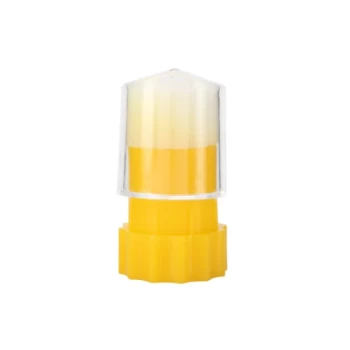
While experienced beekeepers may pick up queens by hand, using a specific tool is highly recommended for safety. A round "push-in" queen marking cage is often the easiest device for securing the queen on the comb without handling her directly.
Alternative Devices
Other options include "piston" devices with foam plungers or one-handed catch cages. These tools help immobilize the queen gently, ensuring she remains still during the delicate application process.
Manual Handling Technique
If you choose to use your hands, grasp the queen by her wings between your thumb and forefinger. Trap her legs gently with your other hand to stop her movement, exposing the thorax for the mark.
The Application Procedure
The Target Zone
The ink must be applied strictly to the top center of the thorax. This is the dorsal section of the body located between the head and the abdomen.
The "Wet Tip" Application
Adhering to the primary rule of application, touch the queen's back gently with the wet tip of the pen. Do not "draw" on the bee; simply allow the wet ink to transfer from the tip to the chitin.
Allow for Drying
Once marked, hold the queen (or keep her in the cage) for 30 seconds to one minute. This prevents the ink from smearing and ensures she is dry before being released back onto the frame.
Common Pitfalls to Avoid
Avoiding Sensory Organs
Precision is non-negotiable. You must ensure that no paint touches the queen's antennae or eyes, as this can severely handicap her ability to function within the hive.
Protecting the Wings
Great care must be taken to prevent ink from spreading to the wings. Sealed or weighted wings can inhibit the queen's mobility and may trigger the colony to supersede (replace) her.
Prevneting Rejection
The hive relies on pheromones to identify the queen. If she is returned to the hive with wet paint, or if she was crushed or stressed during the process, the colony may reject or kill her.
Making the Right Choice for Your Goal
- If your primary focus is safety and minimizing risk: Use a push-in marking cage to immobilize the queen on the comb, eliminating the need to pick her up.
- If your primary focus is skill development: Practice the manual "grasp and trap" method on drones repeatedly until you can apply a mark without applying pressure.
Mastering the ink flow allows you to mark the queen swiftly, ensuring she remains the healthy, recognized leader of the colony.
Summary Table:
| Step | Action | Key Safety Point |
|---|---|---|
| Preparation | Shake and prime the pen on a test surface | Ensure ink is wet and opaque; avoid dry tips |
| Stabilization | Use a marking cage or gentle hand-hold | Focus on the thorax; avoid legs and abdomen |
| Application | Touch wet tip to the top center of thorax | Use fluid transfer only; zero physical pressure |
| Drying | Wait 30 - 60 seconds before release | Prevent smearing and wing/antennae contamination |
Elevate Your Beekeeping Standards with HONESTBEE
At HONESTBEE, we understand that every queen is vital to your operation's success. As a premier partner for commercial apiaries and distributors, we provide more than just tools—we provide the precision your business demands. From high-visibility marking supplies to advanced hive-making and honey-filling machinery, our comprehensive wholesale portfolio covers every industry need.
Why partner with HONESTBEE?
- Expert Equipment: Access a full spectrum of professional-grade beekeeping hardware and machinery.
- Reliable Consumables: Secure a steady supply of essential industry consumables to keep your apiary running.
- Scalable Solutions: Dedicated wholesale support tailored to the needs of large-scale distributors.
Ensure your queen management is flawless. Contact us today to explore our wholesale inventory and discover how HONESTBEE can streamline your beekeeping operations.
Related Products
- Queen Bee Marking Pen POSCA Queen Marking Pens for Beekeeping Bee Markers
- Queen Bee Marking Pen UNI Medium Point for Queen and Bee Marking
- Plastic Long Marker Device for Catching and Marking Bees Queen Bee Marking Tube and Cage
- Queen Bee Catcher Plastic Bee Marker Bottle with Piston Marking Tube
- One Hand Yellow Queen Marking Catcher Tube Cage Beekeeper Tool Accessory for Queen Bee
People Also Ask
- What role do specialized marking pens and color-coding systems play in honeybee tracking? Enhance Research Precision
- Why are specialized marking pens used for stingless bee queens? Essential Tools for Large-Scale Breeding Success
- How should a new paint pen be primed before marking a queen bee? Essential Tips for Safe & Clear Markings
- How should a queen bee marking pen tip be properly primed? Master the Art of Safe Queen Marking
- What specifications are required for a high-quality queen bee marking pen? Ensure Safety and Precision for Your Colony