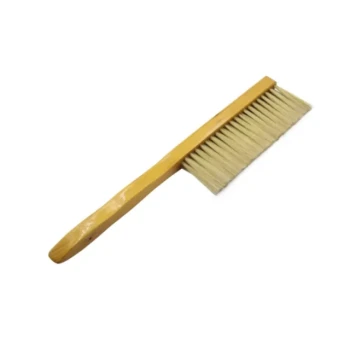
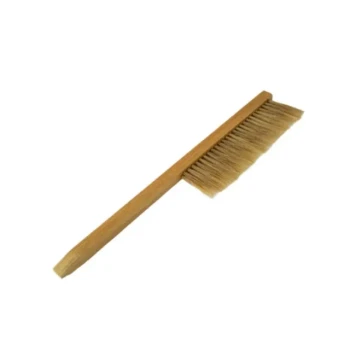
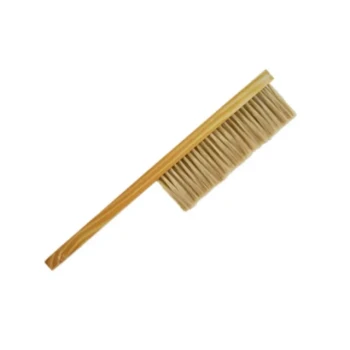
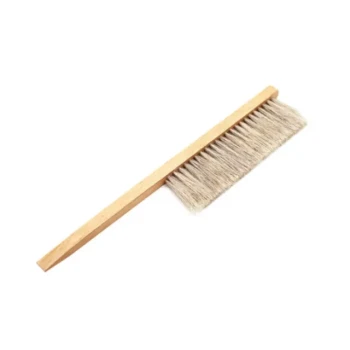
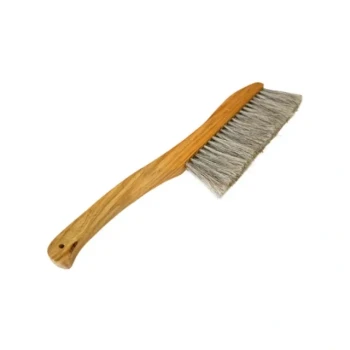
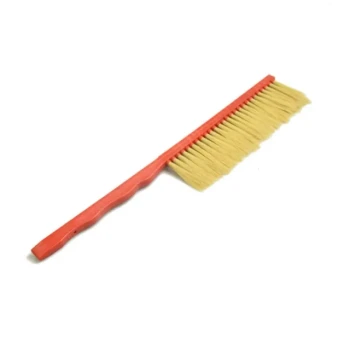
The specific role of a bee brush is to manually and gently dislodge honey bees from honeycomb frames immediately prior to extraction. Typically constructed with long, soft bristles, the tool is designed to separate the insects from the comb without crushing them or damaging the delicate wax. This step is critical for ensuring the harvested honey remains free of organic debris while preserving the health of the colony's workforce.
The bee brush serves as the primary manual interface between the beekeeper and the frame, prioritizing the physical safety of the bees to ensure a contaminant-free harvest.
The Mechanics of Gentle Removal
Material Design and Safety
The defining feature of a bee brush is its construction from soft materials.
Unlike standard cleaning brushes, these are engineered specifically to minimize physical impact. This design ensures that bees are removed without sustaining injury, such as crushed bodies or damaged wings.
Ensuring Honey Purity
The primary technical goal during this phase is contamination control.
By using a brush rather than shaking or striking the frame indiscriminately, you prevent dead bees from falling into the honey. This ensures the raw material entering the extractor is clean and free from biological debris that could spoil the final product.
Preservation of the Colony
Beyond the honey quality, the brush protects the colony's future productivity.
Rough handling during harvest can significantly reduce the population of the workforce. A soft brush ensures that the bees are merely displaced, not killed, allowing them to continue maintaining the hive after the harvest is complete.
Integrating the Brush into the Workflow
The Downward Sweep Technique
Effectiveness relies on a specific motion: sweeping gently but firmly downward.
Beekeepers remove a frame of capped honey from the super and brush the bees off the comb in a downward direction. This works with the bees' natural tendency to move, preventing them from becoming tangled in the bristles.
Securing the Harvest
Once the bees are brushed off, the frame must be immediately isolated.
The clean frame should be placed into an empty, covered super box. This step is vital to prevent "robbing," where displaced bees attempt to reclaim the honey before it can be transported to the processing area.
Pre-Extraction Preparation
The brushing phase is the final step before the frames enter the honey extractor.
Because the extractor uses centrifugal force to spin honey out, any bees left on the frame would also be spun out. Thorough brushing ensures that only honey and wax enter the machinery.
Understanding the Trade-offs
Speed vs. Precision
The bee brush is a tool of precision, not speed.
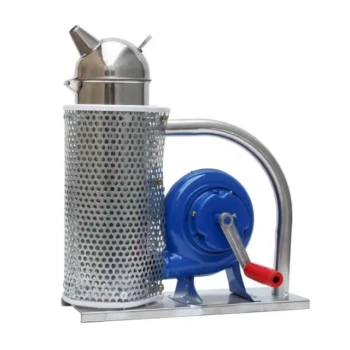
Compared to mechanical alternatives like bee blowers—which use concentrated air to blast bees out of supers—brushing is time-consuming. It requires handling every frame individually, making it less efficient for large-scale commercial operations.
Agitation Risks
While designed to be gentle, physical contact can still agitate the colony.
If used too aggressively, the brush can provoke a defensive response. It is often necessary to use the brush in conjunction with controlled smoke to keep the colony calm, though care must be taken not to overuse smoke and taint the honey's flavor.
Optimizing Your Harvesting Strategy
Selecting the right tool depends on the scale of your operation and your specific priorities regarding speed and bee health.
- If your primary focus is maximum honey purity: Rely on the bee brush to ensure zero organic debris or dead bees enter the extractor.
- If your primary focus is small-scale or hobby beekeeping: Use the bee brush as your primary tool, as it is cost-effective and less traumatic for smaller colonies than industrial blowers.
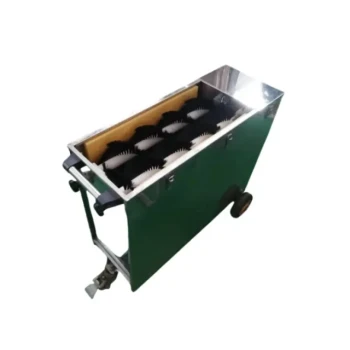
- If your primary focus is commercial efficiency: Utilize a bee escape maze or blower for bulk removal, reserving the bee brush only for final cleanup of individual stubborn bees.
Mastering the bee brush is about balancing the efficiency of the harvest with the biological integrity of the hive.
Summary Table:
| Feature | Bee Brush Specification | Harvesting Benefit |
|---|---|---|
| Bristle Type | Long, soft synthetic or natural hair | Prevents injury to bees and damage to wax |
| Primary Function | Manual bee displacement | Ensures frames are free of organic debris |
| Harvest Quality | Controlled removal | Minimizes contamination from dead bees |
| Workflow Suitability | Individual frame handling | Ideal for small-scale precision and final cleanup |
Elevate Your Beekeeping Operation with HONESTBEE
Maximize your harvest quality and hive health with professional-grade tools from HONESTBEE. As a premier partner for commercial apiaries and distributors, we provide more than just bee brushes—we offer a comprehensive wholesale ecosystem. From specialized honey-filling machines and industrial honey extractors to essential consumables and honey-themed cultural merchandise, we equip you for success at every scale.
Ready to streamline your production? Contact us today to discover how our high-performance machinery and wholesale tool solutions can transform your beekeeping business.
References
- Chimène KAUDJHIS ASSI, SAVADOGO NGUESSAN Koffi. Traditional and modern beekeeping practices in the center of Côte dIvoire: the case of the western part of Yamoussoukro. DOI: 10.29322/ijsrp.10.11.2020.p10743
This article is also based on technical information from HonestBee Knowledge Base .
Related Products
- Wooden Bee Brush with Triple Row Artificial Fiber for Beekeeping
- Classic Wooden Bee Brush with Double-Row Boar Bristles
- Double Row Artificial Fiber Bee Brush for Beekeeping
- Wooden Bee Brush with Double-Row Horsehair Bristles
- Premium Triple-Row Horsehair Bee Brush
People Also Ask
- What is the specific function of a bee brush? Ensure Pure Harvests and Colony Welfare During Honey Extraction
- What are the key characteristics of the bristles on a bee brush? Master Gentle and Efficient Bee Removal
- What is the purpose of using a bee brush during the inspection of hive components? Safe & Precise Hive Management
- What problem does a bee brush solve? Protect Your Colony with Gentle Precision Tools
- Why is a bee brush necessary when extracting honeybee hive frames that contain larvae? Protect Your Brood and Colony