A standard hexagonal grid serves as a precision instrument for the quantitative assessment of honeybee sealed brood strength. By overlaying this grid onto a cross-section of the brood, beekeepers can mathematically calculate the percentage of empty cells, transforming a subjective visual check into a rigorous data point regarding colony health.
This tool shifts brood assessment from estimation to calculation. By isolating the ratio of empty cells, the grid provides a definitive, objective baseline for evaluating queen fertility and larval survival rates.
The Core Function of the Grid
Calculating the Empty Cell Percentage
The primary technical function of the grid is to quantify gaps in the brood pattern.
By placing the grid over the comb, you can count exactly how many cells within the defined area are empty versus sealed. This generates a specific percentage of empty cells, which is the inverse metric of brood strength.
Assessing Biological Performance
This measurement acts as a direct indicator of queen fertility. A solid pattern with few empty cells suggests a queen is laying effectively and consistently.
Simultaneously, it measures larval survival rates. High percentages of empty cells (spotty brood) often indicate that larvae are dying or being removed by nurse bees before emergence.
The Value of Standardization
Establishing an Objective Baseline
Visual estimates of "good" or "bad" brood are notoriously prone to human error and inconsistency.
The grid enforces a quantitative standard. It ensures that assessments of colony strength are repeatable and comparable, regardless of which technician is performing the inspection.
Screening for High-Quality Colonies
Using this grid is essential for rigorously screening colonies for breeding or production.
It allows apiarists to separate high-performing colonies from average ones based on measurable reproductive success rather than intuition.
Understanding the Limitations
Scope of Data
While the grid provides precise data on outcomes (empty cells), it does not identify the cause.
A high empty-cell count indicates a problem—such as poor genetics, disease, or nutritional shifts—but the grid itself cannot diagnose the specific issue. It is a measurement tool, not a diagnostic pathology tool.
Applying This to Your Apiary Management
To use this tool effectively, match the metric to your specific management goal:
- If your primary focus is Queen Breeding: Prioritize colonies with the lowest percentage of empty cells to select for maximum fertility and brood viability.
- If your primary focus is Health Monitoring: Use the grid to establish a numerical baseline for each hive, allowing you to detect subtle drops in larval survival before they become obvious visually.
The standard hexagonal grid turns the abstract concept of "colony strength" into a tangible number you can manage and improve.
Summary Table:
| Metric Category | Measurement Purpose | Key Insight Provided |
|---|---|---|
| Empty Cell % | Quantifies gaps in the comb | Inverse metric of brood strength and density |
| Queen Fertility | Evaluates egg-laying consistency | Indicates reproductive performance and queen quality |
| Survival Rates | Tracks larval development | Detects early-stage issues like disease or poor genetics |
| Data Type | Objective, repeatable numbers | Eliminates human error and visual estimation bias |
Maximize Your Colony Productivity with HONESTBEE
At HONESTBEE, we empower commercial apiaries and distributors with the high-precision tools needed for rigorous colony management. Whether you are scaling up honey production or refining your breeding program, we supply everything from specialized hive-making and honey-filling machinery to a full spectrum of wholesale beekeeping tools and essential consumables.
Don't rely on intuition alone—equip your operation with the industry's best hardware and hardware-focused expertise. Contact us today to discuss our wholesale offerings and discover how our comprehensive equipment portfolio can streamline your business and boost your yield.
References
- N. Salem, Salem Bozryda. Impact of Outcross Mating on Brood Rearing Activity and Honey Production of Local Honey Bees in Libya. DOI: 10.21608/ejarc.2024.346003
This article is also based on technical information from HonestBee Knowledge Base .
Related Products
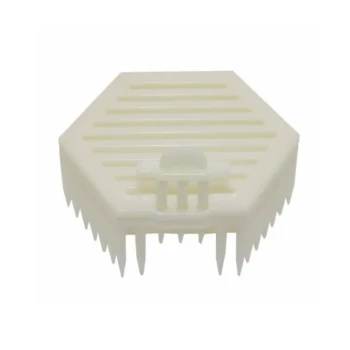
- Hexagonal Direct Comb Introduction Queen Bee Cage
- Minimalist Stainless Steel Honeycomb Display Stand
- Honeycomb Hexagonal Pillar Silicone Candle Mold for Candle Making
- Hexagonal Glass Honey Jars with Metal Lug Caps Elegant Versatile Packaging
- Hexagonal Bee Honeycomb Silicone Soap Mold by HONESTBEE
People Also Ask
- What is the technical purpose of using an introduction cage? Ensure Safe Queen Bee Integration and Colony Acceptance
- How does the introduction cage method differ from standard cage insertion for queen bees? Best Acceptance Strategies
- What is the mechanism of action for using temporary queen bee cages? Master Successful Queen Introduction
- Why are specialized queen bee cages used for the banking of mated queen bees? Maximize Commercial Apiary Storage Efficiency
- What is the importance of specialized queen introduction cages and tools? Secure High-Value Genetics & Scalability.