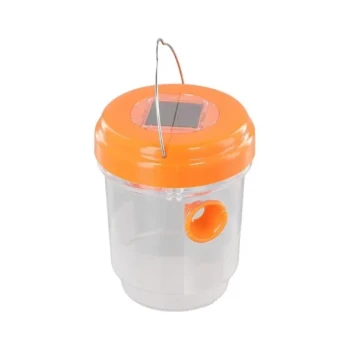
Bait traps serve as a primary reduction tool in commercial apiary management by utilizing specific chemical attractants to lure wasps into sealed containers for capture. By deploying these devices on a large scale, apiary managers can actively intercept predators before they reach the hives.
While bait traps are unlikely to completely eliminate the wasp threat, their strategic value lies in significantly "diluting" predator density. This reduction lowers the defensive burden on honeybees, allowing the colony to maintain normal operations during peak threat periods.
The Mechanics of Predator Reduction
Chemical Attraction
Bait traps rely on specific chemical attractants to divert wasps away from honeybee colonies.
By offering a more potent or accessible scent than the hive itself, the trap effectively mimics a food source.
Sealed Capture
Once lured, the wasps enter a sealed container from which they cannot escape.
This physical removal of individuals from the ecosystem is immediate and permanent for the captured wasps.
Density Dilution
The primary tactical goal of bait traps is the dilution of predator density.
By removing a significant volume of foragers, the overall number of wasps patrolling the apiary decreases.
Strategic Deployment in Integrated Management
Timing the Deployment
To be effective, traps must be utilized during peak wasp activity periods.
Deploying them when wasp populations are naturally surging ensures the highest capture rates and maximum relief for the hives.
The Necessity of Scale
A single trap is rarely sufficient for a commercial operation; large-scale deployment is required.
To achieve a noticeable drop in predator pressure, the density of traps must be high enough to intercept a substantial portion of the wasp population.
Reducing the Defensive Burden
The ultimate benefit to the apiary is the reduction of the defensive burden on the honeybees.
When fewer wasps attack, fewer bees are required to defend the hive entrance, preserving the colony's energy and population.
Understanding the Limitations
Not a Total Solution
It is critical to understand that bait traps may not eliminate the threat entirely.
Wasps are prolific breeders, and traps capture foragers, not necessarily the queens or the source nests.
Part of a System
Bait traps are designed to work in conjunction with other monitoring equipment.
They are a component of "dynamic apiary protection," meaning they should be used as part of a broader strategy rather than a standalone cure.
Making the Right Choice for Your Goal
To effectively integrate bait traps into your management plan, consider your specific objectives:
- If your primary focus is Colony Productivity: Deploy traps at scale during peak activity to minimize the energy your bees spend on defense.
- If your primary focus is Threat Assessment: Use traps alongside other monitoring equipment to gauge the severity of the wasp presence and adjust your strategy dynamically.
Successful wasp management relies on using bait traps not as a silver bullet, but as a lever to tip the balance back in favor of your hives.
Summary Table:
| Strategic Element | Function in Wasp Management | Operational Impact |
|---|---|---|
| Chemical Attraction | Lures predators away from hive entrances | Diverts threat to controlled capture points |
| Sealed Capture | Permanently removes forager wasps | Immediate reduction in predator population |
| Density Dilution | Lowers the volume of patrolling wasps | Decreases the frequency of colony attacks |
| Large-scale Deployment | Strategic placement across the apiary | Intercepts wasps before they reach honeybees |
| Integrated Monitoring | Used alongside other protection tools | Provides data for dynamic apiary defense |
Secure Your Apiary’s Future with HONESTBEE
Protecting your commercial honey production requires more than just luck—it requires professional-grade tools and a comprehensive management strategy. HONESTBEE specializes in supporting commercial apiaries and distributors with high-performance beekeeping machinery and essential industry consumables.
Whether you need advanced hive-making equipment to scale your operation, honey-filling machines for peak efficiency, or a steady supply of specialized hardware and consumables, we deliver the quality you need to succeed.
Ready to reduce your colony's defensive burden and maximize yield? Contact HONESTBEE today to discover how our wholesale offerings and industrial solutions can strengthen your beekeeping business.
References
- Ana Diéguez‐Antón, M. Carmen Seijo. Monitoring Study in Honeybee Colonies Stressed by the Invasive Hornet Vespa velutina. DOI: 10.3390/vetsci9040183
This article is also based on technical information from HonestBee Knowledge Base .
Related Products
- Gourd Shaped Hanging Wasp Trap Professional Wasp Catcher
- Compact Multi-Funnel Hanging Wasp Trap
- Reusable Clear Small Hive Beetle Traps for Beehives Beetle Trapping Tools
- Black Plastic Beetle Barn Hive Beetle Trap for Beehives
- Professional Bucket Style Wasp and Moth Pheromone Trap
People Also Ask
- How do professional wasp traps function? Master Physical Control of Oriental Hornets to Protect Your Apiary
- What are the practical advantages of using professional wasp traps and protective equipment in apiary management? Scale Up
- Why replace sugar syrup bait in wasp traps every three days? Ensure Maximum Attraction and Catch Rates
- What role do specialized wasp traps play in wasp control? Enhance Apiary Security and Pest Monitoring
- How can commercial apiary operators mitigate wasp predation around hives using specialized trapping equipment? Effective strategies for wasp control