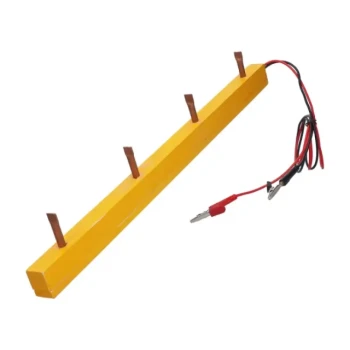
In automatic bee venom collection systems, conductive wires act as the primary interface between the electrical power source and the hive. Materials such as brass, steel, aluminum, and copper define the specific electrical resistance and conductivity of the circuit, directly shaping the characteristics of the pulsed stimulation that prompts bees to release venom.
The specific material of the conductive wire dictates the intensity and uniformity of the electrical pulse. This choice is the defining variable for maximizing total venom yield, ensuring consistent venom color, and minimizing bee mortality rates.
The Physics of Venom Collection
The Role of Conductivity and Resistance
The core function of the wire is to discharge a DC-powered electrical pulse.
Different metals possess inherent physical properties regarding how easily they conduct electricity.
Brass, steel, aluminum, and copper each offer distinct levels of resistance. This resistance determines how much current actually reaches the bees during the pulse.
Controlling Stimulation Intensity
The material choice acts as a natural regulator for the electrical stimulation.
A material with high conductivity allows for a more intense pulse, while a more resistive material dampens the discharge.
This intensity is the trigger that causes the bees to sting the collector plate and release venom.
Ensuring Pulse Uniformity
Beyond intensity, the wire material affects how evenly the electrical charge is distributed across the collection frame.
Uniformity is critical for efficient collection.
If the pulse is inconsistent due to the wire's material properties, some bees may be over-stimulated while others are unaffected.
Impact on Production Quality
Determining Total Venom Yield
The effectiveness of the collection cycle is directly tied to the wire material.
Because the material dictates the quality of the "shock," it controls how many bees respond to the stimulus.
Therefore, the choice of wire is a primary factor in the total volume of venom collected per cycle.
Influencing Venom Color
The reference indicates that the wire material influences the color of the collected venom.
This suggests that the electrical intensity or the physical interaction between the wire and the venom affects the final product's visual quality.
Consistent material choice helps maintain a standardized product appearance.
Understanding the Trade-offs
Balancing Yield vs. Mortality
The most critical trade-off in selecting a wire material is the balance between production and safety.
While certain materials may generate high-intensity pulses that maximize venom release, they may also increase the mortality rate of the bees.
The Risk of Over-Stimulation
If a wire material is too conductive for the specific voltage settings, the stimulation may cross the threshold from irritating to lethal.
Optimizing the system requires selecting a material that irritates the bees enough to sting but provides enough resistance to prevent fatal electric shock.
Making the Right Choice for Your Goal
Since different metals produce different electrical behaviors, your choice depends on your specific priorities for the apiary.
- If your primary focus is Maximizing Volume: Select materials that offer higher conductivity to increase stimulation intensity, ensuring the maximum number of bees react to the pulse.
- If your primary focus is Colony Sustainability: Prioritize materials that offer controlled resistance to ensure the electrical pulse remains uniform and non-lethal, reducing bee mortality.
The ideal wire material is one that creates a stimulation "sweet spot"—high enough to provoke a sting, but low enough to ensure the colony survives to produce again.
Summary Table:
| Wire Material | Electrical Conductivity | Primary Impact on Collection | Key Trade-off |
|---|---|---|---|
| Copper | Very High | Intense pulse stimulation; maximizes volume | Higher risk of bee mortality |
| Aluminum | High | Uniform charge distribution; lightweight | Requires careful voltage regulation |
| Brass | Moderate | Balanced stimulation intensity | Good compromise between yield and safety |
| Steel | Lower | High resistance; gentler stimulation | Lower yield, but highest colony sustainability |
Maximize Your Apiary’s Potential with HONESTBEE
At HONESTBEE, we understand that precision is the difference between a thriving commercial operation and a struggling one. Whether you are a large-scale commercial apiary or a global distributor, we provide the high-performance beekeeping tools and machinery you need to scale your production.
From advanced bee venom collection systems and honey-filling machines to specialized hive-making hardware and essential consumables, our comprehensive wholesale portfolio is designed to enhance your efficiency and product quality. Let us help you find the perfect balance between high venom yields and colony sustainability.
Ready to upgrade your equipment? Contact us today to discuss our wholesale solutions and see how HONESTBEE can power your business growth!
References
- N Turan, Cengiz ERKAN. The effect of conductor wires of different metals on the amount of honey bee (Apis mellifera; Hymenoptera: Apidae) venom collected and its chemical content. DOI: 10.14411/eje.2023.040
This article is also based on technical information from HonestBee Knowledge Base .
Related Products
- HONESTBEE Pneumatic Dual Wire Embedder for W-Pattern Foundation Wiring
- Professional Pneumatic Wire Embedder for Beehive Frames
- Stainless Steel Bee Hive Frame Wire for Beekeeping
- Honestbee Wooden Handle Steel Spur Wheel Wire Embedder
- HONESTBEE Soldering Iron Style Spur Wheel Wire Embedder
People Also Ask
- How does drone cell foundation maintain honey bee genetic quality? Secure Your Apiary with Strategic Breeding Tools
- What is the mechanism of the Platinized double electrode? Precision Honey Conductivity Measurement Explained
- Why is the installation of Fine Wire Mesh Windows critical in beekeeping? Ensure Safe Instructional Apiary Design
- What are the technical advantages of using wireless microcontrollers as monitoring nodes in smart beekeeping?
- What are the advantages of using a WiFi Microcontroller Unit in smart beekeeping technology? Drive Efficiency and ROI