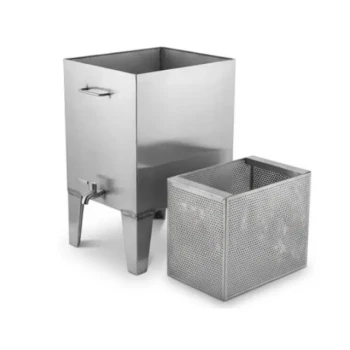
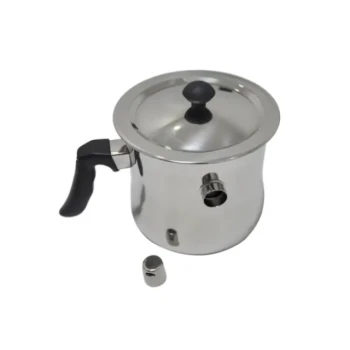
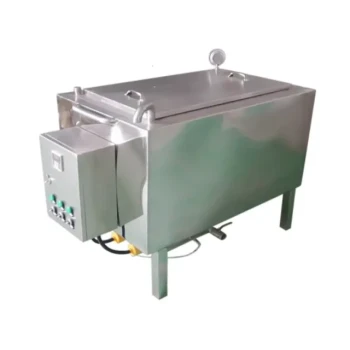
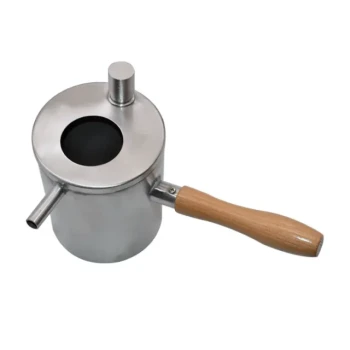
High-precision constant temperature heating equipment is the cornerstone of beeswax calibration. By maintaining stable temperatures, typically between 90°C and 95°C, this equipment ensures that natural beeswax and dopants are completely melted and mixed. This thermal process reduces wax viscosity to achieve total physical and molecular homogenization, eliminating internal concentration gradients and establishing the accurate baseline necessary for precise spectral analysis.
High-precision thermal control is the technical foundation for creating representative beeswax samples. It transforms raw materials into chemically stable, uniform benchmarks that are essential for high-stakes industrial grading and quality assurance.
Ensuring Homogeneity for Precise Calibration
Molecular-Level Mixing at 95°C
To create an accurate calibration sample, beeswax must be combined with specific additives at a constant 95°C. At this temperature, the thermal energy effectively reduces the viscosity of the wax, allowing different components to blend seamlessly. This ensures that every part of the sample is identical in composition.
Eliminating Internal Concentration Gradients
Without precise heating, "pockets" of varying concentrations can form within the wax, leading to false readings during testing. High-precision equipment maintains the heat long enough to eliminate these gradients. This creates a reliable reference baseline that is critical for subsequent quantitative prediction models.
Establishing Reliable Spectral Baselines
For B2B partners involved in infrared spectroscopy, the homogenization process is non-negotiable. Consistent thermal processing ensures that the collected spectra are truly representative of the material. This precision allows for the detection of even minor adulterations in industrial supply chains.
Beyond Melting: The Role in Quality Standardization
Protecting Component Integrity
While heat is necessary, excessive or fluctuating temperatures can cause the oxidation or degradation of natural beeswax components. High-precision equipment stabilizes temperatures (often between 65°C and 70°C during purification) to ensure the wax melts without losing its pharmaceutical or cosmetic properties. This stability is a key selling point for high-grade distributors.
Thermal Conditioning for Physical Measurement
Beeswax is highly sensitive to ambient temperature, which can drastically alter its hardness and cutting resistance. Using a constant temperature measurement chamber ensures the sample reaches a state of thermal stability before testing. This step prevents "false reports" caused by external temperature fluctuations, protecting the reputation of the reseller.
Simulation of Industrial Sterilization
In industrial applications, beeswax often undergoes high-temperature sterilization between 120°C and 140°C. Constant temperature equipment is used to simulate these conditions to verify that the wax’s functional groups remain stable. This expertise allows wholesalers to guarantee that their product maintains its integrity even after rigorous industrial processing.
Understanding the Trade-offs
Precision vs. Processing Time
Achieving perfect molecular homogenization often requires maintaining specific temperatures for extended periods, sometimes up to eight hours for physical sedimentation. While this increases the quality and purity of the "refined" layer, it requires a higher energy investment and longer lead times. Partners must balance the need for ultra-pure samples with the realities of high-volume throughput.
Thermal Degradation Risks
There is a narrow window between achieving a fluid state for filtration and triggering thermal degradation. Using lower-quality heating elements can lead to "hot spots" that darken the wax or alter its chemical signature. Investing in high-precision, stirred heating equipment is the only way to mitigate these risks effectively.
How to Apply This to Your Project
Making the Right Choice for Your Goal
- If your primary focus is Pharmaceutical or Cosmetic Grade Resale: Prioritize equipment that offers narrow-band temperature control (65-75°C) to ensure the wax meets strict purity standards without oxidative damage.
- If your primary focus is Spectral Calibration and Lab Testing: Invest in high-precision units capable of maintaining 95°C with integrated stirring to eliminate molecular gradients and ensure repeatable results.
- If your primary focus is Industrial Comb Foundation Production: Utilize equipment capable of simulating high-heat sterilization (120°C+) to verify the long-term stability of your wax supply.
By mastering these thermal nuances, distributors can offer their clients a level of quality and technical reliability that goes far beyond simple material sourcing.
Summary Table:
| Process Stage | Temperature Range | Primary Benefit for B2B Quality |
|---|---|---|
| Homogenization | 90°C – 95°C | Eliminates concentration gradients for precise spectral analysis. |
| Purification | 65°C – 70°C | Prevents oxidation while maintaining pharmaceutical/cosmetic integrity. |
| Physical Testing | Stable Ambient | Ensures consistent hardness and cutting resistance measurements. |
| Sterilization Simulation | 120°C – 140°C | Verifies molecular stability for rigorous industrial processing. |
Scale Your Business with HONESTBEE’s Professional Sourcing Solutions
Are you a distributor or B2B reseller looking to provide superior technical value to your clients? HONESTBEE is your one-stop partner for the full spectrum of beekeeping tools, machinery, and consumables. From specialized beeswax processing hardware and honey-filling machines to honey-themed cultural merchandise, we empower your business with:
- High Profit Margins: Competitive wholesale pricing designed for distributors.
- OEM/ODM & Customization: Tailor equipment and tools to meet your specific market demands.
- Unmatched Efficiency: Ultra-fast delivery and rapid response times for seamless order fulfillment.
- Technical Expertise: Deep industry knowledge to support your complex project requirements.
Ready to enhance your product portfolio with premium trading services?
Contact HONESTBEE Today to Get Started
References
- Norman Tanner, Birgit Lichtenberg‐Kraag. Identification and Quantification of Single and Multi‐Adulteration of Beeswax by FTIR‐ATR Spectroscopy. DOI: 10.1002/ejlt.201900245
This article is also based on technical information from HonestBee Knowledge Base .
Related Products
- Steam Beeswax Melter Wax Warmer for Wax Processing
- Automatic Continuous Heat Sealing Machine
- Fully Automatic Beeswax Embossing Machine Foundation Mill
- Beeswax Melter for Candle Making Honey Bee Wax Melter
- Electric Commercial Beeswax Melter for Factory Use
People Also Ask
- How does a steam wax melter work? A Fast, Efficient Method for High-Quality Wax
- How does a professional steam wax melter optimize the recovery of beeswax? Maximize Yield & Hygiene for Your Apiary
- What are the steps to use a steam wax melter? Master Safe & Efficient Wax Rendering
- How do steam wax melters function in the disinfection of apiary equipment? Achieve Chemical-Free Organic Sterilization
- How do you operate a steam wax melter? Master Efficient Wax Extraction and Frame Sterilization