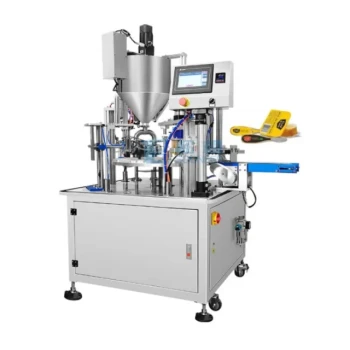
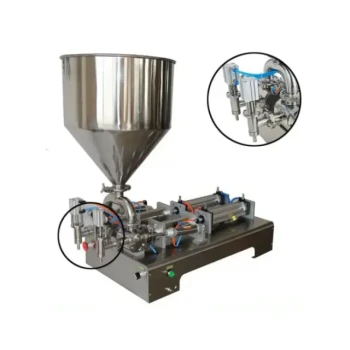
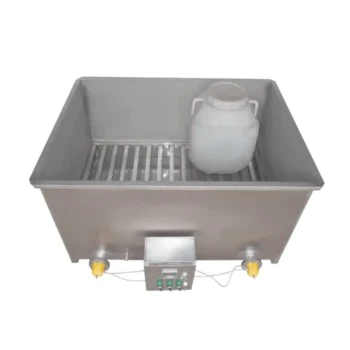
Industrial-grade honey filling machines serve as the technological guarantor of product integrity for standardized regional honey. By utilizing high-precision quantitative technology, these systems ensure that every bottle meets the rigorous net content specifications required for certifications like Protected Designation of Origin (PDO) or Protected Geographical Indication (PGI). Beyond compliance, they are essential for preserving the honey's unique regional characteristics through automated, hygienic sealing processes.
Core Insight: The primary value of industrial filling machines lies in their ability to bridge the gap between artisanal extraction and certified global trade. They enforce the strict volume consistency required for PDO/PGI standards while simultaneously employing air-tight sealing to lock in the specific aroma and physiological activity that define a regional honey’s identity.
Ensuring Regulatory Compliance and Precision
For regional honey to carry prestigious labels like PDO or PGI, consistency is not optional—it is a legal requirement.
Meeting Certification Standards
Regional honey certifications mandate strict adherence to net weight specifications.
High-precision quantitative filling technology eliminates the variability inherent in manual packing. This ensures that every unit complies with the specific weight standards dictated by trade regulations, protecting the producer from compliance penalties.
Minimizing Material Waste
Overfilling is a common financial drain in manual operations.
Industrial machines utilize precise metering to dispense the exact required volume. This consistency significantly reduces raw material waste from overfilling, directly improving the economic efficiency of the production line.
Preserving "Terroir" and Quality
The value of regional honey is derived from its specific floral source, aroma, and texture. Industrial filling plays a critical role in protecting these delicate attributes.
Minimizing Oxidation
Exposure to air degrades honey, altering its flavor profile and nutritional value.
Automated sealing functions are designed to minimize air contact during the packaging process. By rapidly sealing the container, the machine preserves the natural aroma and texture that distinguish specific regional varieties.
Maintaining Physiological Activity
Honey contains active enzymes and nutrients that are sensitive to handling.
By reducing exposure time and eliminating manual interference, these machines preserve the physiological activity of the honey. This ensures the consumer receives a product that is not just compliant in weight, but authentic in biological quality.
Hygiene and Contamination Control
Standardized production requires a guarantee of safety that manual methods struggle to provide consistently.
Preventing Secondary Contamination
The transfer from bulk storage to retail jars is a high-risk point for introducing pathogens.
Industrial machines operate as closed-loop systems. This automated environment prevents secondary contamination from environmental bacteria or microorganisms, providing the sanitary hardware support necessary for modern food safety regulations.
Professional Aesthetic Standards
Perception of quality is influenced by the physical presentation of the product.
Advanced machines use no-drip filling nozzles to prevent sticky residue on bottle necks. This ensures a clean, airtight seal and a professional appearance, which is vital for high-value export markets.
Understanding the Operational Trade-offs
While industrial machines offer standardization and protection, they introduce specific challenges that producers must manage.
Initial Capital Intensity
Transitioning to industrial filling requires significant upfront investment. While this lowers the unit production cost per kilogram over time, the initial expenditure can be a barrier for smaller cooperatives.
Maintenance and Technical Expertise
These machines are complex systems requiring calibration and maintenance. Producers must balance the efficiency gains with the need for skilled operators who can maintain the high-precision metering systems to prevent drift in accuracy.
Making the Right Choice for Your Goal
To select the appropriate filling solution, align the machine’s capabilities with your specific production objectives.
- If your primary focus is PDO/PGI Certification: Prioritize machines with certified high-precision metering to guarantee strict adherence to net content regulations.
- If your primary focus is Quality Preservation: Select equipment with advanced automated sealing and low-oxygen exposure features to protect the honey's natural aroma and enzyme activity.
- If your primary focus is Economic Scaling: Look for systems that emphasize high-speed output and waste reduction (anti-drip features) to maximize labor productivity.
True standardization in regional honey is achieved when you combine the authenticity of the source with the rigorous precision of industrial engineering.
Summary Table:
| Feature | Role in Standardized Production | Impact on Regional Honey Value |
|---|---|---|
| High-Precision Filling | Ensures net weight accuracy and regulatory compliance | Meets PDO/PGI certification legal requirements |
| Automated Sealing | Minimizes oxidation and air exposure | Preserves delicate floral aromas and enzyme activity |
| Closed-Loop System | Prevents secondary contamination | Guarantees food safety and shelf-life stability |
| Anti-Drip Technology | Maintains clean bottle necks and professional finish | Enhances brand perception for high-value export markets |
| Quantitative Metering | Reduces raw material waste and overfilling | Increases economic efficiency and profit margins |
Scale Your Honey Production with HONESTBEE Precision
At HONESTBEE, we empower commercial apiaries and honey distributors to transition from artisanal craft to certified global trade. Our comprehensive wholesale portfolio includes high-precision honey-filling machines, specialized hive-making machinery, and a full spectrum of beekeeping tools and industry consumables.
Whether you are aiming for PDO/PGI certification or looking to enhance your production efficiency, our equipment ensures your regional honey maintains its unique character and quality.
Ready to elevate your honey brand? Contact our experts today to find your custom equipment solution
References
- Agnieszka Borowska. Regional honeys in Poland in 2010-2015. DOI: 10.22616/esrd.2018.051
This article is also based on technical information from HonestBee Knowledge Base .
Related Products
- Precision Durable Efficient HONESTBEE Rotary Honey Filling Machine
- Commercial Rotary Honey Filling Machine for Production
- Fully Automatic Honey Filling Packaging Machine for Processing Line
- Automatic Honey Filling and Filtering Machine for Beekeeping Bottle Filling
- Precision Automated Packaging Turntable Honey Spoon Filling Sealing Packing Machine
People Also Ask
- How do honey filling machines work? Achieve Precision & Speed for Your Apiary
- What are the common types of bottling machines used for honey? Choosing the Right Solution for Your Apiary
- How do honey filling and processing machines aid native bee product conservation? Boost Value with HONESTBEE Technology
- What is a key feature of the new generation of the honey filling machine? The Advanced Electronic Control Unit
- How do high-precision honey filling machines ensure quality? Optimize Your Commercial Production with HONESTBEE