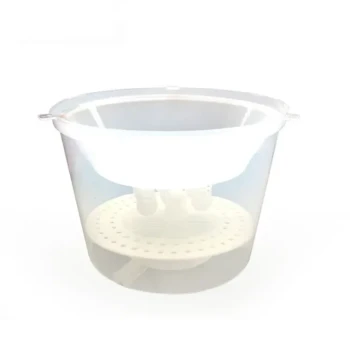
Industrial-grade pollen traps serve as essential biological sampling interfaces. By mechanically stripping pollen pellets from foraging bees as they return to the hive, these devices allow researchers to aggregate and analyze plant virus loads across vast agricultural landscapes efficiently. This method replaces labor-intensive manual sampling with a passive, high-throughput collection system.
By transforming honey bee hives into wide-area environmental sensors, these traps enable the non-invasive assessment of pathogen diversity within an ecosystem without the need for destructive plant testing.
Turning Hives into Data Collection Points
The Mechanism of Interception
Industrial-grade traps are designed to intercept foraging bees at the hive entrance. As the bees pass through the device, pollen pellets are gently dislodged from their legs and collected in a localized tray. This accumulated material acts as the raw biological data for analysis.
Non-Invasive Ecosystem Sampling
Unlike traditional agricultural monitoring, which often requires cutting plant tissue or destroying parts of a crop, pollen trapping is non-invasive. It leverages the natural labor of the bee colony to gather samples without physically altering the agricultural site. This allows for continuous monitoring without disrupting the crop lifecycle.
Achieving Wide-Area Coverage
Because bees forage over significant distances, the pollen they return represents a broad cross-section of the surrounding environment. A single trap can effectively sample a wide radius, providing a comprehensive overview of the viral landscape in a way that spot-checking individual plants cannot.
Assessing Pathogen Diversity
Creating a Representative Sample
The pollen intercepted by these traps is not merely a food source; it is a repository of biological information. Researchers use this material to detect the presence of specific plant viruses carried by the pollen. This provides a representative snapshot of the pathogens currently circulating in the area.
Efficient Large-Scale Monitoring
For large-scale agricultural operations, speed and volume are critical. Industrial-grade traps facilitate the collection of massive amounts of data points (pollen pellets) simultaneously. This efficiency makes it feasible to track plant pathogen diversity across extensive ecosystems in real-time.
Understanding the Operational Trade-offs
Reliance on Foraging Behavior
The effectiveness of this monitoring method is strictly tied to the preferences of the bees. If the bees do not visit a specific crop variety or weed species, the trap will not capture data on viruses affecting those plants. The data is representative of bee activity, which usually correlates with—but is not identical to—total ecosystem diversity.
Aggregate Data vs. Precision Mapping
While these traps excel at identifying the presence of a virus in a region, they provide aggregate data. A positive sample indicates the virus is nearby, but it does not immediately pinpoint the exact plant or field coordinate where the infection originated.
Implementing a Monitoring Strategy
To utilize pollen traps effectively in your agricultural management plan, align the tool with your specific objectives.
- If your primary focus is regional surveillance: Deploy traps to establish a baseline of pathogen diversity across the entire ecosystem, identifying new viral threats as they enter the area.
- If your primary focus is specific crop protection: Use the traps as an early warning system to detect viral loads in the environment before visible symptoms appear on the plants.
By leveraging industrial-grade pollen traps, you convert biological activity into actionable data, securing a clearer view of agricultural health.
Summary Table:
| Feature | Industrial Pollen Traps for Monitoring | Traditional Manual Sampling |
|---|---|---|
| Sampling Method | Passive, high-throughput collection via honey bees | Labor-intensive manual tissue collection |
| Coverage Area | Wide-area radius (based on foraging distance) | Localized/spot-checking individual plants |
| Impact on Crop | Non-invasive; no destruction of plant tissue | Often destructive or physically invasive |
| Data Type | Aggregate regional pathogen snapshots | Precise coordinate-specific mapping |
| Efficiency | High; collects thousands of data points simultaneously | Low; limited by man-hours and sample size |
Maximize Your Colony’s Potential with HONESTBEE
At HONESTBEE, we empower commercial apiaries and distributors with the high-performance tools needed to turn beekeeping into a data-driven enterprise. Whether you are scaling up for large-scale pollination services or supplying the next generation of industrial honey producers, we offer a comprehensive wholesale portfolio—from precision-engineered industrial pollen traps and hive-making machinery to advanced honey-filling systems and essential consumables.
Partner with us to streamline your operations and deliver superior value to your customers. Contact us today to explore our wholesale equipment solutions and see how HONESTBEE can support your growth in the competitive agricultural ecosystem.
References
- Eunseo Lee, Jonathan S. Griffiths. Area Wide Monitoring of Plant and Honey Bee (Apis mellifera) Viruses in Blueberry (Vaccinium corymbosum) Agroecosystems Facilitated by Honey Bee Pollination. DOI: 10.3390/v15051209
This article is also based on technical information from HonestBee Knowledge Base .
Related Products
- Removable Plastic Pollen Trap With Ventilated Tray for Bees Pollen Collector
- 30 cm Plastic Entrance Hole Bee Pollen Trap and Collector
- Plastic Bee Pollen Trap Strips Comb Catcher Collector
- High-Efficiency Diamond Maze Bee Escape for Clearing Supers
- Professional Multi-Component Bucket Wasp Trap
People Also Ask
- What are the design principles and advantages of pollen traps in the collection of bee pollen? Boost Your Apiary Yield
- What is the function of professional pollen traps in evaluating honey plants? Quantifying Pollination and Crop Potential
- What functions do pollen traps serve for bee bread production? Optimize Your Raw Material Collection
- What maintenance and pest prevention measures should be taken for pollen traps? Protect Your Hive and Harvest Quality
- How does the use of pollen traps in honeybee hives enhance crop fertilization? Boost Your Yield Through Induced Activity