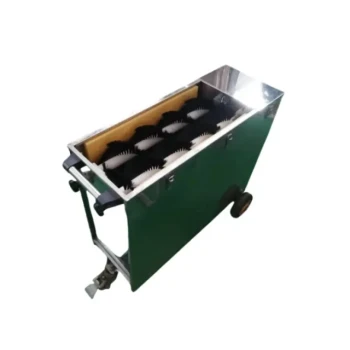
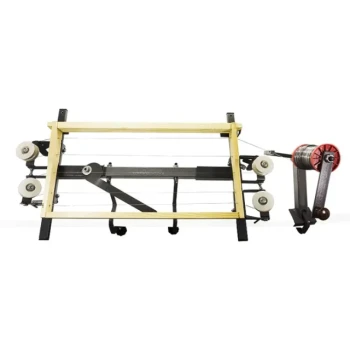
Professionalized beekeeping tools and monitoring devices are critical safety mechanisms in urban environments, serving primarily to minimize risk and manage the delicate interaction between bee colonies and human residents. By controlling colony swarming and managing flight paths, these tools ensure public safety while filtering environmental interference to produce high-quality, pure honey that often exceeds rural standards.
The core role of professional tools in urban apiaries is to transform a variable biological process into a controlled, low-risk operation. They act as a buffer between the colony and the city, allowing for the precise management of hive health and behavior in high-density areas.
Mitigating Risk in High-Density Areas
The primary challenge of urban beekeeping is proximity to people. Professional tools are not merely for convenience; they are the infrastructure that makes coexistence possible.
Managing Colony Behavior
In a city, an uncontrolled swarm is a public safety incident. Precision monitoring devices allow beekeepers to detect early signs of swarming, enabling preemptive intervention. This ensures colonies remain contained and do not pose a threat to neighbors or public spaces.
Controlling Flight Paths
Professional setups allow for the manipulation of flight paths. By strategically placing and orienting hives with specialized equipment, beekeepers can direct bee traffic vertically or away from pedestrian areas, effectively making the bees invisible to the immediate population.
Enhancing Product Quality and Hygiene
Contrary to the assumption that city pollution degrades honey, professional tools in urban settings often yield superior products.
Filtering Environmental Interference
Deploying specialized equipment in unique locations, such as university rooftops, creates a physical separation from street-level pollution. This equipment helps filter out environmental interference, ensuring the final product remains pure.
Ensuring Food Safety
Professional harvesting and small-scale filling equipment support a hygienic short-chain supply model. This machinery ensures urban honey meets strict hygiene standards, building consumer trust in local food sources while reducing the carbon footprint associated with long-distance transport.
Operational Standardization and Health
Moving beyond basic hobbyist methods, professional tools introduce industrial rigor to urban beekeeping.
Early Disease Detection
High-density urban environments can become hotspots for disease transmission. Professional monitoring tools facilitate the early detection of pests and pathogens. This prevents urban apiaries from becoming sources of infection that could devastatingly spread to wider rural bee populations.
Scalability and Efficiency
Standardized tools—from uniform hive frames to protective gear—convert complex biological tasks into manageable technical workflows. This equipment empowerment increases the output-to-time ratio, allowing beekeeping to evolve from a dispersed, variable practice into a scalable, data-driven commercial model.
Understanding the Trade-offs
While professional tools solve many problems, they introduce specific ecological responsibilities that must be managed.
Resource Competition
The introduction of highly efficient, managed honeybee colonies can strain local resources. In limited green spaces, these bees may outcompete native wild bees. It is critical to use monitoring traps to assess this balance and ensure urban greening initiatives support biodiversity, not just honey production.
Operational Complexity
The shift to professionalized tools requires a higher level of technical knowledge. Operators must be skilled not just in animal husbandry, but in the maintenance and interpretation of data from precision devices to prevent "false positives" in hive health assessments.
Making the Right Choice for Your Goal
To maximize the value of your urban apiary, align your tooling strategy with your specific objectives.
- If your primary focus is Public Safety: Prioritize monitoring devices that predict swarming events and hive configurations that strictly control flight path direction.
- If your primary focus is Commercial Production: Invest in standardized processing equipment and standardized hives to increase the output-to-time ratio and ensure hygiene compliance.
- If your primary focus is Ecological Balance: Utilize monitoring traps alongside your hives to actively track and mitigate the impact of your colonies on local wild bee populations.
Success in urban beekeeping is defined by the precision with which you manage the boundary between the hive and the city.
Summary Table:
| Key Feature | Primary Role in Urban Beekeeping | Benefit to Operator |
|---|---|---|
| Monitoring Devices | Swarm prediction & early disease detection | Minimizes public risk & prevents colony loss |
| Flight Path Controls | Directing bee traffic away from pedestrians | Ensures public safety & neighborhood harmony |
| Precision Equipment | Filtering environmental interference | Produces high-quality, pure urban honey |
| Standardized Machinery | Scaling honey processing & filling | Increases efficiency & ensures food safety compliance |
Elevate Your Urban Beekeeping with HONESTBEE Professional Solutions
Transitioning from hobbyist methods to professional-grade operations is essential for safety and scalability in urban environments. HONESTBEE empowers commercial apiaries and distributors with the high-precision tools needed to thrive in high-density markets.
How we add value to your business:
- Comprehensive Wholesale Supply: Access a full spectrum of beekeeping tools, machinery, and essential consumables.
- Industrial-Grade Machinery: From specialized hive-making equipment to precision honey-filling machines for short-chain supply models.
- Standardization & Safety: Our equipment is designed to minimize swarming risks and maximize production efficiency.
Ready to scale your commercial apiary or expand your distribution portfolio? Contact HONESTBEE today to discover how our professional hardware and industry expertise can drive your success.
References
- Lyubomir Lyubenov, Ivaylo Hristakov. Economic-geographical characteristic of beekeeping in the Ruse region. DOI: 10.22616/esrd.2022.56.021
This article is also based on technical information from HonestBee Knowledge Base .
Related Products
- HONESTBEE 15-in-1 Beekeeper Multi-Tool with Hammer and Pliers for Beekeeping
- HONESTBEE Professional Mini J-Hook Hive Tool for Beekeeping
- Stainless Steel J Hook Hive Tool for Beekeeping
- Multi-Function Plier-Style Frame Grip Hive Tool
- Durable Galvanized Steel Frame Grip
People Also Ask
- What is the recommended method for storing beekeeping tools? Expert Vertical Storage Solutions for Your Apiary
- How does a favorable microclimate interact with beekeeping tools? Boost Overwintering Success and Equipment Longevity
- Why is the treatment of beekeeping tools with high-concentration chemical disinfectants necessary for preventing AFB?
- What role do specialized beekeeping tools play in pest management? Enhance Apiary Health with Precision Tech
- Why design beekeeping tools with ergonomics in mind? Empowering All Beekeepers with Inclusive Equipment