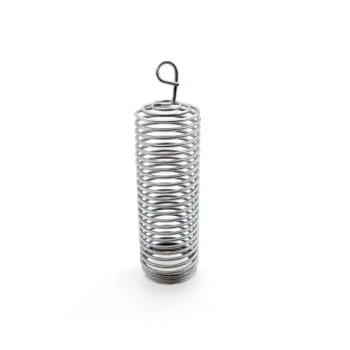
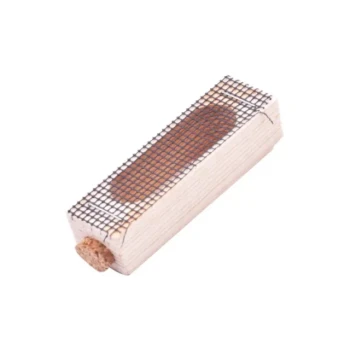
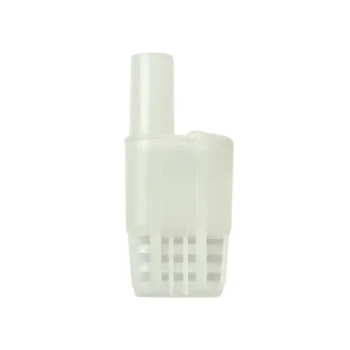
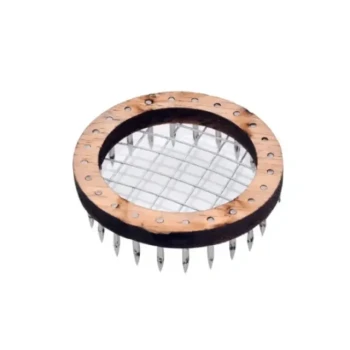
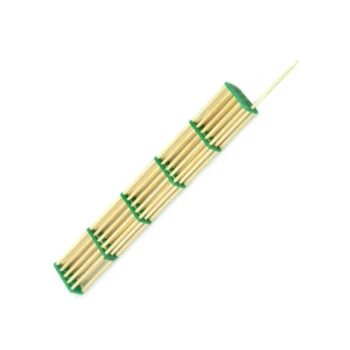
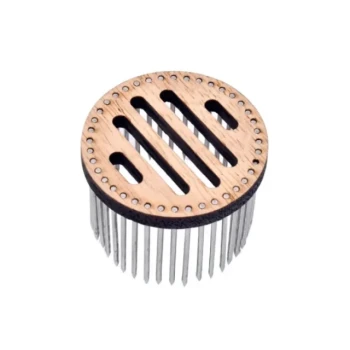
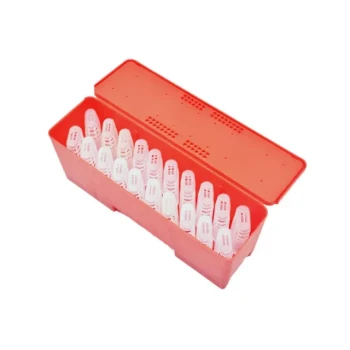
In controlled honey bee resistance experiments, queen cages serve a distinct and perhaps counter-intuitive role: they are repurposed to temporarily confine selected worker bees, rather than queens. This confinement facilitates precise artificial inoculation by forcing close contact between the worker bee and Varroa destructor mites.
The primary function of the queen cage in this context is to create a standardized micro-environment. It ensures that every test subject is exposed to an exact number of mites for a specific duration, guaranteeing that data regarding infection concentration is accurate and reproducible.
The Mechanics of Controlled Inoculation
Repurposing the Enclosure
While these cages are designed for queens, resistance experiments utilize their small size to isolate worker bees.
By placing workers individually into these cages, researchers eliminate the chaos of the full colony environment.
Ensuring Parasitic Contact
The compact volume of a queen cage significantly reduces the space available for the bee to evade the parasite.
This spatial constraint ensures that the Varroa mites successfully latch onto the worker bee.
Controlling Exposure Duration
In an open hive, a bee might brush off a mite or be groomed by others immediately.
The cage allows researchers to set a fixed duration for the initial interaction, ensuring every bee faces the same window of exposure.
Why Precision is Critical
Standardizing Infection Concentration
To measure resistance, researchers must be certain that the infection pressure is uniform across all test subjects.
Using cages allows the introduction of a specific, counted number of mites to each worker.
Eliminating Environmental Variables
If infection were attempted in an open setting, factors like drifting bees or colony hygienic behavior could alter the initial infection rate.
The cage isolates the interaction, ensuring that any difference in survival or immune response is due to the bee's biology, not external luck.
Understanding the Distinctions and Trade-offs
Contextual Usage vs. Standard Usage
It is vital to distinguish this experimental usage from the standard role of queen cages described in general beekeeping.
Typically, as noted in supplementary literature, these cages provide physical barriers for introducing queens or protecting hatching cells. In Varroa studies, however, the cage is a vector for infection, not a shield for protection.
The Artificiality of Isolation
While this method offers high precision, it creates an artificial environment.
A caged worker bee lacks the social support system of the colony, such as thermal regulation or grooming by nestmates.
Stress Considerations
Standard transport cages often include attendant bees to reduce stress during shipping.
In inoculation experiments, the worker is often alone with the parasite, which isolates the variable of individual resistance but may increase stress levels compared to a natural setting.
Interpreting Experimental Design
When evaluating research on honey bee resistance or planning your own studies, understanding the specific application of equipment is essential.
- If your primary focus is experimental precision: Utilize queen cages to isolate worker bees, ensuring that the initial Varroa inoculation dose is exact and uniform for every subject.
- If your primary focus is colony husbandry: Use these cages in their traditional capacity to protect unhatched queen cells or to safely transport queens with attendant bees for care.
By controlling the environment down to the individual bee, researchers transform a variable biological process into a measurable data point.
Summary Table:
| Feature | Traditional Use | Experimental (Inoculation) Use |
|---|---|---|
| Primary Subject | Queen Bees | Worker Bees |
| Main Objective | Protection & Introduction | Precise Parasitic Inoculation |
| Environment | Colony Social Support | Isolated Micro-environment |
| Key Outcome | Successful Queen Acceptance | Standardized Infection Data |
Scale Your Apiary Operations with HONESTBEE
Whether you are conducting specialized research or managing large-scale commercial production, high-quality equipment is the foundation of success. HONESTBEE caters to commercial apiaries and distributors with a comprehensive wholesale offering designed for industry leaders.
Our extensive portfolio includes:
- Advanced Machinery: Hive-making and honey-filling machines for high-volume output.
- Precision Tools: A full spectrum of beekeeping hardware and specialized experimental equipment.
- Essential Consumables: Reliable supplies to maintain colony health and productivity.
From honey-themed merchandise to industrial-grade hardware, we provide the tools you need to excel. Contact HONESTBEE today to discuss your wholesale needs and discover how our expertise can drive your growth.
References
- Miguel E. Arechavaleta-Velasco, Ernesto Guzmán‐Novoa. Relative effect of four characteristics that restrainthe population growth of the mite <i>Varroa destructor</i>in honey bee (<i>Apis mellifera</i>) colonies. DOI: 10.1051/apido:2001121
This article is also based on technical information from HonestBee Knowledge Base .
Related Products
- Durable Galvanized Steel Spring Queen Bee Cage
- Professional Queen Cage with Sliding Gate and Feeder Plug
- Classic Wooden and Mesh California Queen Cage
- Professional Queen Bee Introduction and Transport Cage
- Professional Multi-Functional Queen Bee Cage
People Also Ask
- Why are specialized queen bee cages used for the banking of mated queen bees? Maximize Commercial Apiary Storage Efficiency
- What is the mechanism of action for using temporary queen bee cages? Master Successful Queen Introduction
- What is the step-by-step process for installing a queen bee's cage onto a frame? Ensure Hive Acceptance Safely
- What is the optimal placement for a queen bee cage? Essential Strategies for Successful Re-queening
- What are the advantages and disadvantages of introducing a queen bee by embedding the cage? Boost Your Queen Acceptance