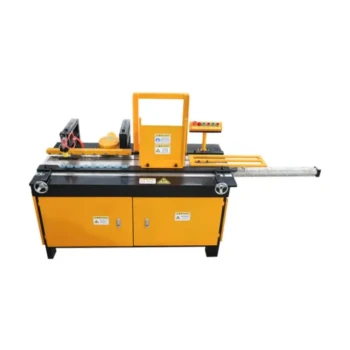
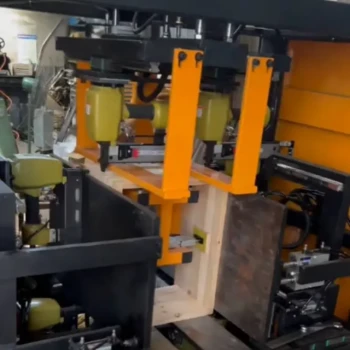
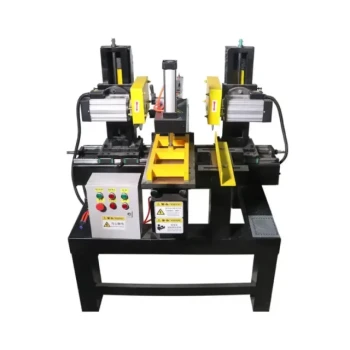
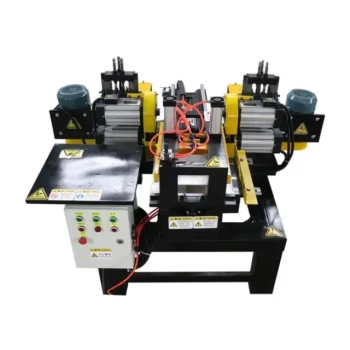
Specialized hive-making machinery acts as the technological foundation of modern beekeeping by automating the production of strictly standardized, structurally precise hive components. By ensuring every hive body and frame meets exact specifications, this equipment eliminates the variability of manual construction, directly enabling the efficiency required for commercial apiary management and mechanized honey extraction.
The core value of this machinery lies in its ability to bridge the gap between biological requirements and industrial necessity. It enforces the strict dimensional tolerances known as "bee space," ensuring that hardware supports—rather than hinders—colony health and automated harvesting.
Engineering Precision for Biological Needs
Maintaining "Bee Space"
The most critical role of specialized machinery is maintaining the exact technical standard known as bee space.
When dimensions are precise, bees move freely; when dimensions vary, bees fill gaps with wild wax or propolis.
Machine-produced hives prevent this buildup, ensuring that internal components remain mobile and easy to manipulate.
Absolute Interchangeability
Efficiency in large-scale beekeeping depends on the ability to move any frame into any hive box without friction.
Specialized machinery guarantees that all components are uniform, allowing for the seamless rotation of colonies.
This interchangeability minimizes the physical disturbance to the bees during inspections and honey collection.
Enhancing Colony Health
High-quality, durable hives provide a stable environment for the colony.
By using machinery to create precise fits, the equipment is better sealed and structurally sound, offering better protection against the elements.
This stability is fundamental for maximizing honey yield and ensuring the long-term viability of the apiary.
Enabling Large-Scale Operations
The Foundation for Mechanization
You cannot effectively use automated honey extraction lines with irregular, hand-built frames.
Specialized hive-making machinery creates the hardware infrastructure necessary for downstream mechanization.
Standardized frames fit perfectly into uncappers and extractors, streamlining the harvest process.
Rapid Expansion Capabilities
To scale an operation, producers must be able to generate equipment faster than the bees reproduce.
High-efficiency cutting technologies significantly reduce the manufacturing cycle and labor costs per unit.
This allows practitioners to quickly expand their operations in response to market demand without supply chain bottlenecks.
Structural Durability
Machine-cut joinery offers a level of precision that enhances the lifespan of the equipment.
Tighter fits result in stronger hives that can withstand the rigors of transport and heavy honey loads.
This durability reduces the frequency of replacement, lowering long-term overhead.
Economic and Environmental Autonomy
Reducing Procurement Costs
Owning production machinery allows operations to bypass the markup of finished goods.
Operators can process raw materials into finished hives, significantly reducing the cost of acquiring high-efficiency equipment.
This shift supports a self-sufficient supply model, crucial for independent production.
Localized Adaptation
Specialized machinery allows for the processing of local materials tailored to specific climates and bee species.
Beekeepers can optimize hive structures based on regional ecological characteristics rather than relying on generic imports.
This supports a circular economy model, reducing dependence on external resources and long-distance logistics.
Understanding the Trade-offs
Initial Capital vs. Long-Term Savings
While the machinery reduces the per-unit cost of hives, it requires a significant initial capital investment.
For smaller operations, the cost of the machinery may outweigh the savings generated by self-manufacturing.
Operational Complexity
Transitioning to machine-based production requires technical manufacturing skills distinct from beekeeping skills.
Operators must maintain the machinery to ensure the "precision" remains precise over time; a poorly calibrated machine defeats the purpose of standardization.
Making the Right Choice for Your Goal
Whether you should invest in this machinery depends on the specific trajectory of your beekeeping operation.
- If your primary focus is Rapid Scalability: Prioritize this machinery to ensure frame interchangeability and to support future automated extraction lines.
- If your primary focus is Cost Reduction: Use this machinery to utilize local raw materials and eliminate the markup of pre-manufactured hives.
- If your primary focus is Colony Health: Rely on machine-produced hives to strictly maintain "bee space" and minimize propolis buildup, reducing stress on the bees.
By integrating specialized machinery, you move from simply keeping bees to managing a standardized, industrial-grade production chain.
Summary Table:
| Key Feature | Benefit for Beekeepers | Impact on Production |
|---|---|---|
| Dimensional Precision | Maintains "Bee Space" | Reduces propolis buildup and colony stress |
| Component Uniformity | Absolute Interchangeability | Enables seamless use of automated extraction lines |
| Automated Joinery | Structural Durability | Hives withstand transport and heavy honey loads |
| High-Volume Output | Rapid Scalability | Reduces manufacturing cycles and labor costs |
| Material Flexibility | Localized Adaptation | Lower procurement costs using regional raw materials |
Transform Your Beekeeping Productivity with HONESTBEE
Are you ready to transition from traditional methods to a standardized, high-efficiency production chain? At HONESTBEE, we specialize in empowering commercial apiaries and distributors with the tools needed for industrial-grade success. From specialized hive-making and honey-filling machines to a full spectrum of beekeeping hardware and consumables, we provide the infrastructure your business needs to scale.
Why Partner with HONESTBEE?
- Wholesale Excellence: Gain access to a comprehensive portfolio of high-precision machinery and tools.
- Operational Efficiency: Our equipment ensures the exact tolerances required for automated harvesting and colony health.
- Global Supply: We cater to the unique needs of distributors and large-scale operations worldwide.
Contact us today to optimize your production chain!
References
- Aída Huerta Barrientos, Emiliano Gutiérrez Ayala. Physicochemical and Sensory Analysis of Commercial Honeys of Apis Mellifera Produced by Cooperative Societies in Mexico City. DOI: 10.26855/ijfsa.2020.09.014
This article is also based on technical information from HonestBee Knowledge Base .
Related Products
- High-Efficiency Pneumatic Bee Hive Making Machine for Rapid Box Assembly
- Beehive Handle and Frame Rest Cutting Machine: Your Specialized Hive Machine
- Mini Desktop Bee Hive Frame Forming Making Machine
- Automatic High-Speed Bee Hive Box Stapling Machine
- Beehive Machine Double End Saw for Precision Hive Component Manufacturing
People Also Ask
- How does the introduction of professional beehive-making machinery benefit sustainable beekeeping? Scale Your Apiary
- Why is specialized beehive-making machinery critical for low-defense breeding? Enhance Selection with Precision Tools
- How does the introduction of specialized beehive making machinery contribute to increasing the scale of regional beekeeping industries?
- What is the importance of specialized beehive making machinery in a circular bio-economy? Build Local Sustainability
- Why is specialized beehive-making machinery essential? Scale Your Apiary with Precision Industrial Standards