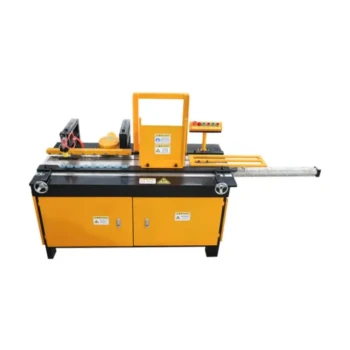
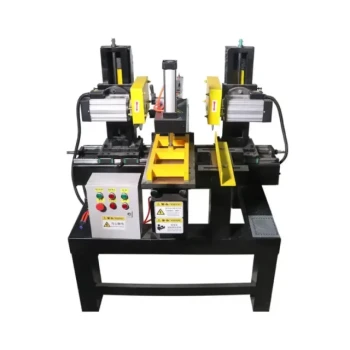
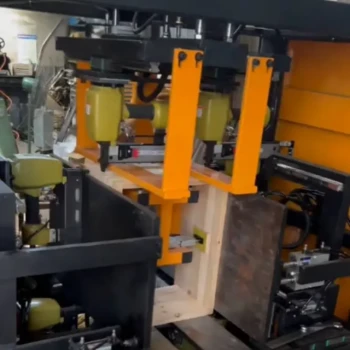
Industrial hive-making equipment is the catalyst for commercial expansion, shifting beekeeping from an artisanal craft to a scalable industry through the automated production of standardized infrastructure. It serves as the physical foundation for large-scale operations, ensuring that every hive provides the precise specifications necessary for consistent colony management, superior thermal insulation, and optimized honey production.
The Core Takeaway The significance of this equipment lies not just in manufacturing speed, but in total standardization. By ensuring every hive component is identical and interchangeable, industrial machinery removes the physical variables of beekeeping, allowing operators to scale management processes, reduce unit costs, and significantly improve colony survival rates.
The Operational Impact of Standardization
Ensuring Component Interchangeability
The primary driver for scaling an apiary is the ability to manage thousands of hives as a single system rather than individual units. Industrial-grade machinery ensures that internal dimensions and frame specifications are perfectly uniform.
This precision creates interchangeability, where frames and components can be moved seamlessly between different hive units. This capability simplifies complex tasks such as colony splitting, merging, and pest inspections, which significantly increases labor efficiency.
Facilitating Mechanized Management
Standardized hives are a prerequisite for advanced automation in other areas of the apiary. The uniform structure produced by these machines allows for mechanized honey extraction and streamlined handling.
When hive dimensions are consistent, they become compatible with standard beekeeping tools and processing lines. This reduces the manual labor required for harvesting, directly contributing to higher management capacity and operational speed.
Economic Efficiency and Scalability
Reducing Infrastructure Costs
Expansion requires capital, and the cost of housing bees is a major expense. Industrial manufacturing utilizes high-precision cutting and automated assembly to reduce the unit cost of beehives.
By lowering the barrier to entry for new infrastructure, these machines enable professional beekeepers to rapidly increase their colony counts. This creates a hardware foundation that supports increasing returns to scale, making large commercial units economically viable.
Enabling Rapid Capacity Growth
Manual hive construction is a bottleneck for growth. Industrial equipment allows for the automated production of large batches of high-quality components.
This speed allows apiaries to respond quickly to market demands or seasonal opportunities by rapidly deploying new colonies. The ability to generate infrastructure on demand is central to the expansion strategies of commercial enterprises.
Colony Health and Yield Optimization
Improving Environmental Control
The precision offered by industrial equipment directly impacts bee health. Hives produced with exact specifications provide superior insulation and structural integrity.
These tight tolerances protect colonies from extreme weather, significantly improving overwintering success and breeding rates. A consistent physical environment is vital for minimizing stress on the bees, leading to stronger colonies.
Enhancing Biosecurity and Hygiene
Standardized mobile-frame hives offer a more hygienic environment compared to traditional methods. The uniform physical environment is fundamental for maintaining biosecurity.
Smooth, precise manufacturing minimizes gaps where pests can hide and disease can fester. Furthermore, standardized equipment facilitates easier cleaning and rotation of old comb, which is essential for controlling disease transmission and ensuring honey purity.
Understanding the Trade-offs
Capital Intensity vs. Flexibility
While industrial equipment drives efficiency, it requires a significant upfront investment. Transitioning to this level of production means committing capital to machinery that is highly specialized.
Commitment to a Single Standard
Adopting industrial hive-making locks an operation into a specific set of dimensions. While standardization is the goal, it creates a rigidity in the system. If the chosen standard turns out to be suboptimal for a specific local microclimate or bee species, retrofitting a massive inventory of industrially produced hives is financially difficult.
Making the Right Choice for Your Expansion
To leverage industrial hive-making equipment effectively, align your investment with your specific operational bottlenecks.
- If your primary focus is Rapid Scaling: Prioritize machinery that offers the highest throughput and lowest unit cost to maximize your return on infrastructure investment.
- If your primary focus is Colony Health and Yield: Select equipment known for high-precision joinery and insulation capabilities to maximize overwintering survival and honey production efficiency.
Standardization is the lever that allows beekeepers to move from managing individual boxes to managing a scalable, profitable enterprise.
Summary Table:
| Key Benefit | Impact on Expansion | Operational Value |
|---|---|---|
| Total Standardization | Enables seamless component interchangeability. | Reduces labor time during hive inspections and splits. |
| Cost Efficiency | Lowers the unit cost per hive through automation. | Maximizes capital for rapid infrastructure scaling. |
| Precision Engineering | Improves thermal insulation and structural integrity. | Increases colony survival rates and honey yields. |
| Automated Throughput | Removes manual manufacturing bottlenecks. | Allows for rapid deployment of new apiary sites. |
| Enhanced Biosecurity | Minimizes pest hiding spots with tight tolerances. | Simplifies hygiene management and disease control. |
Scale Your Apiary with Industrial Precision
Transitioning from an artisanal craft to a profitable enterprise requires more than just bees—it requires the right infrastructure. HONESTBEE empowers commercial apiaries and distributors with the high-performance tools needed to dominate the market.
From industrial hive-making machinery and automated honey-filling systems to a complete spectrum of wholesale beekeeping consumables, we provide the hardware foundation for your growth. Whether you are expanding your colony count or streamlining your processing line, our expertise ensures you achieve maximum efficiency and superior yield.
Ready to automate your success? Contact us today to explore our comprehensive wholesale offerings!
References
- Georgi Aleksiev. HONEY TRADE IN BULGARIA AND ITS IMPACT ON THE APPICULTURAL SECTOR. DOI: 10.15547/tjs.2019.s.01.073
This article is also based on technical information from HonestBee Knowledge Base .
Related Products
- High-Efficiency Pneumatic Bee Hive Making Machine for Rapid Box Assembly
- Mini Desktop Bee Hive Frame Forming Making Machine
- Beehive Handle and Frame Rest Cutting Machine: Your Specialized Hive Machine
- Beehive Machine Double End Saw for Precision Hive Component Manufacturing
- Professional Multi-Function Stainless Steel Hive Tool
People Also Ask
- How does the introduction of professional beehive-making machinery benefit sustainable beekeeping? Scale Your Apiary
- Why is specialized beehive-making machinery critical for low-defense breeding? Enhance Selection with Precision Tools
- How does the introduction of specialized beehive making machinery contribute to increasing the scale of regional beekeeping industries?
- What is the importance of specialized beehive making machinery in a circular bio-economy? Build Local Sustainability
- Why is specialized beehive-making machinery essential? Scale Your Apiary with Precision Industrial Standards