Professional honey storage facilities act as a critical economic buffer between the cyclical nature of bee harvesting and constant consumer demand. By providing a temperature-controlled and light-shielded environment, these facilities prevent spoilage and fermentation, allowing producers to hold inventory during peak harvest times and release it strategically to avoid price crashes caused by oversupply.
The Core Insight Honey production is inherently seasonal, but market demand is year-round. Specialized storage facilities bridge this gap by preserving honey's chemical integrity, allowing producers to control market flow and stabilize prices rather than selling at a loss during harvest surpluses.
Stabilizing the Supply Chain
The primary function of professional storage is to decouple the time of production from the time of sale. This strategic separation allows producers to manage the volatility of agricultural markets.
Preventing Market Saturation
During peak harvest seasons, the market is typically flooded with raw honey. Without storage, producers are forced to sell immediately, leading to an oversupply that drives prices down.
Storage facilities allow producers to withhold stock during these "gluts." This prevents the necessity of price-slashing and protects the long-term economic stability of the beekeeping operation.
Ensuring Consistency During Shortages
Conversely, honey production drops significantly during off-peak seasons. Facilities with advanced infrastructure allow marketers to release stored reserves during these times.
This ensures a steady market flow, securing stable income for producers even when active harvesting is impossible.
Preserving Product Integrity
Beyond economics, professional storage is a technical necessity for quality control. Honey is a biological product susceptible to environmental degradation.
Controlling Fermentation and Spoilage
Raw honey contains natural yeasts that can trigger fermentation if not managed correctly.
Professional facilities provide temperature-controlled environments that inhibit yeast activity. This prevents the honey from souring or spoiling before it reaches the consumer.
Managing Physical Changes
Honey is prone to crystallization and browning (darkening) over time, particularly if exposed to fluctuating temperatures or humidity.
Industrial-grade storage delays these chemical changes. By maintaining precise humidity levels and shielding the product from light, these facilities ensure the honey retains the color, aroma, and consistency expected of a high-value product.
Understanding the Operational Trade-offs
While professional storage is essential for commercial scalability, it requires a nuanced approach to integration.
Storage vs. Processing
Storage preserves existing quality, but it does not improve it. To ensure total purity and shelf stability, storage must often be paired with processing facilities.
As noted in supplementary data, processing steps like heating and filtration are required to actively eliminate impurities and fermenting yeasts, whereas storage simply creates an environment where they are less likely to thrive.
Environmental Sensitivity
Improper storage, such as open-air selling or using non-sealed containers, leads to rapid degradation.
Storage facilities must be strictly monitored; even minor lapses in temperature control can accelerate crystallization or lead to the loss of specific physicochemical properties that define the honey’s grade.
Making the Right Choice for Your Goal
Whether you are a producer looking to maximize revenue or a distributor ensuring quality, the role of storage varies slightly based on your objective.
- If your primary focus is Economic Stability: Prioritize storage capacity that allows you to hold at least 30-50% of your harvest, enabling you to bypass low prices during the peak season.
- If your primary focus is Product Quality: Focus on facilities with advanced humidity and light control to prevent the browning and crystallization that lower commercial value.
- If your primary focus is Long-Term Preservation: Combine climate-controlled storage with processing equipment (heating and filtration) to remove the yeasts that cause fermentation during extended shelving.
Professional storage is not just a warehouse; it is a strategic tool that transforms honey from a perishable seasonal crop into a stable, year-round commodity.
Summary Table:
| Feature | Function in Seasonal Management | Impact on Quality & Market Value |
|---|---|---|
| Climate Control | Inhibits yeast activity and fermentation | Prevents spoilage and sours; maintains product purity |
| Market Buffering | Decouples harvest time from sale time | Prevents price crashes by avoiding seasonal market saturation |
| Physical Shielding | Regulates light exposure and humidity | Delays crystallization and browning (HMF increase) |
| Inventory Reserve | Ensures supply during off-peak seasons | Secures year-round revenue and maintains customer loyalty |
Maximize Your Harvest Value with HONESTBEE
Transitioning from a seasonal producer to a year-round market leader requires more than just storage—it requires the right infrastructure. HONESTBEE empowers commercial apiaries and international distributors with a comprehensive range of professional beekeeping tools, specialized honey-filling machinery, and essential consumables designed to maintain the highest product integrity.
Whether you need industrial-grade equipment to process honey for long-term storage or specialized hardware to scale your distribution, our team provides the wholesale solutions you need to stabilize your supply chain.
Ready to optimize your production and protect your profits? Contact HONESTBEE today for tailored equipment solutions.
References
- K. Beula, A Anandhy. A Study on Honey Production and Marketing by the Marthandam Beekeepers’ Co-Operative Society in Kanniyakumari District. DOI: 10.34293/economics.v8i2.1632
This article is also based on technical information from HonestBee Knowledge Base .
Related Products
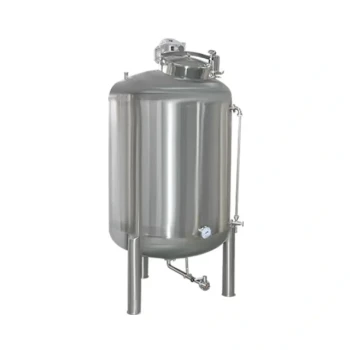
- Stainless Steel Honey Storage Tank with Lid for Honey
- Stainless Steel Honey Storage and Settling Tank with Double Strainer
- Professional Honey Storage Tank with Agitation System
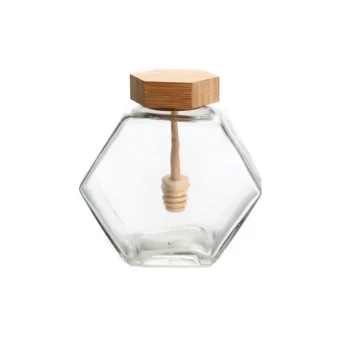
- Hexagonal Glass Honey Jar with Wooden Lid Integrated Dipper Elegant Functional Storage
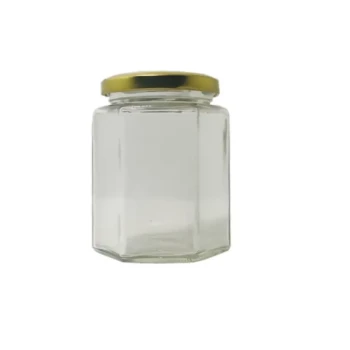
- Hexagonal Glass Honey Jars with Metal Lug Caps Elegant Versatile Packaging
People Also Ask
- What economic role do honey storage tanks play? Boost Your Revenue Through Strategic Inventory Management
- What roles do industrial honey storage tanks and filtration meshes play in processing? Ensure Purity & Consistency
- What is the purpose of a honey storage tank? Streamline Your Honey Processing for Quality & Efficiency
- What are honey storage tanks used for? Essential Features for Quality Preservation and Profit
- How do large honey storage tanks and gravity fall filling systems improve honey packaging efficiency and safety?