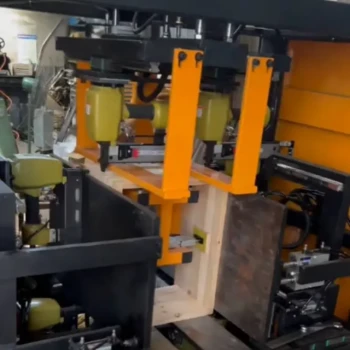
The specific dimensions of Heterotrigona itama Topping Boxes, particularly the 7 cm height, are calibrated to match the colony's natural expansion rate. These standardized measurements ensure the spatial capacity aligns with the bees' biological ability to build honey pots. By restricting the volume to what the bees can manage, you synchronize the hive's workflow with a predictable harvest cycle.
Standardizing the topping box height to approximately 7 cm aligns the harvest cycle with the bees' natural 93.6-day construction rhythm. This precision prevents environmental stress within the hive and guarantees stable honey production per unit of time.
Aligning Structure with Biology
Matching the Construction Cycle
The dimension of 7 cm is not a random architectural choice; it is a biological calculation. It dictates a spatial capacity that allows Heterotrigona itama colonies to complete honey pot construction efficiently.
Research indicates that this specific volume corresponds to an approximate 93.6-day cycle. This predictability allows beekeepers to forecast harvest times accurately based on the colony's natural work rate.
Regulating the Internal Microenvironment
Stingless bees must actively manage the temperature and humidity inside their hive. Standardized dimensions prevent the creation of "dead space" that the colony struggles to regulate.
If the topping box provides reasonable spatial capacity, the bees can maintain their internal environment without expending excessive energy. This balance directs the colony's energy toward production rather than climate control.
Biological Expansion Rates
The box size limits the available expansion volume to match the colony's growth speed. This physical constraint directly influences how the bees arrange and distribute their honey pots.
By simulating a log cavity with controlled dimensions, you dictate the morphological development of the nest. This ensures the colony expands upward into the honey zone at a sustainable pace.
Operational Efficiency
Separating Brood from Harvest
The Topping Box functions as an independent, detachable unit placed above the original nest chamber. Its primary operational role is to physically separate the honey storage area from the brood (larvae) area.
This separation is critical for commercial efficiency. It allows you to harvest honey by accessing only the upper box, leaving the sensitive brood chamber at the bottom completely undisturbed.
Reducing Colony Stress
Standardized wooden hives minimize the operational difficulty of harvesting. Because the honey is isolated in the topping box, the core colony structure remains intact during collection.
This reduction in disturbance lowers stress levels for the Heterotrigona itama colony. Lower stress correlates directly with long-term colony health and consistent yields.
Understanding the Trade-offs
The Risks of Oversized Spaces
It is a common misconception that a larger box yields more honey. In reality, oversized spaces increase the "maintenance costs" for the bees.
If the box is too large (e.g., significantly higher than 7 cm), the bees may struggle to regulate the internal microenvironment. This can lead to instability in the colony and a decrease in honey production per unit of time.
Maintenance vs. Production
When dimensions ignore the natural expansion rate, bees are forced to prioritize hive maintenance over honey storage.
Standardization removes this variable. It ensures the space provided is never a burden to the colony, maintaining a focus on filling honey pots rather than fixing the hive environment.
Making the Right Choice for Your Goal
When selecting or constructing topping boxes for Heterotrigona itama, your decisions should be driven by the balance between biological needs and operational goals.
- If your primary focus is stable production: Adhere to the 7 cm height standard to ensure the bees can fill the box within the optimal ~93-day cycle.
- If your primary focus is colony health: Ensure the topping box provides a complete physical separation from the brood chamber to eliminate harvest-related stress.
- If your primary focus is commercial scalability: Use standardized dimensions (like 30x35x7 cm) to simplify transport and enable consistent data comparison across different hives.
By respecting the 7 cm standard, you stop fighting the bees' biology and start leveraging their natural rhythms for consistent success.
Summary Table:
| Key Feature | Standard Dimension | Biological/Operational Impact |
|---|---|---|
| Height | 7 cm | Aligns with natural 93.6-day honey pot construction rhythm |
| Width/Length | 30 x 35 cm | Provides optimal spatial capacity without creating 'dead space' |
| Design | Detachable Unit | Separates honey from brood chamber to reduce harvest stress |
| Internal Climate | Controlled Volume | Minimizes energy spent on temperature & humidity regulation |
| Scalability | Standardized Fit | Simplifies transport and performance tracking across apiaries |
Scale Your Commercial Apiary with Precision-Engineered Equipment
At HONESTBEE, we understand that beekeeping success is built on the perfect balance between biology and technology. We provide commercial apiaries and distributors with high-quality, standardized beekeeping tools designed to maximize yields and ensure colony longevity.
Our comprehensive wholesale portfolio includes:
- Precision Machinery: Professional hive-making and honey-filling machines.
- Wholesale Equipment: A full spectrum of specialized hardware and beekeeping tools.
- Essential Consumables: Everything needed for day-to-day hive management and maintenance.
- Cultural Merchandise: Unique honey-themed products to expand your market reach.
Whether you are scaling a professional honey production facility or supplying the next generation of beekeepers, HONESTBEE delivers the reliability and expertise you need.
Ready to optimize your production? Contact us today to discuss your wholesale needs!
References
- Seprido Seprido, Nariman Hadi. Adaptation and Production of Heterotrigona itama from Natural Colonies in Kuantan Singingi. DOI: 10.36378/juatika.v6i1.3382
This article is also based on technical information from HonestBee Knowledge Base .
Related Products
- Styrofoam Mini Mating Nuc Box with Frames Feeder Styrofoam Bee Hives 3 Frame Nuc Box
- Heavy-Duty Ergonomic Grip Galvanized Pollen Shovel
- Professional Plastic Honey Dipper for Easy Honey Drizzling
- 5 Gallon Pail Opener Bucket Opener Tool for Honey Bucket
- Langstroth Honey Bee Box Hive Boxes for Different Depths
People Also Ask
- How are nuc boxes used in queen rearing? The Essential Tool for Reliable Queen Mating
- What is the primary advantage of mini mating nucs? Maximize Queen Production with Minimal Bee Resources
- What are the practical uses for an empty nuc box? Essential Tools for Swarm Control and Apiary Management
- What are nuc boxes used for in beekeeping? Essential Tools for Queen Rearing and Colony Growth
- Can a nuc box be used for swarm catching? An Effective and Manageable Solution for Beekeepers