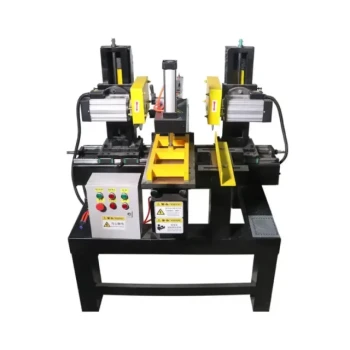
The transition to industrial beekeeping relies on precision manufacturing. Hive-making machines facilitate the standardized production of essential components, such as hives and specific frame types like Nagy-Boczonádi frames. This standardization dramatically lowers acquisition costs and ensures the tight mechanical fit required for safe, migratory beekeeping.
The Core Reality In large-scale operations, the value of hive-making machines extends beyond simple manufacturing speed. They create a standardized infrastructure that allows for component interchangeability, mechanized harvesting, and the robust physical stability needed to transport colonies safely, unlocking true economies of scale.
The Role of Precision in Scalability
Achieving True Component Interchangeability
The primary barrier to scaling an apiary is logistical complexity. Hive-making machines utilize automated precision processing to ensure every component—from hive bodies to gates—has uniform dimensions.
This uniformity allows for perfect interchangeability. Frames and supers can be moved seamlessly between different hives without modification, significantly reducing the labor required during colony management and equipment turnover.
Facilitating Mechanized Harvesting
Standardization is a prerequisite for modern harvesting. Machine-produced frames are designed to be perfectly compatible with post-processing equipment, such as centrifugal honey extractors.
If frames vary in size or structure, they can jam or break automated extractors. Uniform production ensures the harvesting line runs without interruption, a critical factor for industrial operations managing 150 or more colonies.
Supporting Data-Driven Management
Large-scale apiaries often rely on mathematical models to predict population growth and health. Variability in hive volume or construction creates "noise" in this data.
By ensuring structural precision, machine-made hives minimize quality variations that lead to prediction errors. This provides a stable physical carrier that allows for accurate, data-based colony management.
Logistics and Migratory Beekeeping
Ensuring Stability During Transport
For apiaries that practice migratory beekeeping, the physical fit of the hardware is a safety issue. Precision manufacturing ensures a tight fit between frames and the hive box.
This precision prevents components from shifting or rattling during mechanized transport. A stable internal structure reduces stress on the colony and prevents equipment damage during long-distance moves.
Reducing Capital Expenditure
Relying on external suppliers for thousands of hive components is prohibitively expensive. Hive-making machines enable internal production, significantly reducing the cost of hardware.
This shift allows the apiary to achieve economies of scale. By producing hardware on-demand, the operation avoids the markups associated with purchasing pre-made equipment.
Impact on Colony Health and Maintenance
Enhancing Weather Resistance
Machine-manufactured hives offer superior sealing compared to hand-assembled or inconsistent alternatives. This precision improves weather resistance, isolating the colony from external moisture and ground dampness.
Better sealing reduces long-term maintenance costs by preventing wood corrosion. It also helps the colony maintain its internal humidity balance, aligning the habitat with the biological needs of species like Western and Eastern honeybees.
Improving Pest Defense
Precision joinery creates a barrier against pests. A standardized fit minimizes gaps that crawling pests might otherwise use to invade the colony.
Furthermore, machine-produced components can be integrated with specific configurations, such as elevated stands (e.g., 500mm height), which further improve ventilation and pest isolation.
Understanding the Trade-offs
While hive-making machines are essential for scale, they introduce dependency risks.
- Operational Rigidity: Once a machine is set for a specific standard (e.g., Nagy-Boczonádi), changing dimensions to experiment with new hive types requires retooling. You trade flexibility for efficiency.
- Upfront Capital: The initial investment in industrial-grade machinery is high. For smaller operations, the ROI may not be realized quickly enough to justify the expense compared to manual methods.
- Maintenance Overhead: The machines themselves require skilled maintenance to retain their precision. If the machine falls out of calibration, the entire production run becomes non-standard, defeating the purpose of the investment.
Making the Right Choice for Your Goal
To maximize the value of hive-making machinery, align your production strategy with your primary operational goal:
- If your primary focus is Migratory Beekeeping: Prioritize machines that guarantee tight tolerances between frames and boxes to prevent vibration damage during transport.
- If your primary focus is Rapid Expansion (150+ Colonies): Focus on high-throughput machines that ensure total interchangeability of parts to minimize labor logistics.
- If your primary focus is Scientific/Data Management: Ensure the machinery produces strictly uniform internal volumes to validate mathematical population models.
Standardization is not just a convenience; it is the structural foundation that allows an apiary to evolve from a craft to an industry.
Summary Table:
| Key Benefit | Impact on Large-Scale Operations |
|---|---|
| Standardization | Enables total component interchangeability and easier labor logistics. |
| Mechanized Harvesting | Ensures frames fit perfectly into honey extractors without jamming. |
| Economic Efficiency | Lowers capital expenditure by shifting from purchasing to internal production. |
| Colony Health | Precision sealing improves weather resistance and provides better pest defense. |
| Logistics Safety | Tight mechanical fit prevents colony stress and damage during migratory transport. |
Transform Your Apiary into an Industrial Powerhouse with HONESTBEE
At HONESTBEE, we empower commercial apiaries and distributors with the precision tools needed for global-scale success. Our comprehensive wholesale solutions cover the entire spectrum of beekeeping—from hive-making and honey-filling machines to premium hardware and essential consumables.
Whether you are scaling up to 150+ colonies or looking to supply the industry with high-quality components, our portfolio ensures your infrastructure is standardized, durable, and efficient. Partner with us to reduce your acquisition costs and unlock true economies of scale.
Contact HONESTBEE Today for Your Wholesale Solution
References
- Alíz Feketéné Ferenczi, Viktória Vida. A hazai méhészeti ágazat helyzetének elemzése (termelés, kereskedelem). DOI: 10.20494/tm/8/2/2
This article is also based on technical information from HonestBee Knowledge Base .
Related Products
- High-Efficiency Pneumatic Bee Hive Making Machine for Rapid Box Assembly
- Mini Desktop Bee Hive Frame Forming Making Machine
- Beehive Handle and Frame Rest Cutting Machine: Your Specialized Hive Machine
- Automatic High-Speed Bee Hive Box Stapling Machine
- Beehive Machine Double End Saw for Precision Hive Component Manufacturing
People Also Ask
- How does the introduction of professional beehive-making machinery benefit sustainable beekeeping? Scale Your Apiary
- Why is specialized beehive-making machinery critical for low-defense breeding? Enhance Selection with Precision Tools
- How does the introduction of specialized beehive making machinery contribute to increasing the scale of regional beekeeping industries?
- What is the importance of specialized beehive making machinery in a circular bio-economy? Build Local Sustainability
- Why is specialized beehive-making machinery essential? Scale Your Apiary with Precision Industrial Standards